Who Is the Best Forged Steel Parts Manufacturer in China?
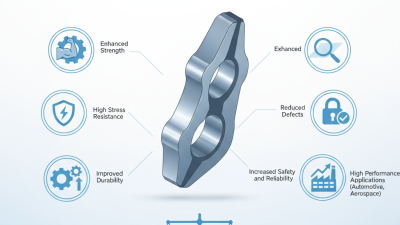
Who is the best Forged Steel Parts manufacturer in China? There is no universal winner. The right supplier depends on the component’s design, steel grade, production volume, and service requirements. A sturdy forging should do more than look clean after machining. Its strength depends on controlled heating, well-designed dies, suitable heat treatment, and careful inspection. Small details matter: a material certificate, a clear heat-treatment record, and consistent dimensions across a batch can tell buyers more than a glossy factory video.
This guide explains how to compare Chinese manufacturers using practical evidence rather than broad claims. It considers forging capabilities, engineering support, quality-control systems, traceability, communication, and delivery performance. Useful questions include whether a supplier can review your drawings, explain its process limits, and provide inspection reports for the parts you need. Ask how defects are handled, too. That answer can reveal how a factory works when production gets difficult.
The comparison is not perfectly neat. A large plant may offer broad capacity, while a smaller specialist may respond faster or understand a particular alloy better. Neither advantage proves overall superiority. Buyers should verify claims with samples, records, and direct technical discussions before making a decision. There is no shortcut. Even careful research can miss things, so keep room for follow-up questions and independent checks.
What Are Forged Steel Parts? Processes, Alloys, and ASTM A668 Scope
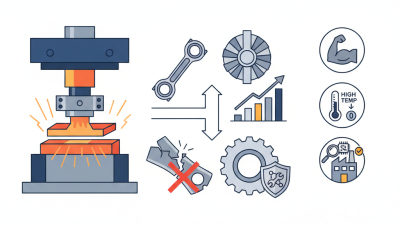
Forged steel parts are shaped by compressive force, often while the steel is hot. Open-die forging works the metal between broad dies, making it suitable for large shafts and rings. Closed-die forging presses steel into a shaped cavity for more repeatable geometry. The process can refine grain flow, but it does not erase every flaw. Inspection still matters.
Carbon steel is often chosen for strength and cost control; alloy steels may add elements such as chromium, molybdenum, or nickel to support hardenability or service performance. The right choice depends on load, temperature, section size, and machining needs. A thick shaft can cool unevenly. That matters. Heat treatment and testing should match the part’s dimensions and duty, not just its alloy label.
ASTM A668/A668M covers carbon and alloy steel forgings for general industrial use. Its classes define different mechanical-property requirements, and the applicable class should be stated in the order documents. It is not a universal design approval or a substitute for specifying dimensions, heat treatment, and acceptance tests. Buyers should check the current edition and confirm which requirements apply to the component. Not every detail is obvious from a material certificate.
How Are They Made? Open-Die, Closed-Die, and Ring-Rolling Methods
A forged steel part is shaped while heated metal is compressed under force. The method affects grain flow, dimensions, material use, and the amount of machining required. There is no single best process for every component. A capable manufacturer should explain why its chosen method fits the part’s geometry, load, and production volume.
In open-die forging, a press or hammer squeezes the workpiece between dies that do not fully enclose it. Operators reposition the hot steel between blows, making this method useful for large shafts, bars, and custom shapes. It offers flexibility, but dimensions may need more machining. Closed-die forging presses steel into a shaped cavity. It can produce repeatable forms at higher volumes, though tooling costs and design limits matter. Excess metal may form flash along the die line and require trimming. Ring rolling starts with a pierced steel blank. Rolls expand its diameter while reducing the wall thickness, creating seamless rings for demanding applications.
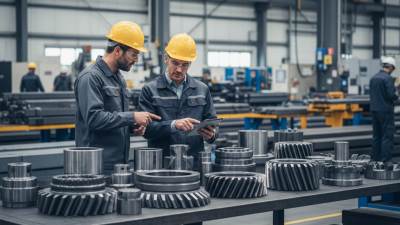
Process choice is only part of the assessment. Ask how temperature, die condition, and final dimensions are monitored. Look for traceable material records and suitable inspection results, such as ultrasonic testing when required by the specification. A smooth surface alone proves little about internal soundness. A detailed drawing can still miss practical issues, like machining allowance or distortion after cooling. That deserves another look. Good communication about these limits is a useful sign of manufacturing competence.
Which ASTM A694 Grades Fit? F42–F70 Specify 42–70 ksi Minimum Yield Strength
For high-pressure piping forgings, ASTM A694 grades are defined by minimum yield strength, not by a promise of service life. ASTM A694/A694M’s mechanical-property table sets F42 at 42 ksi and F70 at 70 ksi, with F46, F48, F50, F52, F56, F60, and F65 between them. These values help engineers screen materials, but they do not determine a safe pressure rating on their own. Wall thickness, temperature, weld details, and the applicable design code matter too.
When comparing manufacturers, ask for heat-specific material test reports and verify that the reported yield strength meets the ordered grade. Check testing records, heat numbers, forging dimensions, and inspection procedures. A polished certificate is not the whole story; traceability must connect the document to the actual part. That detail is easy to overlook. ASTM A694/A694M provides the grade requirements, while the project’s governing piping code sets design rules. Use both.
Tips: Match the grade to the design specification, not just the headline ksi value. Confirm the required tests and documentation before production. If the service conditions are unclear, pause and ask the engineer; a quick assumption can become an expensive one.
How Can Buyers Verify Quality? Tensile, Impact, Hardness, and NDT Records
A forged-steel supplier should provide test records that match the parts being shipped, not just a generic sample report. Ask for traceability from the component or batch number to the steel heat number. Then compare that number across the certificate, inspection report, and packing documents. A polished PDF is not proof by itself.
Check tensile results against the agreed specification, including yield strength, tensile strength, and elongation. Impact-test records should state the test temperature and sample direction; a value without these details is hard to interpret. Hardness readings need a stated scale and test locations. A few readings on a smooth coupon may not represent a large forging. Small details matter.
For non-destructive testing, confirm the method, coverage, acceptance criteria, and inspector’s recorded findings. Ultrasonic or magnetic-particle reports should identify the examined area and any relevant indications, not merely say “passed.” Keep the raw reports and ask how samples were selected. If records raise questions, request clarification or arrange independent testing against the purchase specification. Paperwork can still miss a mismatch, especially when batch identification is weak. No single test tells the whole story. Read the records together, and check that their dates and identifiers align.
Who Is China’s Best Manufacturer? Compare Capacity, Traceability, and Delivery Metrics
China’s scale is not proof of a supplier’s forging capability. The World Steel Association reported that China produced 1,019.1 million tonnes of crude steel in 2023. That figure shows the depth of the steel supply base, not the capacity or quality of any individual forging plant. Look for verified press tonnage, furnace capacity, alloy range, and monthly accepted output. Ask whether those figures include subcontracted work. That detail is easy to miss.
Traceability should connect each finished part to its heat number, material certificate, forging record, and inspection results. Request a sample lot file, then check how quickly staff can retrieve it. A one-hour retrieval test is a useful buyer’s check, not a universal industry standard. ISO 9001:2015 calls for identification and traceability where applicable, but certification alone does not prove complete part-level records. Check the actual documents.
Delivery claims need the same scrutiny. Compare 12 months of on-time-in-full performance against purchase-order dates, and ask how late orders are recorded. Also review rejection rates and corrective-action closure times. A supplier with enormous nominal capacity may still struggle with complex dies or changing schedules. There is no perfect scorecard; buyers can also overlook how their own forecast changes affect delivery. Choose the manufacturer whose records match your part, volume, and risk—not the boldest brochure.