China Top 10 Hot Forging Part Suppliers?
China’s hot forging industry supports demanding markets, including automotive, construction machinery, rail equipment, energy, and industrial hardware. This article introduces ten notable Hot Forging Part suppliers in China. It focuses on practical manufacturing capability, not promotional claims alone.
Professor Taylan Altan, a widely recognized forging researcher, once emphasized, “Good forging design begins with controlling metal flow.” That principle remains important. A strong supplier should understand billet heating, die filling, grain flow, trimming, heat treatment, and final inspection. These details affect strength, fatigue life, dimensional accuracy, and production consistency.
The selected companies are considered through several visible criteria. These include forging capacity, material traceability, tooling experience, machining support, testing equipment, quality systems, export service, and experience with complex components. Sample details matter. A reliable factory should explain its furnace temperature records, die maintenance schedule, hardness results, and inspection reports clearly.
Still, no ranking can fit every purchasing situation. A supplier experienced in automotive steering parts may not suit a large mining component. Some factories look impressive during an audit but respond slowly after the purchase order. That weakness is easy to overlook.
This guide therefore offers a starting point, not a final verdict. Buyers should verify drawings, tolerances, material grades, minimum order quantities, lead times, and certification status directly. Factory visits and sample testing remain valuable. They often reveal more than a polished website.
The following supplier overview aims to make comparison easier. It also recognizes an uncomfortable truth: the lowest quotation may create the highest long-term cost.
China’s Hot Forging Market: Processes, Materials, and Key Industry Data
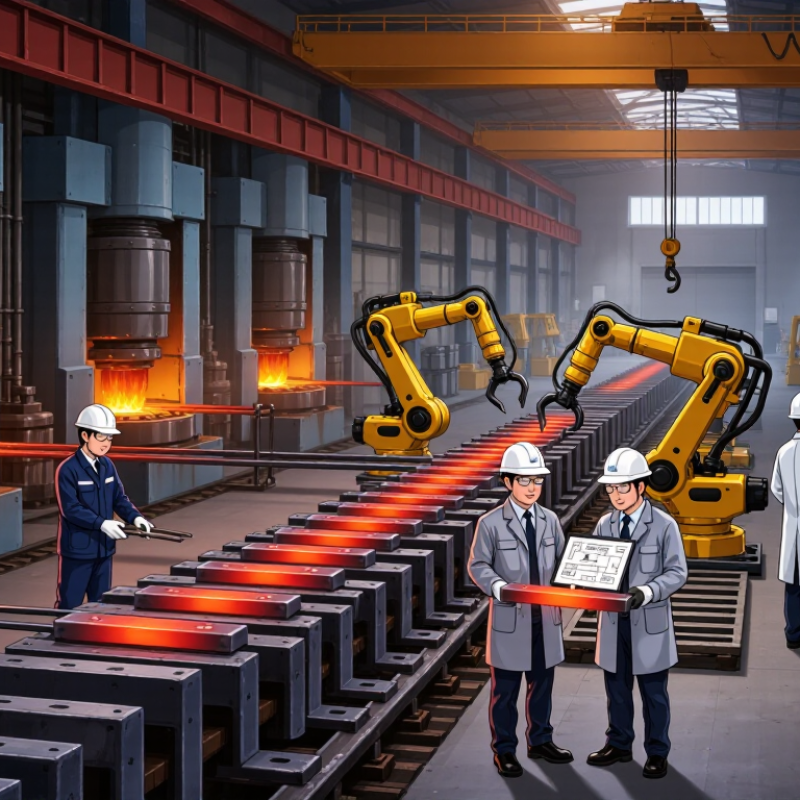
China’s hot forging market serves automotive, construction, energy, rail, and industrial machinery applications.
When comparing the top ten hot forging part suppliers, buyers should study process control, not only quoted prices.
Common methods include open-die forging
closed-die forging
hammer forging
and hydraulic pressing.
Each method affects grain flow, dimensional accuracy, tooling cost, and production volume.
Typical materials include carbon steel, alloy steel, stainless steel, aluminum, and selected titanium grades.
Suppliers may offer cutting, preheating, forging, trimming, heat treatment, shot blasting, and machining in one production chain.
Useful industry data includes press capacity, monthly output, energy consumption, defect rates, inspection equipment, and delivery performance.
A reliable supplier should provide heat numbers, material certificates, hardness results, tensile data, and dimensional reports.
Factory experience matters. However, published capacity figures can be incomplete, and buyer audits may reveal production limits during peak seasons.
Tips:
Request a sample process flow before signing a contract. Check die life, furnace temperature records, and traceability practices.
Ask how suppliers handle cracks, scale, and dimensional drift. Compare total cost, not unit price alone.
A lower quotation may hide extra machining or repeated inspection. It is also wise to test a pilot batch, because laboratory results do not always reflect continuous production.
Forging quality is rarely perfect. Careful verification remains necessary.
How the Top 10 Chinese Hot Forging Suppliers Are Ranked by 2025 Metrics
China’s top ten hot forging part suppliers should be ranked through transparent 2025 metrics, not advertising claims. The assessment can combine dimensional accuracy, defect rates, delivery reliability, production capacity, and engineering support. Quality records should cover at least twelve months. Independent factory audits can verify furnace control, die maintenance, inspection equipment, and traceability.
A practical score may assign
30% to quality,
25% to delivery performance,
20% to technical capability,
15% to capacity, and
10% to commercial stability.
Evidence matters. Inspectors should review sample parts, material certificates, heat-treatment charts, and corrective-action reports. A supplier producing complex shafts or heavy brackets may deserve extra credit for process control. Yet capacity figures can be overstated. That weakness deserves attention.
Tips:
Request recent production samples and compare them with approved drawings. Ask for measurable defect data, not broad promises. Confirm whether quoted capacity reflects normal shifts or emergency overtime. Review communication during a trial order. A technically strong supplier may still fail when feedback is slow. The ranking should also record uncertainty, because incomplete data can distort a supplier’s position.
Supplier Profiles: Capacity, Certifications, Alloys, and Forging Tonnage
China Top 10 Hot Forging Part Suppliers?
A useful supplier profile should show more than product photographs. Review annual capacity, press configuration, heat-treatment equipment, and inspection resources. A workshop producing 8,000 tonnes yearly may suit automotive brackets, while aerospace-style components require tighter process control. Confirm whether stated capacity means installed tonnage or actual annual output. The difference can be substantial.
Certifications provide structure, but they never replace technical judgment. Check current quality certificates, scope, expiry dates, and audit records. Common references include ISO 9001, IATF 16949, and ISO 14001, depending on the industry. Ask about alloys such as carbon steel, stainless steel, alloy steel, aluminum, and titanium. Then verify melting sources, chemical analysis, grain flow, hardness, and dimensional reports. Forging tonnage should match part size, material strength, and die complexity. Tonnage matters.
Tips: Request sample inspection reports and a process flow before comparing prices. Ask how defects are handled, including laps, underfill, scale, and cracks. Visit the plant when possible. Observe die storage, furnace temperature records, and traceability labels. A supplier may quote impressive capacity but lack enough skilled setters. That weakness is easy to miss online. I would also question vague claims like “full certification” without document numbers. No profile is complete without checking delivery history, tooling control, and corrective-action speed. Some evaluations still rely too heavily on brochures. That deserves reflection.
Quality Benchmarks: ISO 9001, IATF 16949, GB/T, and ASTM Compliance
When evaluating China’s top ten hot forging part suppliers, certifications should guide deeper verification. ISO 9001 shows whether quality processes are controlled and repeatable. However, a certificate alone cannot prove stable forging performance.
For automotive components, IATF 16949 indicates stronger controls for risk, traceability, and process variation. Auditors should review control plans, failure records, and corrective actions. Ask for heat numbers linked to each production batch. Check whether furnace records show actual heating cycles, not only target temperatures. Die wear also deserves attention. Small die cracks can create hidden dimensional defects.
GB/T compliance helps confirm alignment with Chinese national requirements. ASTM standards often define material grades, testing methods, or acceptance criteria. A reliable supplier should provide mill certificates, hardness results, tensile data, and dimensional inspection reports. Samples should match the shipped parts. That sounds obvious. It is not always consistent.
A practical factory visit can reveal more than a polished presentation. Watch operators measure part temperature and remove scale from working surfaces. Review calibration labels on gauges and test machines. Ask how nonconforming parts are isolated. Some suppliers maintain excellent paperwork but weak shop-floor discipline. I have also seen capable production teams lose traceability during urgent orders. That weakness deserves honest discussion. Independent testing may be necessary for critical parts, especially when material substitutions or drawing changes occur.