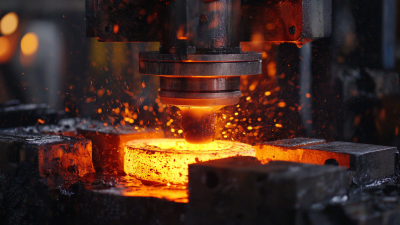
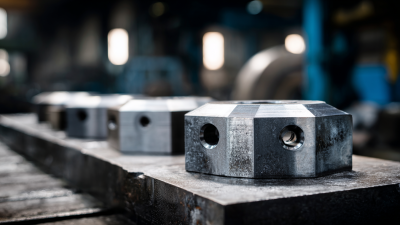
How to Choose Forging Machine Parts in 2026
Choosing Forging Machine Parts in 2026 is not simply a matter of matching dimensions or finding the lowest price. A mismatched bearing, clutch, or hydraulic seal can cause vibration, heat, and costly downtime. The right choice starts with the machine’s actual operating conditions: forging force, stroke rate, temperature, lubrication, and production hours. Small errors compound.
Market conditions matter, too. The World Steel Association’s October 2024 Short Range Outlook forecast global steel demand at 1,793 million tonnes in 2024 and 1,815 million tonnes in 2025. That forecast signals broad industrial activity, not guaranteed demand for every forging line. The International Energy Agency’s Energy Efficiency 2024 report also makes energy performance a relevant consideration for industrial operators. Buyers should therefore assess a part’s service life and operating impact, not just its purchase cost. A neat specification sheet can still mislead.
For reliable selection, compare drawings and material grades against the machine manual, then confirm tolerances, heat treatment, and compatibility with the exact model. Ask suppliers for inspection records, traceability, warranty terms, and realistic delivery times. Where failure could stop production, verify spare-part availability before ordering. Experienced maintenance teams can often spot fit or wear issues that a catalogue misses. Still, plant conditions vary, and no checklist replaces a qualified inspection. This guide explains how to evaluate Forging Machine Parts with practical criteria for performance, durability, safety, and long-term value.
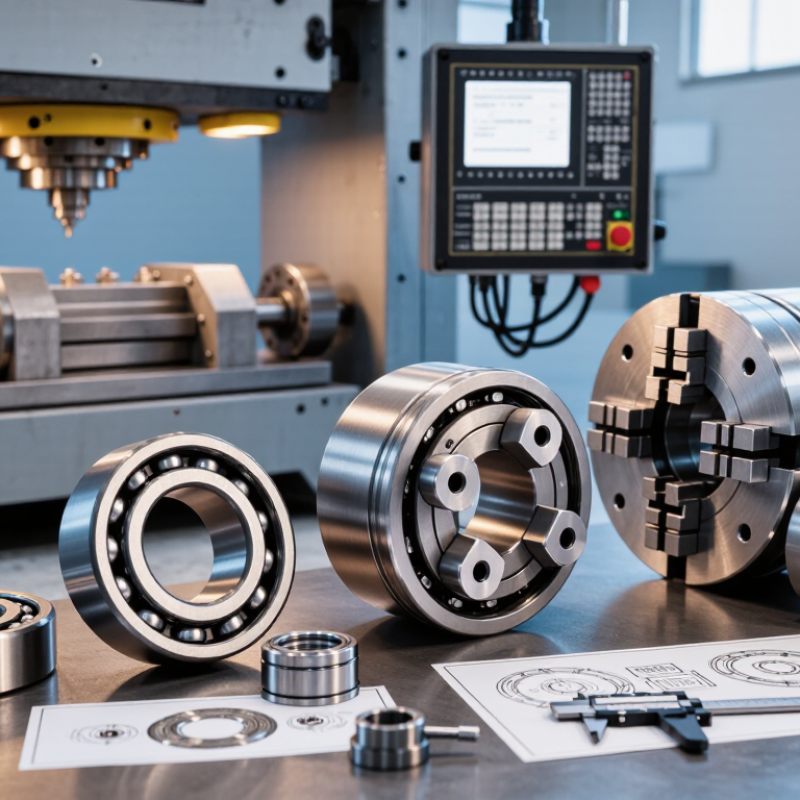
Assess Operating Conditions and Forging Machine Specifications
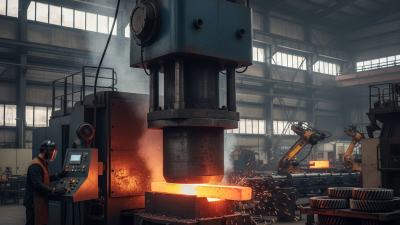
Assess the machine’s real operating envelope before selecting a replacement part. Record impact energy, stroke rate, load direction, cycle length, and peak temperature during production. A hammer component faces repeated shock; a press component may see sustained force and sliding wear. Heat changes everything. Check whether the part’s material, hardness, dimensions, and fit match the machine’s specification and the process. A tolerance that looks minor on paper can cause uneven contact, extra vibration, or premature cracking.
Inspect the actual environment, too. Scale, lubricant, cooling flow, dust, and alignment all affect service life. Compare measured conditions with the machine maker’s limits, then verify critical dimensions against drawings and maintenance records. The U.S. Department of Energy’s 2002 assessment estimated that motor-driven systems used about 68% of U.S. manufacturing electricity. That historical figure is not a forging-specific benchmark, but it shows why motor load, duty cycle, and drive compatibility deserve attention when choosing connected parts. Confirm ratings under the machine’s normal and peak loads, not just its idle condition. Keep one point open for review: field measurements can vary between shifts, so a single reading may mislead. Cite the measurement date and operating state in the maintenance record.
Identify the Part Type and Its Function
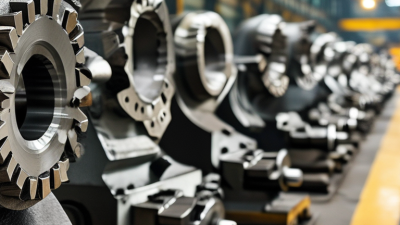
Identify the machine and operation before ordering a part. A closed-die press needs matched dies, guides, and ejectors; an open-die press relies more on tooling that controls workpiece position. Hammers and presses also impose different impact and load patterns. Check the part’s job, not just its name. A ram transfers force, while a die holder supports tooling and helps maintain alignment. Fit matters. Record the machine model, part dimensions, mounting points, stroke, and operating temperature. A catalog description alone may miss a critical detail.
The World Steel Association’s World Steel in Figures 2024 reports 1,892.2 million tonnes of crude steel production worldwide in 2023. That figure reflects the scale of steel use, but it does not determine which forging component your machine needs. Match the component’s material and geometry to its actual duty: repeated impact, sliding contact, heat, or sustained compression. For example, inspect ejector pins for scoring and bent tips; inspect guide components for uneven wear or excess clearance. Compare measurements with the machine’s service documentation, then confirm tolerances with a qualified technician. A worn part can look usable. I have to admit, visual checks alone are not enough.
Compare Materials, Heat Treatment, and Wear Resistance
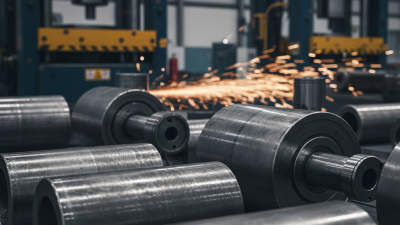
Choosing forging machine parts in 2026 starts with the job they must perform. A heavily loaded crank pin faces different demands from a guide that sees sliding contact. Alloy steel often suits high-impact service, while carbon steel may work for less demanding components. Material certificates and the machine’s load history help narrow the choice. Don’t select by hardness alone. A very hard surface can still crack if the core lacks toughness.
Heat treatment changes how a part handles stress and wear. Quenching and tempering can balance surface strength with a tougher interior, but results depend on the steel grade and process control. For a guide or die surface, case hardening may provide a wear-resistant layer while preserving a more resilient core. Check the specified hardness, treatment depth, and any signs of distortion. Small details matter. There is no perfect setting for every machine, and I’d treat a neat specification as a starting point, not proof of service life.
Tips: Match the material and treatment to the actual contact, load, and operating temperature. Ask how hardness was measured and where. Inspect worn parts for scoring, pitting, or uneven wear before ordering replacements; those marks can reveal alignment or lubrication problems. Keep the old part for comparison. A quick visual check can miss subsurface damage, so use qualified inspection when cracks or repeated failures appear.
Verify Dimensions, Compatibility, and Safety Standards
How to Choose Forging Machine Parts in 2026
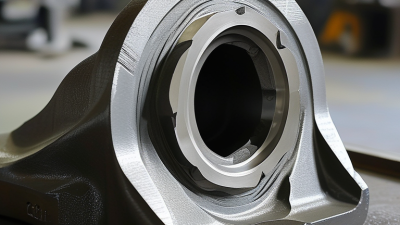
Verify dimensions before ordering a forging machine part. Measure shaft diameters, keyways, bolt spacing, and overall length with suitable tools. Check the machine drawing and the part’s stated tolerances, not just its headline measurements. Small errors matter. A few millimeters can affect alignment, vibration, or bearing life. If the old part is worn, its dimensions may not represent the original specification. Use the equipment manual or a verified drawing as your reference. Record measurements and note any uncertainty.
Compatibility goes beyond fit. Confirm the part’s material, operating temperature range, load rating, and connection type match the machine’s duty cycle. Ask for material or inspection documentation when the application requires it. Then review relevant safety standards and the machine maker’s installation guidance. Check that guards, fasteners, and emergency-stop access remain functional after replacement. A part that fits can still create a hazard. This check is easy to rush; it shouldn’t be. Document what you verified, and have a qualified technician review unclear specifications before installation. Even a careful inspection can miss something, so pause if the details do not agree.
Evaluate Suppliers, Traceability, and Total Ownership Cost
How to Choose Forging Machine Parts in 2026
A supplier’s polished quote tells only part of the story. Ask how parts are made, inspected, and matched to your machine’s specifications. For a replacement crankshaft or die holder, request material certificates, dimensional inspection results, and a clear part revision. Check that the records identify the production batch. Paperwork matters.
Traceability helps when a part wears early or fails inspection. Confirm that serial or batch numbers connect the delivered component to its material and inspection records. Ask how long those records remain available, and what happens if a label is missing. Check the details. A capable supplier should explain the process without relying on vague assurances. Still, documentation alone cannot prove consistent quality; compare it with sample inspection data and your own incoming checks.
Compare total ownership cost, not just purchase price. Include expected service life, installation time, maintenance needs, spare-part availability, and the cost of machine downtime. A lower-priced bearing may require more frequent replacement, while a longer lead time can leave a press idle. Cheap is not always cheap. Ask suppliers for realistic lead times and warranty terms, then check whether those promises fit your operating schedule. Estimates can be imperfect, so record assumptions and revise them after the part has run in production.