How to Choose the Right Forged Steel Parts for Your Project?
Choosing the right forged steel parts for your project is crucial for success. The forged steel parts industry has seen steady growth, with a projected market size of $28 billion by 2026, according to recent industry reports. These parts are renowned for their strength and durability, making them ideal for critical applications in various sectors.
Dr. Emily Carter, a leading expert in metallurgical engineering, emphasizes the importance of selecting appropriate materials. She states, "The quality of forged steel parts can make or break your project's integrity." Understanding the specific requirements for your project can significantly enhance performance and safety.
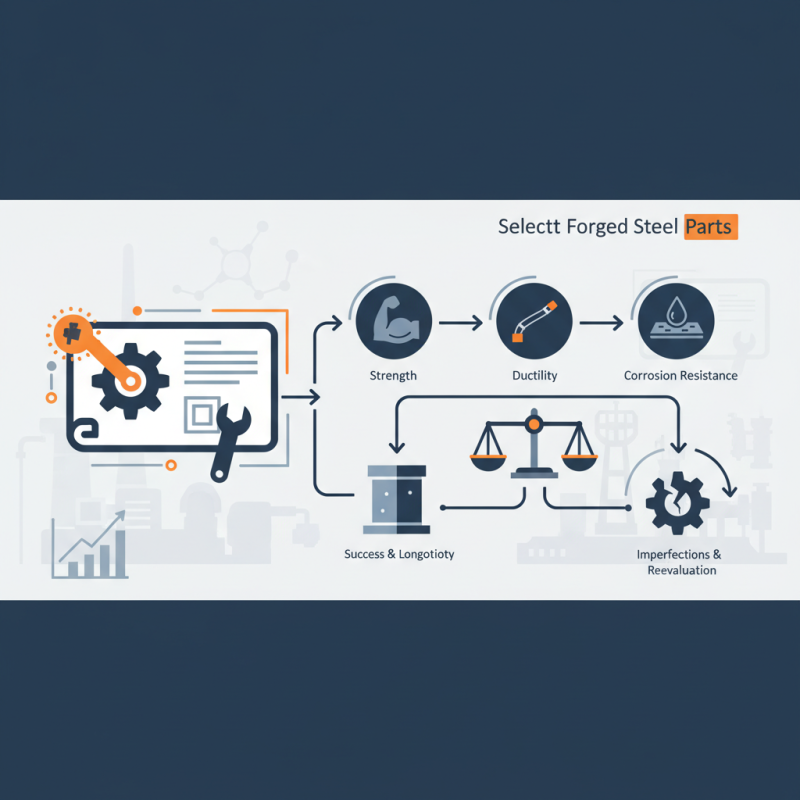
When selecting forged steel parts, consider aspects such as strength, ductility, and corrosion resistance. Each project has unique demands. Balancing these factors can lead to imperfections, which may require re-evaluation and adjustment. A thoughtful approach to material selection is essential to avoid potential failures and ensure longevity in your applications.
Understanding the Basics of Forged Steel Parts and Their Applications
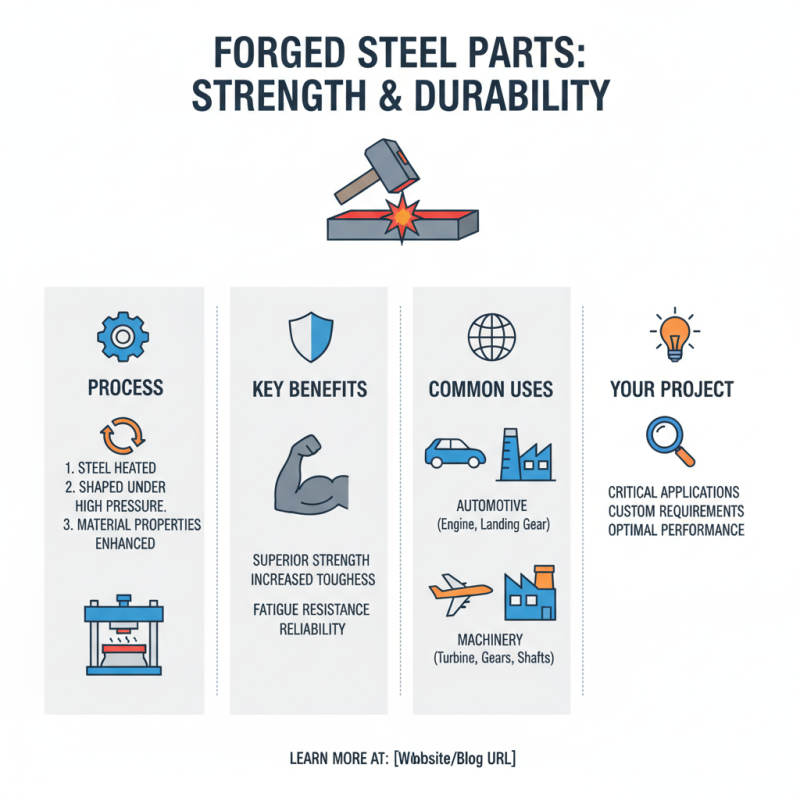
Forged steel parts are essential in various industries due to their strength and durability. These components are made by shaping steel under high pressure. This process enhances the material’s properties, making it more reliable for critical applications. Common uses include automotive, aerospace, and machinery sectors. Understanding the specific requirements of your project is key.
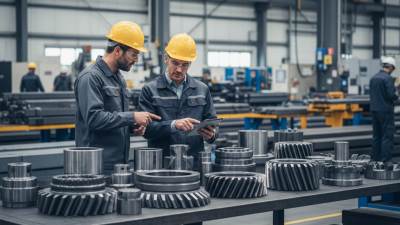
Different types of forged steel parts exist. Some include gears, shafts, and valves. Each part has unique characteristics suited for specific tasks. For instance, gears must withstand high torque. They need precision in design. However, not every project can afford the best. Cost and availability sometimes dictate choices. Moreover, flaws can emerge from improper forging methods. Regular inspections can help identify potential issues.
Choosing the right forged steel parts requires thought. Consider the application's demands. Consult with experts if unsure. It’s crucial to balance quality with practicality. Mistakes can lead to project delays. Remember, the right part can enhance performance. But the wrong one could cause failures. Each choice matters in achieving success.
Key Factors to Consider When Selecting Forged Steel Components
When selecting forged steel components for your project, certain factors play a crucial role. The material's mechanical properties are paramount. According to a recent industry report, forged steel often boasts superior strength and toughness compared to cast alternatives. This makes it ideal for high-stress applications, such as in automotive and aerospace industries. However, not every project requires such robust materials.
Another key factor is the manufacturing process. Forging can produce parts with fewer internal defects. However, it may come with higher production costs. Companies must weigh the benefits against budget constraints. Understanding the specific forging process—open-die vs. closed-die—can influence your choice. Each has distinct advantages and applicable uses.
Size and tolerance are also critical considerations. Forged parts can achieve tighter tolerances, often necessary in critical applications. However, larger components can increase lead times and costs. Be prepared for potential trade-offs. For example, while a tighter tolerance might enhance performance, it can also complicate manufacturing. Thus, careful deliberation is essential in the selection process.
Assessing Material Properties for Optimal Performance in Forged Steel
When choosing forged steel parts, understanding material properties is critical. Forged steel is known for its superior strength and durability. However, not all forged steel is created equal. Factors like alloy composition and manufacturing processes can significantly affect performance.
A recent report from the Forging Industry Association indicates that carbon content in steel impacts tensile strength. For example, 0.4% carbon can increase strength by approximately 20%. Yet, higher carbon content can reduce ductility. Balancing these aspects is essential. Another study found that the microstructure of the steel influences toughness. Forged parts with fine-grained structures typically perform better under stress.
It's important to acknowledge that the selection process involves trade-offs. Even the best steel type may not perform optimally in poor designs or unsuitable applications. Sometimes, manufacturers overlook these details, leading to failures. Ensuring that the forged parts match the application requirements is vital for optimal performance. Understanding these material properties allows engineers to make informed choices, leading to better project outcomes.
Analyzing Cost vs. Quality: Making Informed Choices for Your Project
When choosing forged steel parts, cost and quality often dance a fine line. A recent industry report notes that 60% of manufacturers prioritize cost, but this can lead to compromised quality. It's vital to understand that cheaper parts may not withstand the pressures of demanding applications. For instance, components used in high-stress environments require materials with a higher tensile strength. Selecting lower-quality parts could result in unexpected failures, triggering costly replacements and downtime.
The balance between cost and quality must be carefully analyzed. Reports show that investing in higher-quality parts can reduce long-term operational costs. Quality parts can last 30% longer in demanding applications. However, this means higher initial costs, which can deter some buyers. It's essential to weigh these factors against project requirements and operational realities. Sometimes, opting for a less expensive part may seem attractive but could lead to greater expenses down the line. Reflecting on previously failed projects can guide future decisions.
Engaging with industry experts may provide deeper insights. With the right information, you can avoid pitfalls. Consider your project's specific demands and the environments where the parts will operate. Making informed choices is crucial to your success in the long run.
How to Choose the Right Forged Steel Parts for Your Project? - Analyzing Cost vs. Quality: Making Informed Choices for Your Project
| Dimension |
Material Grade |
Cost per Unit ($) |
Tensile Strength (MPa) |
Applications |
| 50mm x 50mm x 5mm |
AISI 4140 |
20 |
680 |
Automotive Components |
| 75mm x 75mm x 10mm |
AISI 1045 |
25 |
600 |
Construction Machinery |
| 100mm x 100mm x 15mm |
AISI 8620 |
30 |
550 |
Gearbox Applications |
| 25mm x 25mm x 3mm |
AISI 316 |
15 |
480 |
Marine Applications |
| 40mm x 40mm x 8mm |
AISI 4130 |
22 |
700 |
Oil and Gas Industry |
Common Mistakes to Avoid When Choosing Forged Steel Parts
Choosing forged steel parts for your project can be daunting. Many make common mistakes that lead to costly errors. One major pitfall is overlooking the importance of material specifications. According to a recent industry report, nearly 30% of failed projects stem from improper material selection. This highlights the need for rigorous evaluation of properties like tensile strength and corrosion resistance.
Tip: Always review the part's specifications. Understand what you need based on your project requirements. Failure to do this can derail timelines and budgets.
Another mistake is assuming all forged parts are the same. Variations in manufacturing processes can significantly affect quality. A 2022 survey found that 22% of engineers underestimated the impact of these variations. It's essential to consider the manufacturing method used, whether it's closed-die or open-die forging.
Tip: Ask manufacturers about their processes. Get detailed insights to avoid unexpected compromises in quality. Recognizing these nuances can save time and resources down the line.