How to Choose the Best Cold Heading Die for Your Needs?
Choosing the right Cold Heading Die is crucial for manufacturing efficiency. A well-designed die can significantly improve production quality. However, selecting one isn’t straightforward. Many factors come into play.
It’s essential to assess your specific needs. Do you require high precision or mass production capabilities? Understanding your requirements can help narrow down options. Cold Heading Dies vary in material, design, and compatibility. Each of these factors can impact the end product's performance.
Expert advice often emphasizes the importance of quality. A poorly chosen die can lead to flawed products and wasted resources. Customers frequently overlook these details, risking long-term consequences. Aim for a balance of cost and quality when making your choice. The right Cold Heading Die can enhance both productivity and product reliability.
Understanding Cold Heading Dies: A Comprehensive Overview
Cold heading dies are vital tools in the manufacturing of fasteners and other metal components. They shape the material under high pressure, creating precise and uniform parts. Understanding different types of dies can significantly impact your production efficiency. Various designs cater to specific materials and diameters, affecting strength and durability. It's essential to analyze the properties of the steel or metal used to ensure compatibility with your chosen die.
Choosing a cold heading die requires careful consideration. Factors like material hardness, die design, and maintenance must align with your production goals. For instance, a die with a complex profile may enhance precision but can also demand more frequent maintenance. Users often overlook the importance of routine checks, which can lead to unexpected downtimes. Production teams should document die performance and identify recurring issues.
The learning curve associated with cold heading dies is steep. Newcomers to this field might find themselves overwhelmed by technical specifications. Engaging with manufacturers or experienced engineers can provide valuable insights. Trial and error play a crucial role in refining die selection, but it's essential to learn from setbacks. Open discussions in manufacturing forums can enhance knowledge and improve practices.
Key Factors to Consider When Selecting Cold Heading Dies
Choosing the right cold heading die is crucial for production efficiency. Multiple factors influence this decision. Understanding these factors can save time and resources.
Material type is paramount. Different materials like steel or aluminum require specific die designs. The die's hardness also matters. Harder dies last longer but may be less forgiving with certain materials. It's essential to balance durability and flexibility based on your needs.
Die geometry is another key consideration. Features such as contour and shape can significantly affect how materials behave during the heading process. It's worth noting that small variations can lead to significant differences in the final product. Always evaluate your specific application before making a choice. Balancing these elements is challenging but necessary to ensure optimal results. Avoiding shortcuts in selection could save you from future issues.
Types of Cold Heading Dies and Their Applications
When selecting cold heading dies, understanding the types available is crucial. Cold heading dies generally fall into various categories, including heading dies, thread rolling dies, and broaching dies. Each type serves distinct functions based on the intended application.
Heading dies are primarily used for producing fasteners like screws and bolts. They create a precise shape by compressing metal at room temperature. Thread rolling dies, on the other hand, are designed for forming threads. They often involve a more complex process. This produces intricate thread patterns while maintaining high strength levels.
Broaching dies are less common but play a vital role in specialty fasteners. They can achieve unique shapes that standard dies cannot easily replicate. Choosing the right type should align with your specific project needs. Misalignment can lead to inefficiencies or excessive costs. Being informed about these nuances can greatly enhance your production quality.
How to Choose the Best Cold Heading Die for Your Needs?
| Type of Cold Heading Die |
Material Used |
Common Applications |
Advantages |
| Standard Dies |
Tool Steel |
Bolts, Screws, and Fasteners |
Cost-effective, Versatile |
| Custom Dies |
Carbide |
Specialized Shapes and Sizes |
High Precision, Tailored Solutions |
| Multi-Stage Dies |
High-speed Steel |
Complex Parts Manufacturing |
Increased Efficiency, Reduced Cycle Time |
| Progressive Dies |
Alloy Steel |
High Volume Production |
Lower Labor Costs, High Output |
| Forming Dies |
Carbide-coated |
Electronics, Automotive |
Durability, Excellent Finish |
Evaluating Material and Design for Optimal Performance
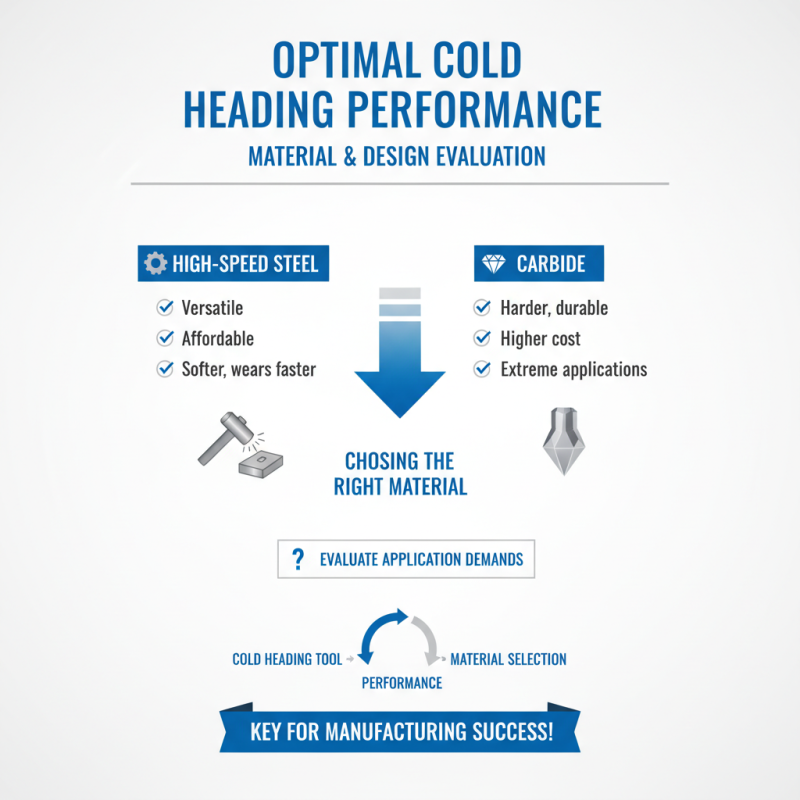
Choosing the right cold heading die is crucial for achieving optimal performance in your manufacturing process. Material selection plays a significant role in this decision. Common materials include high-speed steel and carbide. High-speed steel is versatile and affordable, but it may wear out faster. Carbide, on the other hand, offers greater hardness and durability. However, it comes at a higher cost. Evaluating the specific demands of your application will help you determine which material fits your needs best.
Design is another critical factor to consider. A die's design affects its ability to produce precise shapes. Look for designs that minimize friction and ensure uniform pressure distribution. Complex shapes may require more intricate designs. These often lead to higher production costs and longer lead times. Choosing a simple yet effective design could be more beneficial for routine projects.
Evaluating the die’s performance should also involve testing prototypes. Monitor their efficiency under real working conditions. Note the wear pattern and how often you need to replace them. This analysis helps you refine your choices and optimize future investments. While it’s easy to get drawn to the latest designs, sometimes established options perform just as well. Finding the balance between innovation and practicality remains essential.
Maintenance Tips for Prolonging the Life of Cold Heading Dies
Maintaining cold heading dies is crucial for optimizing their lifespan and performance. These dies, which are central to manufacturing fasteners and similar products, undergo significant wear during use. A recent industry report indicates that proper maintenance can increase die life by up to 30%. Regular inspections are essential to identify any signs of wear or damage early on.
Tip: Clean the dies regularly. Residue build-up can lead to surface abrasive damage, which shortens their life. Utilizing soft brushes and non-corrosive solutions works best. Implement a routine schedule for inspections, focusing on critical wear areas. Tracking usage patterns can provide insights into when maintenance is needed.
Another key to prolonging die life is proper lubrication. Insufficient lubrication can lead to overheating and premature failure. A study published in the Journal of Materials Processing Technology emphasizes that consistent lubrication practices lead to a 25% decrease in wear rates. Ensure the lubrication system is functioning correctly, and always use the recommended lubricant types.
Tip: Consider environmental conditions. Dust and moisture can affect both lubrication and die materials. Store dies in a controlled environment when not in use. Small changes in handling procedures can make a significant difference in their longevity. Always be proactive in maintenance to avoid costly downtime due to failure.
Cold Heading Die Maintenance and Lifespan