China Top 10 Forged Aluminum Parts Manufacturers You Should Know?
In today's competitive market, the demand for high-quality Forged Aluminum Parts is ever-growing. These components are essential in various industries, including automotive, aerospace, and construction. Understanding the top manufacturers in China can provide insights into their capabilities and innovations.
China has emerged as a leading producer of Forged Aluminum Parts. The country boasts advanced technology and skilled labor. However, not all manufacturers meet the same standards. Some companies struggle with quality control and consistency. This can impact the reliability of the final products.
Explore the top ten forged aluminum parts manufacturers in China. These companies have proven their expertise and reliability over the years. We will examine their specialties, innovations, and how they stand out in an evolving industry. Knowing these key players can guide businesses in making informed decisions.
Overview of the Forged Aluminum Parts Industry in China
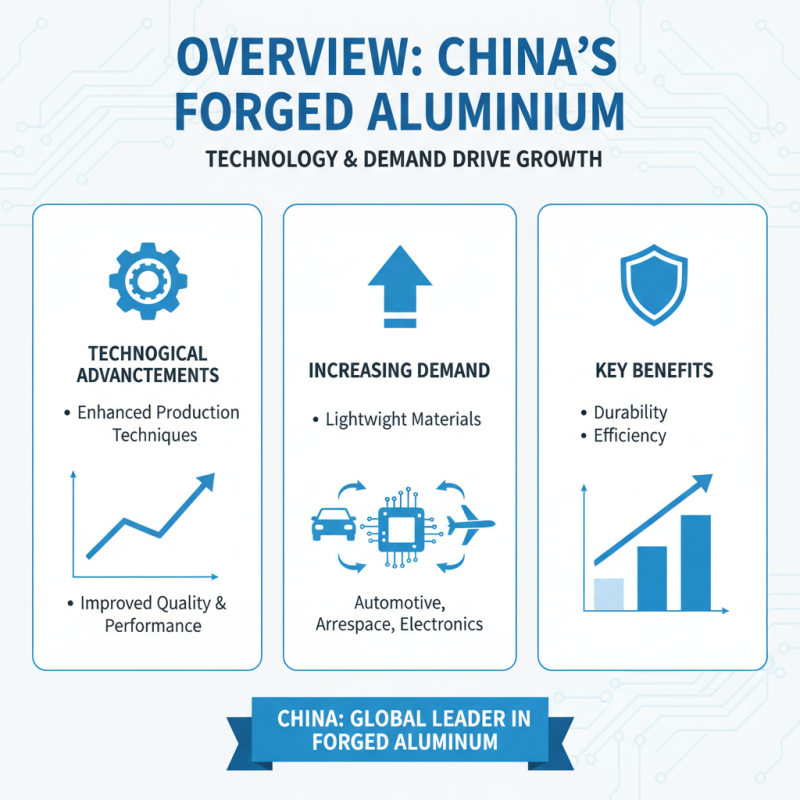
The forged aluminum parts industry in China has seen significant growth in recent years. This surge is largely due to advancements in technology and an increasing demand for lightweight materials in various sectors. Industries such as automotive, aerospace, and electronics benefit greatly from the durability and efficiency of forged aluminum. Manufacturers are focusing on enhancing production techniques to improve quality and performance.
However, challenges remain in maintaining consistent quality across the board. While many manufacturers excel, discrepancies in workmanship can lead to issues. Some businesses struggle with outdated machinery, affecting their ability to compete. Looking at the industry as a whole, it’s evident that innovation is crucial.
China's commitment to sustainable practices influences market trends. Environmental regulations are becoming stricter, pushing manufacturers to adopt greener processes. This transition, though necessary, requires time and investment. It’s a learning curve that many businesses are navigating, leading to both successes and setbacks. Understanding these complexities is vital for anyone interested in the industry.
Key Factors Driving Growth in China's Forged Aluminum Parts Sector
China's forged aluminum parts sector is experiencing notable growth. Several factors contribute to this trend. The automotive and aerospace industries drive demand for lightweight, durable materials. Companies are increasingly focused on reducing the weight of their products to improve efficiency.
Technological advancements are enhancing production capabilities. Automated processes lead to consistent quality and reduced manufacturing costs. However, challenges remain. Many manufacturers struggle to keep up with rapid changes in market requirements. Balancing innovation with cost-effectiveness is crucial.
Environmental sustainability is another key factor. There is a growing emphasis on eco-friendly practices. Manufacturers must adapt to these demands to remain competitive. The sector has room for improvement in terms of recycling processes and waste management. As the industry evolves, continuous adaptation will be necessary for success.
Top 10 Manufacturers of Forged Aluminum Parts in China: A Detailed Analysis
The forged aluminum parts industry in China is rapidly evolving. According to recent market reports, the demand for forged aluminum is expected to grow by 5% annually over the next five years. This is driven by the automotive and aerospace sectors, which increasingly favor lightweight materials for improved fuel efficiency.
China's manufacturers are facing intense competition. Many companies are upgrading their technology to enhance production quality. However, the variation in manufacturing standards can lead to inconsistencies. Some producers may still rely on outdated methods, resulting in products that do not meet stringent specifications. These shortcomings can affect overall client satisfaction.
Cost-effective production is a double-edged sword. While it allows for competitive pricing, it often sacrifices quality control. Not all manufacturers have implemented robust quality assurance measures. Industry experts note the importance of maintaining quality while scaling production. Forged aluminum parts require a careful balance between cost and standards to succeed in the global market.
Comparison of Manufacturing Techniques Used by Leading Aluminum Forgers
In the realm of forged aluminum manufacturing, various techniques stand out. Industry reports indicate that about 69% of leading aluminum forgers utilize the die forging method. This technique allows for high production rates while maintaining structural integrity. Die forging is particularly effective for components requiring strength and durability.
Hot forging and cold forging are also prevalent. Hot forging involves heating aluminum to its recrystallization temperature. This enhances malleability and reduces material stress. According to the Aluminum Association, this process can improve the mechanical properties of the final product significantly. Cold forging, on the other hand, is energy-efficient and produces tighter tolerances but may require more sophisticated machinery.
However, these methods are not without challenges. Die wear can increase production costs and time, prompting manufacturers to consider alternative alloys. Additionally, achieving consistent quality across batches remains a critical focus. Many manufacturers are investing in advanced technologies to streamline these processes and reduce defects. As the industry evolves, embracing these innovations will be essential for maintaining competitiveness.
Market Trends and Projections for Forged Aluminum Parts in China Industry
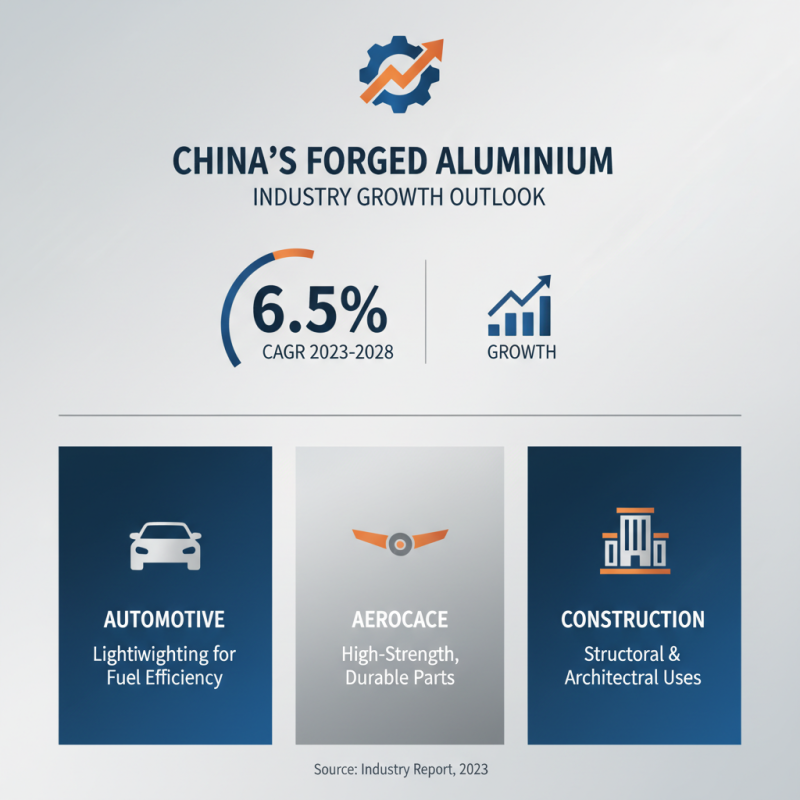
The forged aluminum parts industry in China is experiencing significant growth. According to a recent report, the market is projected to expand at a compound annual growth rate (CAGR) of around 6.5% from 2023 to 2028. This growth is driven by increased demand in various sectors, including automotive, aerospace, and construction. The automotive sector, in particular, is a major contributor, thanks to the shift towards lightweight materials for better fuel efficiency.
However, challenges persist. Competition remains fierce among manufacturers, leading to pricing pressures. Many companies struggle to maintain profit margins while investing in advanced technologies and sustainable practices. A survey found that only 45% of manufacturers believe they are adequately prepared for future challenges. Additionally, fluctuating raw material costs can impact production stability. Companies must continuously innovate and adapt to stay relevant in this evolving market.
Investments in research and development are crucial. Many manufacturers are beginning to focus on automation and smart manufacturing. Although automation can enhance efficiency, the initial investment is significant. Some firms hesitate to fully embrace these technologies due to budget constraints. Balancing immediate costs with long-term gains remains a critical issue that industry leaders must address.