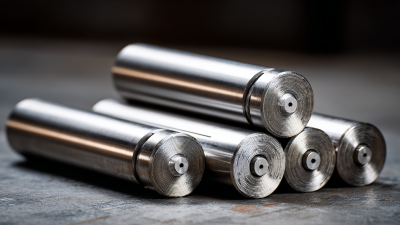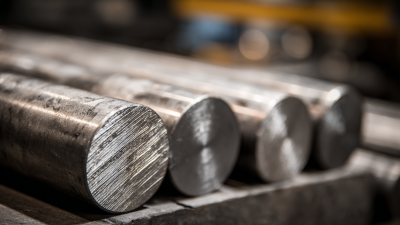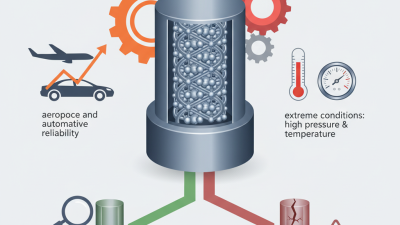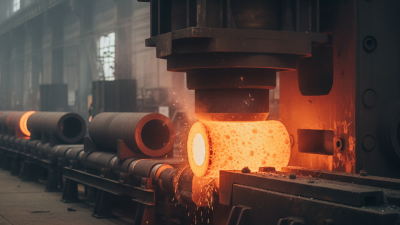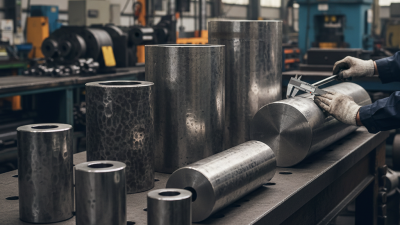
Choosing the right Forged Cylinders manufacturer is not a simple ranking exercise. It requires evidence from materials, forming methods, testing, and field performance.
A serious comparison should examine steel or aluminum grade, forging temperature, wall-thickness control, heat treatment, and traceability. It should also consider hydrostatic testing, ultrasonic inspection, fatigue resistance, and compliance with recognized pressure-vessel standards. These details matter. A cylinder may look flawless under bright factory lights, yet fail a demanding cycle test if its grain structure or heat treatment is inconsistent.
Dr. George E. Totten, a respected authority on steel heat treatment and industrial manufacturing, has often stressed the importance of process control. His principle is worth remembering: “Heat treatment is a science, but it is also an art.” That observation applies directly to Forged Cylinders, where small temperature variations can influence strength, toughness, and service life.
This article examines leading manufacturers across Asia, Europe, North America, and other major production regions. It considers production capacity, engineering experience, certification practices, inspection depth, customization, and customer support. Company size alone does not prove technical excellence. Nor does a polished website.
There is room for doubt.
Public information can be incomplete, and supplier claims may not reveal rejection rates or long-term cylinder performance. Therefore, buyers should request test records, material certificates, audit results, and references from comparable applications. The strongest manufacturers welcome those questions. They understand that reliability is built inside the metal, then demonstrated through disciplined evidence.
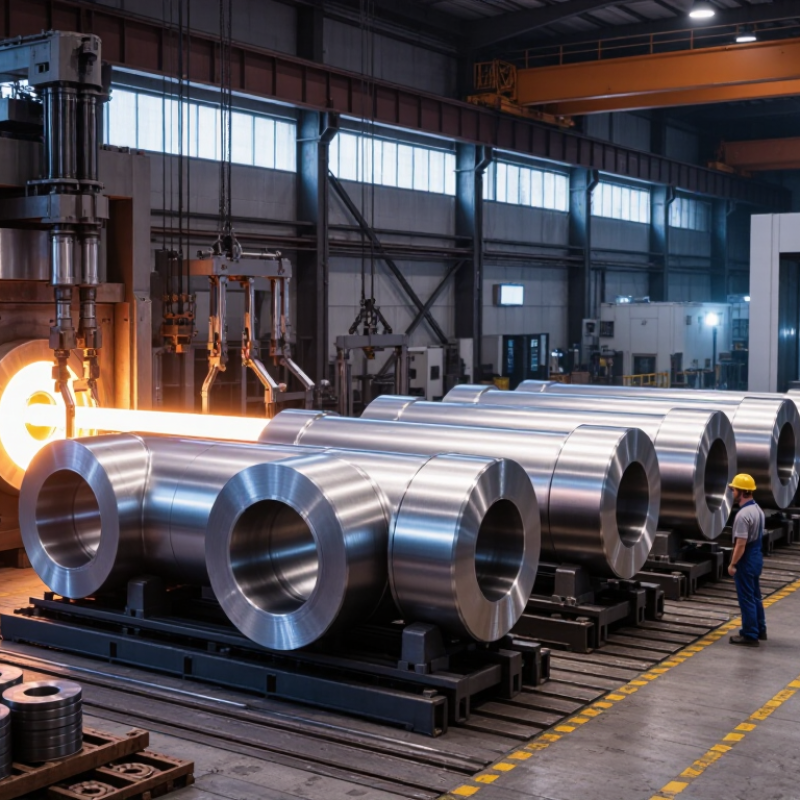
Forged cylinders are hydraulic actuators made from steel shaped under intense pressure, usually while heated. This process can improve grain flow, impact resistance, and fatigue performance compared with some cast alternatives. However, “forged cylinder” does not always mean every part is forged. The barrel, rod, head, and mounting ends may use different manufacturing methods.
They convert hydraulic pressure into controlled linear movement. You can find them lifting excavator arms, tilting agricultural tools, steering heavy vehicles, and operating industrial presses. Mining equipment demands thick walls and reliable seals. Marine machinery adds corrosion concerns. Small design errors still matter. A poorly finished rod can damage seals quickly.
Mordor Intelligence estimated the global hydraulic cylinder market at about USD 14.4 billion in 2024, with continued growth expected through 2029. That figure covers hydraulic cylinders generally, not forged units alone. The distinction is important when comparing worldwide manufacturers. Buyers should examine forging traceability, heat-treatment records, fatigue testing, pressure ratings, and compliance with standards such as ISO 6020/2. Field experience also shows that sealing systems and surface coatings often determine service life more than forging alone. Performance claims need independent test evidence. Not every expensive cylinder is the strongest choice.
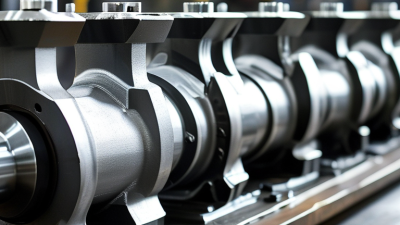
Evaluating the world’s leading forged cylinder manufacturers requires more than comparing prices or production capacity. The ISO Survey 2022 recorded 1,265,216 valid ISO 9001 certificates worldwide. Yet certification alone cannot prove cylinder reliability. Buyers should examine process controls, audit findings, and corrective-action records.
Material traceability is essential. Each cylinder should connect its heat number to forging, heat treatment, machining, and final inspection records. Independent laboratories should verify tensile strength, impact resistance, dimensional accuracy, and ultrasonic results. ASME Boiler and Pressure Vessel Code Section VIII and EN 13445 provide recognized pressure-vessel benchmarks. Manufacturers meeting these requirements demonstrate stronger technical discipline.
Performance data matters most. Ask for fatigue-life testing, burst-pressure results, wall-thickness mapping, and rejection rates. A credible supplier explains test methods and sampling frequencies clearly. It should also report warranty claims and field failures, not only successful tests. That detail builds trust.
Experience remains difficult to measure. Visit the production floor, inspect calibration labels, and question operators about defect prevention. A polished brochure proves little. I would still question unusually perfect performance figures. Independent verification, documented engineering changes, and stable delivery records provide better evidence. Suppliers should also show how they manage steel quality, forging temperature, heat-treatment variation, and traceability across multiple facilities. These practical details separate proven capability from marketing language.
When buyers ask which companies are the top forged cylinder manufacturers worldwide, the answer depends on application, pressure, and production scale. The strongest suppliers usually operate certified forging plants, precision machining lines, and dedicated inspection laboratories. They produce hydraulic, gas, and heavy-equipment cylinders from controlled steel grades.
Look for manufacturers with documented forging temperatures, ultrasonic testing, and traceable heat numbers. A reliable supplier can show dimensional reports, pressure-test records, and coating data for each production batch. Experienced engineering teams also review rod buckling, seal compatibility, fatigue cycles, and mounting loads before quoting. This practical review matters more than a polished catalog.
Ask for samples.
The leading companies often serve construction, mining, energy, marine, and industrial automation markets. They can customize bore diameter, stroke length, ports, surface hardness, and corrosion protection without weakening production control. Large regional manufacturers may offer shorter delivery routes, while global groups can provide wider service networks and multi-site capacity. Neither option is automatically better. No ranking is perfect; some suppliers publish excellent test data but provide slow technical support. Others respond quickly but reveal little about process control. My assessment would favor transparent records, repeatable testing, skilled forging personnel, and a clear warranty process.
Top forged cylinder manufacturers are best compared through measurable performance, not marketing language. Leading producers often use closed-die forging, controlled heat treatment, and computer-monitored machining. These methods improve grain flow and dimensional accuracy. Some facilities operate presses exceeding 10,000 tons, while others focus on smaller, highly customized cylinders. Technology matters, but process discipline matters more. A modern press cannot correct poor billet preparation or weak inspection procedures.
Quality depends on traceability from steel receipt to final testing. Reliable manufacturers record chemical composition, forging temperature, hardness, and ultrasonic inspection results. They may also perform magnetic-particle testing and pressure verification when suitable for the cylinder design. Capacity includes more than annual tonnage. It covers tooling availability, machining range, delivery stability, and the ability to repeat specifications across multiple production batches. In practice, a smaller plant may outperform a larger one on complex cylinders. That comparison is easy to miss. Public capacity figures can also change, so buyers should request current records and sample documentation.
Tips: Ask for inspection reports, material certificates, and realistic lead times. Check whether engineers review drawings before quoting. Visit the production site when possible. Look for clean heat-treatment records and clearly marked parts. Do not judge quality from surface polish alone. It can hide deeper process weaknesses. A supplier’s response to a difficult technical question often reveals more than a polished brochure. Capability claims should be tested against recent, comparable projects.
| Comparison Dimension | Manufacturer Profile A East Asia |
Manufacturer Profile B Western Europe |
Manufacturer Profile C North America |
Manufacturer Profile D Central Europe |
Manufacturer Profile E South Asia |
|---|---|---|---|---|---|
| Primary Market Position | High-volume supplier for industrial hydraulic and mobile-equipment cylinders | Premium supplier focused on engineered hydraulic systems and demanding industrial applications | Large-scale supplier serving construction, energy, mining, and heavy machinery markets | Specialist supplier for high-pressure, high-temperature, and precision applications | Cost-competitive supplier serving standard and customized hydraulic-cylinder programs |
| Typical Forging Process | Closed-die and open-die forging, followed by CNC machining and heat treatment | Open-die forging and precision machining with tightly controlled process documentation | Open-die forging, ring forging, deep-hole machining, and integrated assembly | Closed-die forging and precision machining for repeatable medium-volume production | Open-die and closed-die forging with CNC machining and outsourced or in-house heat treatment |
| Typical Cylinder Bore Range | 40–1,000 mm | 50–1,200 mm | 75–1,500 mm | 40–800 mm | 40–900 mm |
| Typical Stroke Range | 100–8,000 mm | 150–10,000 mm | 200–12,000 mm | 100–8,000 mm | 100–7,000 mm |
| Typical Operating Pressure Capability | 160–350 bar, with higher-pressure designs available | 250–700 bar for specialized hydraulic applications | 210–700 bar, depending on design and service conditions | 250–500 bar for engineered applications | 160–350 bar, with project-specific high-pressure options |
| Common Cylinder Materials | Carbon steel, alloy steel, stainless steel, and corrosion-resistant grades | Alloy steel, stainless steel, duplex stainless steel, and nickel-alloy options | Carbon steel, chrome-molybdenum steel, stainless steel, and application-specific alloys | Alloy steel, stainless steel, and high-strength quenched-and-tempered grades | Carbon steel, alloy steel, stainless steel, and selected wear-resistant grades |
| Surface and Wear Protection | Hard chrome plating, thermal spraying, induction hardening, and corrosion-resistant coatings | Hard chrome plating, HVOF coatings, ceramic coatings, and engineered surface treatments | Hard chrome plating, nickel-based coatings, thermal spray, and stainless overlay options | Hard chrome, induction hardening, nitriding, and specialized anti-corrosion treatments | Hard chrome plating, induction hardening, and standard industrial coating systems |
| Machining and Dimensional Control | Large CNC lathes, deep-hole boring, honing, and automated inspection for repeat orders | High-precision CNC machining, robotic measurement, and detailed capability studies | Heavy-duty CNC equipment, deep-hole boring, honing, and large-part metrology | Precision CNC machining, automated gauging, and strong process repeatability | CNC turning, boring, honing, and inspection suitable for standard tolerance classes |
| Typical Bore Surface Finish | Approximately Ra 0.2–0.8 μm after honing | Approximately Ra 0.1–0.4 μm after precision honing | Approximately Ra 0.2–0.8 μm after honing | Approximately Ra 0.1–0.4 μm after precision honing | Approximately Ra 0.2–0.8 μm after honing |
| Quality and Testing Capabilities | Dimensional inspection, pressure testing, surface inspection, and selected ultrasonic testing | Extensive dimensional inspection, hydrostatic testing, ultrasonic testing, magnetic-particle testing, and traceability | Hydrostatic and functional testing, ultrasonic testing, magnetic-particle testing, and documented material traceability | Advanced dimensional control, pressure testing, ultrasonic testing, and non-destructive examination | Dimensional inspection, pressure testing, visual examination, and non-destructive testing when specified |
| Typical Quality-System Framework | Quality systems commonly aligned with ISO 9001; automotive or sector-specific systems may be available | ISO 9001-based systems with strong engineering documentation and sector-specific compliance procedures | ISO 9001-based systems, with additional project, energy, and heavy-equipment requirements where applicable | ISO 9001-based systems supported by rigorous process qualification and inspection planning | ISO 9001-based systems, with certification scope varying by facility and product line |
| Customization Capability | High | Very High | Very High | High | High for standard and moderately complex designs |
| Large-Part Capacity | Large forgings and cylinders up to approximately 20–60 tonnes, depending on facility | Large forged components generally up to approximately 30–100 tonnes, depending on equipment | Large forgings and cylinders commonly up to approximately 50–150 tonnes at integrated facilities | Medium-to-large components generally up to approximately 20–60 tonnes | Medium-to-large components generally up to approximately 10–50 tonnes |
| Production Model | Strong serial-production capability with flexible batch manufacturing | Engineering-to-order and low-to-medium-volume production | Combination of high-volume programs and large engineered projects | Low-to-medium-volume engineered production with repeatable precision manufacturing | Batch production with competitive tooling and machining economics |
| Relative Technology Rating | ★★★★☆ | ★★★★★ | ★★★★★ | ★★★★☆ | ★★★☆☆ |
| Relative Quality-Control Rating | ★★★★☆ | ★★★★★ | ★★★★★ | ★★★★☆ | ★★★☆☆ |
| Relative Capacity Rating | ★★★★★ | ★★★★☆ | ★★★★★ | ★★★☆☆ | ★★★★☆ |
| Best Fit for Buyers | High-volume orders, mobile hydraulics, construction equipment, and standard custom cylinders | Critical-duty systems, marine equipment, energy infrastructure, and highly documented projects | Very large cylinders, mining equipment, heavy presses, energy projects, and demanding field service | Precision industrial equipment, high-pressure systems, and specialized machinery | Cost-sensitive industrial programs, replacement cylinders, and medium-complexity custom products |
| Notes: The figures above are industry-based indicative ranges for anonymized manufacturer profiles rather than audited company-specific claims. Actual capability depends on forging presses, heat-treatment equipment, machining centers, material grade, cylinder design, applicable standards, inspection scope, and production scheduling. | |||||
Selecting a forged cylinder manufacturer requires more than comparing quoted prices. Buyers should examine forging capacity, material control, and documented inspection practices. Ask for heat-treatment charts, chemical reports, and complete material traceability. Each cylinder should connect to a batch number. That detail matters. Request dimensional records for bore diameter, wall thickness, straightness, and surface finish. Independent ultrasonic testing can reveal internal flaws that visual checks may miss. Confirm the inspection standard, equipment calibration, and technician qualifications before approval. A factory tour can clarify whether machining, testing, and packing occur under controlled conditions. Photos help, but they are not proof.
Delivery performance deserves equal attention. Review realistic lead times, production capacity, and contingency plans for steel shortages or equipment downtime. A supplier should explain how it manages engineering changes and nonconforming parts. Clear drawings, signed specifications, and sample approval reduce costly misunderstandings. Buyers should also check export packaging, corrosion protection, and storage guidance. In practical purchasing work, responsive communication often predicts smoother projects than a low initial quote. Still, this judgment can be imperfect. A confident sales team cannot replace verified records. Request references for similar cylinder sizes, pressures, and operating temperatures. Evaluate warranty terms, failure reporting, and technical support after delivery. The strongest choice is usually the manufacturer that explains its limits honestly. That honesty is valuable.
A practical buyer-weighting model for evaluating forged-cylinder manufacturers. The criteria are aligned with commonly used requirements for seamless steel and composite gas cylinders, including design qualification, production control, traceability, inspection, and lifecycle support.
Scores use a 1–5 procurement-priority scale, where 5 indicates the highest priority. Buyers should verify applicable certifications, design approvals, hydrostatic testing, material traceability, inspection records, and compliance with the regulations of the destination market.