Leave Your Message

Why Choose Forged Steel Parts for Industrial Applications?

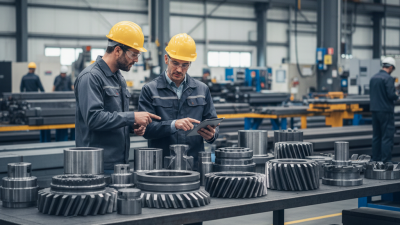
Industrial equipment rarely fails at a convenient moment. A cracked shaft, worn gear, or distorted valve body can stop a production line and trigger costly repairs. Forged Steel Parts are often selected for demanding service because controlled deformation can align the steel’s grain flow with a component’s shape. The result may support strength and fatigue performance, but only when the alloy, design, forging route, and heat treatment are properly matched.

The scale of steel use provides useful context. The World Steel Association’s World Steel in Figures 2024 reports 1,892.2 million tonnes of crude steel production worldwide in 2023. That figure describes steel production, not forged output. Still, it shows how central steel remains to industrial supply chains. In applications exposed to repeated loads, vibration, or impact, engineers assess more than material price. They examine fatigue life, toughness, dimensional consistency, and inspection requirements. Forging can be a strong option. It is not a universal answer.

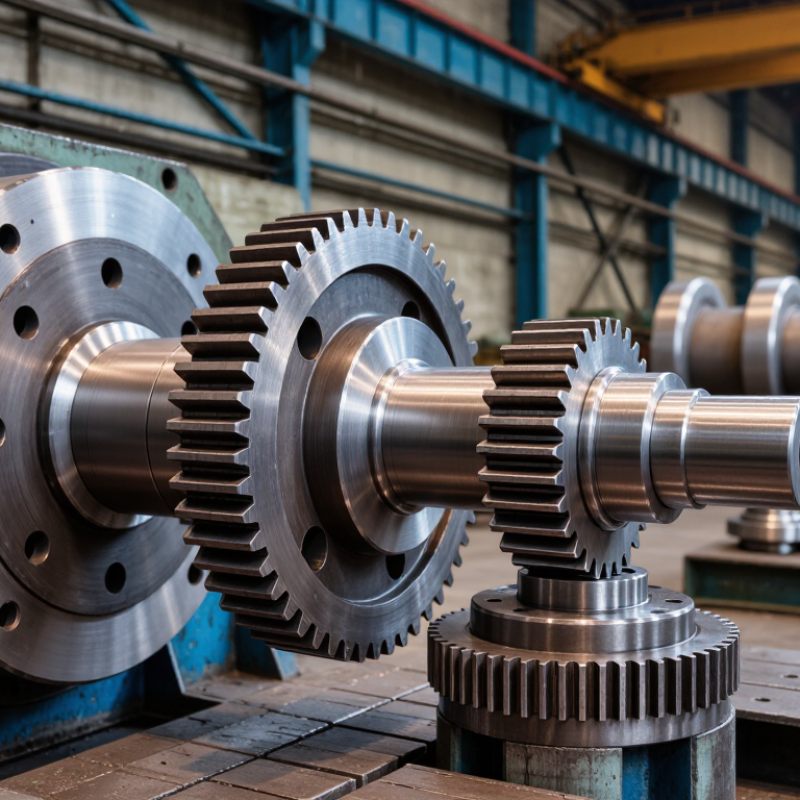
The practical case becomes clearer when a forged shaft turns under load or a gear transmits torque through daily operating cycles. Process control matters. So do clean material, sound tooling, and verified heat treatment. Buyers should compare certified material records, mechanical test results, and component-specific inspection plans, rather than rely on the word “forged” alone. A careful review may reveal that a casting or machined billet suits a particular design better. That nuance is easy to overlook, and worth remembering.
Why Choose Forged Steel Parts for Industrial Applications?

What Forged Steel Parts Are and How They Are Made

Why Choose Forged Steel Parts for Industrial Applications?

What Forged Steel Parts Are and How They Are Made

Forged steel parts are components shaped by pressing or hammering heated steel, or by forming it cold. Unlike cast parts, they are not made by pouring molten metal into a mold. The forming process can align the steel’s grain with the part’s shape, helping it withstand repeated loads. A connecting rod or heavy-duty shaft may benefit from this structure. Heat matters.

To make a typical hot-forged part, workers cut steel stock into billets and heat each billet until it can be shaped. A press or hammer forces the metal into dies, sometimes in several stages. The part is then cooled under controlled conditions and may receive heat treatment, machining, or inspection. Temperature and timing affect the final properties. A poorly controlled process can still produce defects, so forging alone is no guarantee of quality.

Tips: When reviewing a forged part, check its material specification, critical dimensions, and inspection records. Ask how heat treatment is controlled. Match the forging method to the part’s load and operating conditions; a stronger process may add cost without solving the actual design problem. Details are easy to overlook.
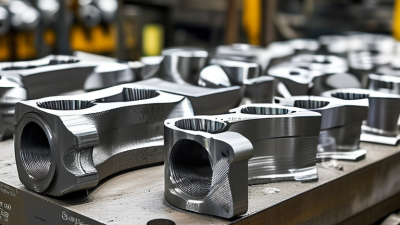
How Forging Shapes Steel for Industrial Use

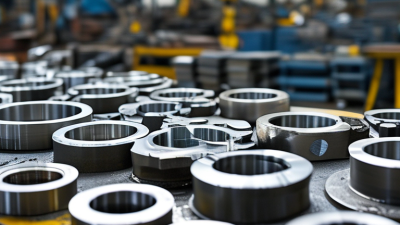
Forging shapes steel by applying compressive force while the workpiece is hot or cold. The process changes a billet’s geometry and can align its grain flow with a component’s main load path. In closed-die forging, heated steel is pressed into shaped cavities; excess metal may form flash, which is trimmed. Controlled deformation matters. Not magic. Die design, temperature, and material condition all affect the result. A poorly controlled process can leave defects or create costly machining work. Forged parts may still need heat treatment, inspection, and finish machining before installation.

The World Steel Association’s World Steel in Figures 2024 reports 1,892.2 million tonnes of crude steel produced worldwide in 2023. That figure describes steel production, not forged output, but it shows the scale of the material supply behind industrial manufacturing. For a plant engineer, the useful question is whether the forging’s shape and properties suit the actual load, impact, and service environment. A forged component can be a strong choice for shafts, gears, or heavy-duty connections, but it is not automatically the best choice for every design. Process records and dimensional checks help verify the part; they cannot replace application-specific testing.

Why Choose Forged Steel Parts for Industrial Applications?

Typical hot-forging temperature ranges vary by steel type. Forging shapes heated steel under compressive force; the exact working range depends on the grade and process specification.

Key Properties of Forged Steel Components

Forged steel components are valued for strength, toughness, and dependable performance under repeated loading. During forging, compressive forces shape heated steel and can align its grain flow with the part’s contours. This helps reduce weak, abrupt changes in grain direction. It does not make every forging defect-free. Process control still matters.

The ASM Handbook, Volume 1, reports typical quenched-and-tempered AISI 4140 values near 850 MPa tensile strength, 655 MPa yield strength, and 16% elongation. These figures vary with heat treatment and section size. A thick shaft may cool differently from a small pin. That detail matters. ASTM A668/A668M likewise sets mechanical-property requirements by forging class, rather than treating all steel forgings as identical. For engineers, the practical advantage is a combination of strength and resistance to impact or fatigue, chosen for the actual load case. Yet a forged part is not automatically the best choice: machining allowance, inspection needs, geometry, and production volume can change the decision. Check the material certificate and heat-treatment records, then verify critical properties with tests on representative parts.

Industrial Applications That Benefit from Forged Steel

Industrial equipment faces repeated impact, vibration, and heavy loads. Forged steel parts suit many of these demanding conditions because shaping steel under pressure can produce a dense, continuous grain flow. The result depends on the alloy, forging method, heat treatment, and final machining. Forging is not a shortcut around good design.

In mining, forged shafts, gears, and connecting components may operate near abrasive dust and sudden load changes. A shaft beside a crusher, for example, must handle torque while rotating under stress. In construction machinery, pins and hydraulic components need reliable strength through repeated movement. Regular inspection still matters. Even a robust part can wear or crack if it is overloaded or poorly maintained.

Agricultural equipment also benefits. Plow attachments, axle components, and drivetrain parts encounter soil, shock, and changing weather. In power generation and heavy transport, forged components can be selected for critical load-bearing roles, where consistent material properties are important. The correct choice depends on part geometry and service conditions, not on the word “forged” alone. Forging may cost more upfront, and some shapes require substantial machining. That trade-off deserves a careful review. A useful specification includes the expected load, operating temperature, corrosion exposure, and inspection plan.

Why Choose Forged Steel Parts for Industrial Applications? – Industrial Applications That Benefit from Forged Steel
Industrial Application Typical Forged Components Why Forging Can Be Suitable Important Selection Considerations
Power transmission Gears, shafts, couplings, and crankshafts Forging can produce dense parts with continuous grain flow shaped around the component, which can support strength and fatigue performance when the material and process are properly specified. Consider load direction, fatigue duty, alloy grade, heat treatment, dimensional tolerances, and the required surface finish.
Mining and earthmoving equipment Large shafts, pins, connecting links, and heavy-duty gear blanks Forged steel is often considered for parts exposed to high loads, impact, or repeated stress. The final performance depends on the steel grade, forging quality, and subsequent processing. Account for impact loading, wear, operating temperature, section size, inspection requirements, and repair or replacement needs.
Oil, gas, and process industries Valve bodies, flanges, fittings, and pressure-containing components Forged components can be manufactured for demanding pressure-service designs, with material properties controlled through the selected grade, production route, and heat treatment. Verify applicable design codes, pressure and temperature ratings, corrosion compatibility, traceability, and required nondestructive examination.
Automotive and commercial vehicles Connecting rods, steering arms, axle components, and wheel hubs Forging is used for components where a combination of strength, toughness, and resistance to cyclic loading is important. Evaluate mass and packaging constraints, fatigue life, crash or impact requirements, machining needs, and production volume.
Rail transportation Axles, wheels, couplings, and selected running-gear components Forged steel can be appropriate for heavily loaded parts that experience repeated service stresses, provided the design and manufacturing controls meet the relevant requirements. Check applicable rail standards, material certification, fatigue assessment, dimensional control, and inspection plans.
Construction and material handling Crane hooks, lifting links, pins, and load-bearing hardware Forging can produce robust load-bearing shapes and may be selected for components requiring reliable mechanical properties under demanding service conditions. Use components designed and certified for their specific lifting duty; confirm rated capacity, material traceability, inspection, and maintenance requirements.
Marine and shipbuilding Shafts, rudder components, and selected propeller or drivetrain parts Forged steel may suit high-load drivetrain and structural applications, while the appropriate steel grade and protection system address the actual service environment. Assess seawater corrosion, fatigue, impact, weldability where relevant, coating or cathodic protection, and classification requirements.
Industrial machinery Rolls, spindles, press components, and heavy-duty fasteners Forging can be useful for parts that need strength and toughness, and it can provide a practical starting shape for subsequent machining. Compare forging with casting or machining based on geometry, production quantity, material utilization, tolerances, and total manufacturing cost.

Factors to Consider When Selecting Forged Steel Parts

Selecting forged steel parts begins with the actual load, not a generic strength rating. Define peak force, cyclic loading, impact, temperature, and expected service life. A well-designed forging can align grain flow with principal loads, but geometry and later machining affect that benefit. Test the real load. A catalog value is not a design.

Next, match the alloy and heat treatment to the job. A shaft exposed to repeated torsion may need different toughness and fatigue performance than a static bracket. Check hardness, tensile properties, impact requirements, section thickness, and the supplier’s test records. Ask how samples represent the finished part. One awkward truth: buyers sometimes specify strength before defining the load spectrum. That can lead to unnecessary cost—or a missed failure mode.

Also assess tolerances, machining allowance, inspection, lead time, and traceability. For environmental screening, worldsteel’s Sustainability Indicators 2023 report gives a 2022 crude-steel average of about 1.92 tonnes of CO₂ per tonne produced. This is sector-level context, not a footprint for an individual forging; production route and yield matter. Request part-specific process and material data where available, and compare equivalent boundaries. That distinction is easy to miss.