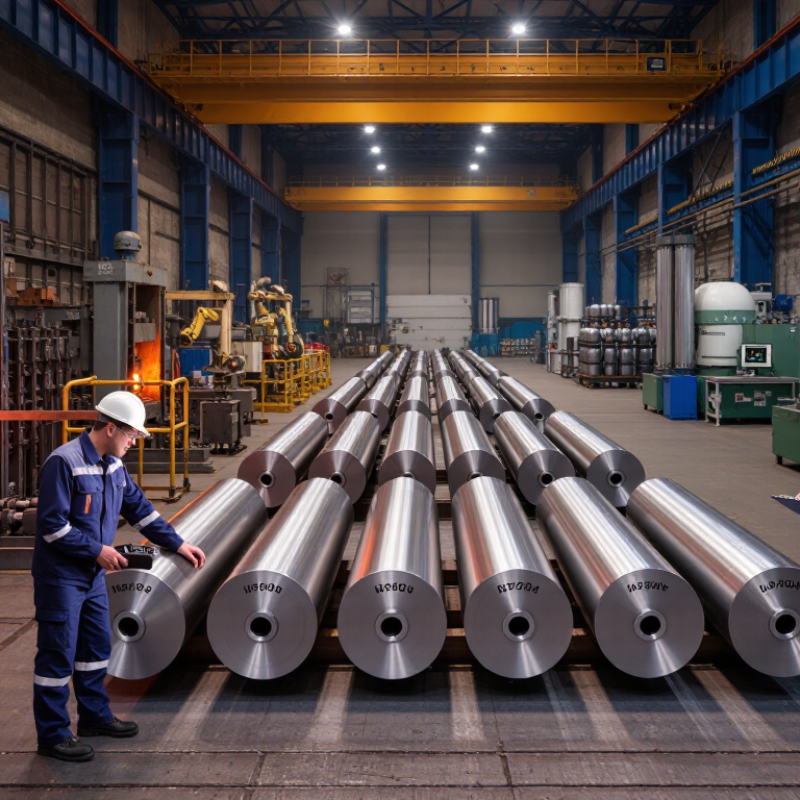
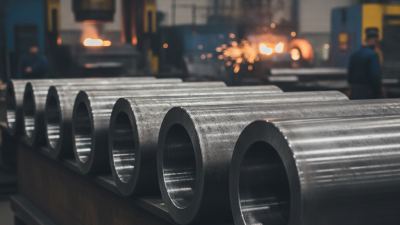
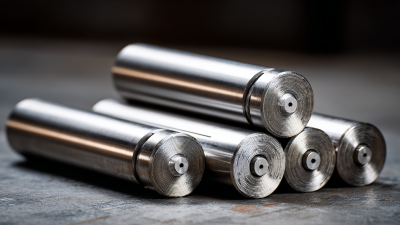
Choosing the right Forged Cylinders supplier requires more than comparing prices and delivery dates. Pressure vessels protect people, equipment, and production continuity. Small manufacturing weaknesses can create serious operational risks.
The International Energy Agency’s Global Hydrogen Review 2024 reports that global hydrogen demand reached almost 100 million tonnes in 2023. This growing market increases demand for reliable high-pressure storage. However, market growth does not guarantee supplier quality. A convincing website is not evidence. Ask for material certificates, heat-treatment records, dimensional inspection reports, and traceable batch numbers.
Look for suppliers familiar with ASME BPVC Section VIII, ISO 9001, ISO 11120, and applicable regional pressure-equipment requirements. These standards address design, production controls, testing, and quality management. The correct standard still depends on cylinder type, working pressure, gas, and destination market. Confirm this early.
Factory experience matters. Inspect forging equipment, ultrasonic testing procedures, hydrostatic testing stations, and calibration records. A professional supplier should explain wall-thickness control without vague answers. Request recent third-party inspection results when the application involves hydrogen, oxygen, or other demanding gases. The Hydrogen Council’s reports also highlight the rapid expansion of hydrogen infrastructure, making dependable cylinder quality increasingly important.
Do not choose on certification alone. An audited supplier may still miss communication details or realistic lead times. Ask how nonconforming products are handled. Ask who owns technical changes. Better questions often reveal better suppliers. Some buyers overlook after-sales support, but replacement valves, retesting, and documentation can affect years of operating cost. No supplier is perfect. The strongest choice is transparent, technically capable, and willing to show evidence before receiving the order.
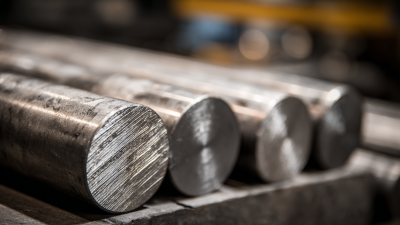
A forged cylinder begins as heated steel shaped under controlled pressure, not simply machined from a bar. This process can refine grain flow and improve resistance to repeated loads. The result is useful where a plain cast component may crack, deform, or wear early. Hydraulic presses, lifting equipment, injection machines, and heavy transport systems often use these cylinders. They may also serve in energy, marine, and process industries.
In practice, the cylinder’s material grade, bore, wall thickness, and end design must match its duty. A hydraulic cylinder cycling beside a steel mill faces heat, dust, shock, and contamination. A pressure cylinder may demand different controls. Ask how the supplier manages forging temperature, heat treatment, machining, and non-destructive testing. Useful records include chemical analysis, hardness results, ultrasonic reports, and dimensional checks. Traceability should follow the part from billet to final inspection.
Supplier evaluation should include more than price. Review production capacity, design support, inspection equipment, and experience with similar loads. Request sample drawings and clarify tolerances, surface finish, seals, and delivery conditions. I have seen technically strong parts fail when installation details were discussed too late. That lesson is easy to overlook. No inspection plan is perfect, so communication and documented corrective action still matter.
Understanding the typical working-pressure requirements of each application helps buyers evaluate forging quality, wall-thickness design, testing capability, and supplier experience.
The ranges shown are representative engineering values commonly used for hydraulic and high-pressure cylinder applications. Actual requirements depend on system design, temperature, fatigue cycles, corrosion conditions, applicable standards, and safety factors. A qualified supplier should provide material certificates, dimensional inspection, pressure testing, and traceability documentation.
Choosing a forged cylinders supplier starts with a precise technical brief. Define working pressure, test pressure, stroke length, load, cycle count, temperature, and installation space. A cylinder rated for 250 bar may still fail your application if fatigue cycles are underestimated. Specify piston speed and side-load limits, too. These details affect wall thickness, sealing design, and forging quality.
Material selection needs equal discipline. Ask for the steel grade, heat-treatment route, chemical analysis, and mechanical-test results. Require material certificates with batch traceability, not generic promises. The 2024 World Steel Association Short Range Outlook placed global steel demand near 1.75 billion tonnes, showing the scale of supply. Scale does not guarantee consistency. ISO 11120 and applicable pressure-equipment rules can guide design, testing, and documentation. Your supplier should also explain ultrasonic testing, magnetic-particle inspection, dimensional checks, and hydrostatic testing. I would not accept “tested” without a test method and acceptance limit.
Tips: Build a requirement table before requesting quotations. Include pressure, cycles, material, tolerance, coating, inspection, and delivery records. Request one sample inspection report. Compare evidence, not adjectives. A useful supplier can challenge your assumptions respectfully. That matters. Sometimes the first specification is wrong. Review it after field data, temperature changes, and maintenance feedback become available. Also ask how rejected forgings are controlled, how nonconformities are documented, and whether the supplier can support root-cause analysis after delivery.
Supplier qualification matrix for forged steel hydraulic, pressure, and industrial cylinders
| Evaluation Category | Requirement to Define | Recommended Technical or Acceptance Criteria | Evidence to Request from the Supplier | Priority |
|---|---|---|---|---|
| Application and Duty | Cylinder function, operating environment, load type, duty cycle, and expected service life | Confirm whether the cylinder is intended for hydraulic actuation, pressure containment, structural loading, or cyclic industrial service. Define static, intermittent, or continuous duty before quotation. | Application questionnaire, duty-cycle calculation, load cases, environmental description, and design review records | High |
| Cylinder Dimensions | Outside diameter, inside diameter, overall length, bore length, wall thickness, mounting geometry, and port locations | All dimensions must be controlled by an approved drawing. Bore, outside diameter, concentricity, straightness, and mounting interfaces should include explicit tolerances rather than nominal dimensions only. | Approved manufacturing drawing, dimensional inspection report, coordinate-measuring results, and revision-control records | High |
| Pressure Rating | Rated working pressure, proof-test pressure, and design pressure | The supplier must distinguish working pressure from proof pressure and burst or design calculations. Proof testing should follow the applicable product specification and approved test procedure. | Pressure-design calculation, pressure-test procedure, calibrated gauge certificate, and signed pressure-test report | High |
| Material Selection | Forged steel grade, chemical composition, hardenability, and compatibility with service conditions | Common engineering choices include 42CrMo4 or AISI 4140-type alloy steel for high-strength applications, subject to the required standard, heat treatment, section size, corrosion exposure, and weldability requirements. | Material specification, ladle-analysis certificate, heat number traceability, and material test certificate | High |
| Forging Quality | Forging method, reduction ratio, grain flow, billet quality, and elimination of internal discontinuities | The forging route should be suitable for the final section size and load path. The supplier should define forging temperature control, reduction practice, trimming, and any required normalization or stress relief. | Forging procedure, process-flow chart, heat records, forging inspection plan, and traceability documentation | High |
| Heat Treatment | Quenching, tempering, normalizing, stress relief, hardness, and mechanical-property requirements | Specify the required tensile strength, yield strength, elongation, impact toughness where applicable, and hardness range. Heat-treatment parameters must be appropriate for the selected grade and section thickness. | Furnace charts, batch identification, hardness map, tensile-test results, impact-test results when specified, and heat-treatment certificate | High |
| Mechanical Testing | Tensile strength, yield strength, elongation, reduction of area, impact toughness, and hardness | Testing should be performed using an agreed standard such as ASTM A370 or the applicable EN or ISO equivalent. Test orientation, sampling location, and retest rules must be defined in advance. | Laboratory reports, specimen location diagram, test-machine calibration records, and independent laboratory accreditation where required | High |
| Non-Destructive Testing | Detection of surface and internal defects in the forged body | Typical controls include magnetic-particle or dye-penetrant testing for surface-breaking defects and ultrasonic testing for internal discontinuities. Acceptance levels must be stated on the purchase specification. | NDT procedure, personnel qualification records, equipment calibration certificates, scan plan, and signed NDT report | High |
| Machining Accuracy | Bore size, roundness, cylindricity, straightness, surface finish, thread quality, and sealing surfaces | Typical hydraulic sealing surfaces may require a controlled surface finish, but the exact value must come from the seal and application design. Do not accept a generic “precision machined” statement without numerical tolerances. | Dimensional report, bore gauge records, roughness measurements, thread-gauge records, and inspection-equipment calibration certificates | High |
| Corrosion Protection | Internal and external corrosion resistance during storage and service | Define the required coating, plating, paint system, preservative, or stainless/alloy option according to humidity, chemicals, salt exposure, temperature, and storage duration. | Coating or plating specification, thickness report, adhesion or visual inspection record, and corrosion-protection procedure | Medium |
| Leak and Pressure Testing | Hydrostatic, hydraulic, pneumatic, or functional leakage testing as applicable | The test medium, pressure, hold time, acceptance limit, temperature, and safety controls must be documented. Pneumatic testing requires additional risk controls because compressed gas stores significant energy. | Test specification, pressure chart, leakage observations, test duration, calibrated instruments, and final acceptance record | High |
| Traceability | Traceability from finished cylinder to raw material, forging heat, heat-treatment batch, machining, and inspection records | A unique identification number or heat number should remain legible through production and be linked to all certificates and inspection results. | Traceability matrix, marked-part photographs, traveler or routing sheet, material certificates, and final data book | High |
| Quality Management | Documented quality system, nonconformance control, corrective action, and inspection planning | An ISO 9001-based quality system is a useful baseline. Critical applications may also require customer-specific quality clauses, first-article inspection, or third-party inspection. | Quality certificate, inspection and test plan, process-audit results, nonconformance procedure, and corrective-action records | Medium |
| Production Capacity | Maximum forging size, machining envelope, monthly capacity, tooling capability, and production continuity | The supplier should demonstrate that its equipment can handle the required diameter, length, mass, heat-treatment section, and machining tolerance without relying on unapproved subcontracting. | Equipment list, capacity statement, process route, subcontractor disclosure, and sample production schedule | Medium |
| Delivery and Commercial Risk | Prototype lead time, serial-production lead time, minimum order quantity, packaging, and logistics terms | Obtain a written schedule that separates tooling, first article, testing, approval, and repeat production. Packaging must protect machined surfaces and prevent moisture damage during transport. | Milestone schedule, capacity plan, packaging specification, delivery performance history, and commercial quotation | Medium |
| Technical Support | Design-for-manufacture assistance, failure analysis, engineering communication, and change management | A capable supplier should identify impractical tolerances, forging defects risks, heat-treatment limitations, and inspection gaps before production rather than after delivery. | Technical review minutes, drawing feedback, sample failure-analysis report, engineering contact plan, and change-control procedure | Medium |

Choosing a forged cylinder supplier starts with the factory floor, not the sales brochure.
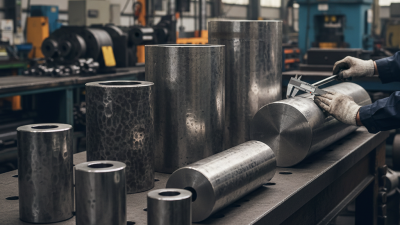
Ask to review forging capacity, press tonnage, furnace controls, machining tolerances, and inspection equipment. The supplier should explain how each heat number follows the cylinder from billet to shipment. Ask for evidence. Not promises.
The ISO Survey 2023 reported more than 1.2 million ISO 9001 certificates worldwide, yet certification alone cannot prove manufacturing discipline.
Review the supplier’s quality manual, internal audit records, nonconformance trends, and corrective-action closure times. Confirm whether ultrasonic testing, magnetic-particle inspection, dimensional checks, and pressure testing follow documented procedures. Material certificates should identify chemistry, mechanical results, heat treatment, and traceability. For pressure applications, compare procedures with relevant ASME and ASTM requirements.
A capable supplier should show calibrated equipment, qualified inspectors, and controlled welding or repair processes.
Request sample inspection plans and anonymized production records. Visit the plant if the order is critical.
Observe whether operators actually use work instructions beside the equipment. This detail often matters more than polished paperwork. A certificate can create false comfort. I have seen strong systems weaken when production targets become aggressive.
Therefore, discuss capacity during peak demand, subcontractor controls, and how rejected cylinders are isolated. Small gaps matter. Ask how the supplier learns from them.
Certifications offer a useful starting point, but they should never be the only filter. Ask which standards the supplier follows and whether certificates cover materials, production, and inspection. Verify certificate numbers, issuing bodies, and valid dates. A scanned document alone proves very little. During supplier audits, I have found that clear records often reveal more than polished presentations.
Testing procedures deserve close attention. Reliable suppliers should explain ultrasonic testing, dimensional checks, hardness testing, and pressure testing in practical terms. Request sampling plans, equipment calibration records, and acceptance criteria. Ask who performs each test and who approves the final report. Test reports should identify the cylinder, heat number, drawing revision, and inspection date. Small details matter.
Traceability connects every finished cylinder to its origin. Material certificates, forging records, heat-treatment charts, and inspection results should follow the product throughout production. A durable identification mark helps prevent document confusion later. It should remain readable after machining and coating. That sounds obvious, yet it is often missed. Review how the supplier handles nonconforming products and corrective actions. No process is perfect. A supplier that openly documents mistakes may be more dependable than one claiming none exist. Evaluate evidence, not promises.
Choosing a forged cylinder supplier requires more than comparing unit prices. A 2020 global supply-chain survey reported that 73% of companies experienced supplier-related problems. That finding still matters. Ask for material certificates, forging records, heat-treatment results, and inspection samples. Compare total cost, including tooling, testing, packaging, freight, and rejected parts. The cheapest quotation may become expensive after one failed pressure test.
Lead time also needs evidence. The 2023 Logistics Performance Index assessed 139 economies and showed significant differences in customs, infrastructure, and delivery capability. Request a production schedule with forging, machining, inspection, and shipment dates. Check whether the supplier keeps alloy stock or depends on uncertain mill deliveries. I have found that “ready to ship” can mean only raw material is available. That wording deserves careful questioning.
Tips: Require a written quality plan. Confirm cylinder standards, test pressure, traceability, and change-control procedures. Ask for on-time delivery data from the past twelve months. Review response times for technical questions and corrective actions. A useful supplier should explain problems clearly, not hide behind polished documents. References from similar projects are valuable, but verify them independently. I would also audit one production batch before signing a long contract. This costs time. It can reveal uncomfortable weaknesses early.