What is Hot Forging Part and How It Benefits Your Business?
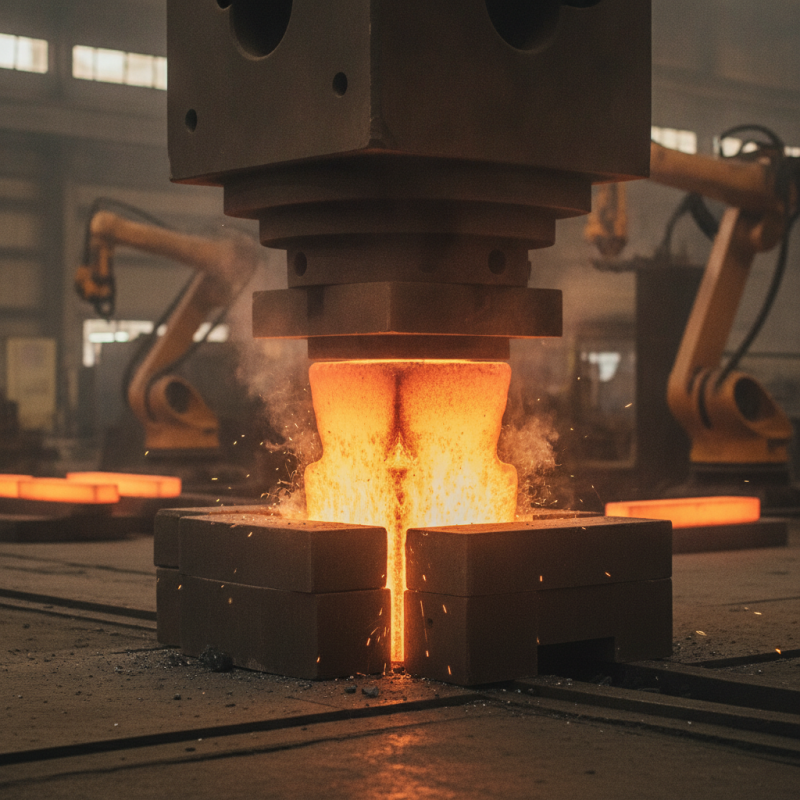
Hot forging is a vital process used in manufacturing many metal parts. The term "Hot Forging Part" refers to components shaped by applying high heat and pressure. This method offers significant advantages to businesses, enhancing efficiency and product quality.
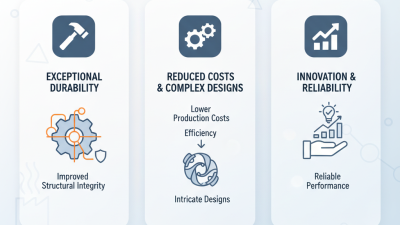
One notable benefit of hot forging is its ability to improve the mechanical properties of metal. When heated, metals become malleable, allowing for intricate designs. This results in parts that resist wear and fatigue. Additionally, hot forging can reduce production costs by minimizing material waste.
However, some businesses may overlook the importance of choosing the right forging techniques. This can lead to suboptimal results. Understanding your specific needs is crucial. An informed approach ensures that your hot forging parts meet strict quality standards and performance requirements. In this competitive landscape, leveraging the benefits of hot forging can set your business apart.
What is Hot Forging and How Does It Work?
Hot forging is a metalworking process that molds materials using heat and pressure. This method begins by heating the metal above its recrystallization temperature. The heated metal becomes malleable, making it easier to shape. Once the desired form is achieved, the metal cools, creating a strong, durable part. The uniform grain structure gives hot-forged components excellent mechanical properties.
This process offers several advantages for manufacturers. Firstly, hot forging can enhance the strength and toughness of metals. It is also more efficient compared to other shaping methods. The process reduces material waste, contributing to cost-effectiveness. However, it requires precise temperature control and skilled labor to manage. Common challenges include ensuring consistent quality and minimizing defects. Each step in hot forging must be executed with care to avoid costly errors. Understanding these complexities can lead to better decision-making in production.
Benefits of Hot Forging for Businesses
This chart illustrates the various benefits of hot forging for businesses. Each category represents a different benefit rated on a scale from 1 to 10, showcasing the significant advantages hot forging can offer in terms of cost efficiency, quality, production speed, material utilization, and customization.
Key Benefits of Hot Forging for Manufacturing Processes
Hot forging is a manufacturing process that involves shaping metal at high temperatures. This technique offers several benefits that can significantly enhance production efficiency. One key advantage lies in increased material strength. The process refines the grain structure of the metal, resulting in stronger and more durable components. This can lead to improved performance in critical applications.
Furthermore, hot forging allows for complex geometries to be achieved with less machining required. This reduction in machining time not only speeds up production but also minimizes waste material. The reduction in waste also directly impacts costs, making it a more economical option for many manufacturers. Enhanced precision in hot-forged parts can lead to better assembly and less downtime.
However, hot forging is not without challenges. It requires careful temperature control and equipment maintenance. Inadequate heating can lead to defects in the material. Businesses must ensure their staff is well-trained in operating the machinery. Investing in proper training can prevent costly errors. Embracing hot forging involves balancing benefits against potential risks to maximize production outcomes.
Applications of Hot Forging in Various Industries
Hot forging is a critical process in various industries. It enhances the mechanical properties of metals through deformation at high temperatures. This technique is widely used in automotive, aerospace, and construction sectors, where strong, durable components are essential.
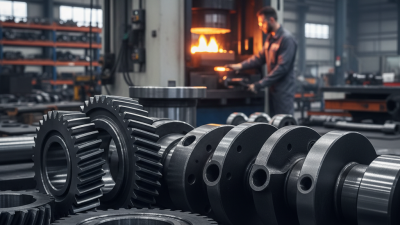
In the automotive industry, hot forging produces many parts. According to the Forging Industry Association, nearly 70% of automotive components utilize forging processes. These parts include axles, crankshafts, and gears. The hot forging process helps achieve precise dimensions. It also improves crack resistance, making vehicles safer and more reliable.
Similarly, the aerospace industry relies heavily on hot forging. Aerospace components must withstand extreme conditions. Hot forging provides the strength needed for landing gears and turbine disks.
The construction industry also benefits. Hot forged steel is used for structural components. Data shows that hot forged connectors exhibit superior strength compared to cold-finished ones. However, some challenges exist. The initial costs of hot forging can be higher than other methods. It requires careful temperature control and skilled labor. Manufacturers must assess these factors to optimize production efficiently. Balancing quality and cost remains an ongoing conversation in industry circles.
Comparing Hot Forging to Other Forging Techniques
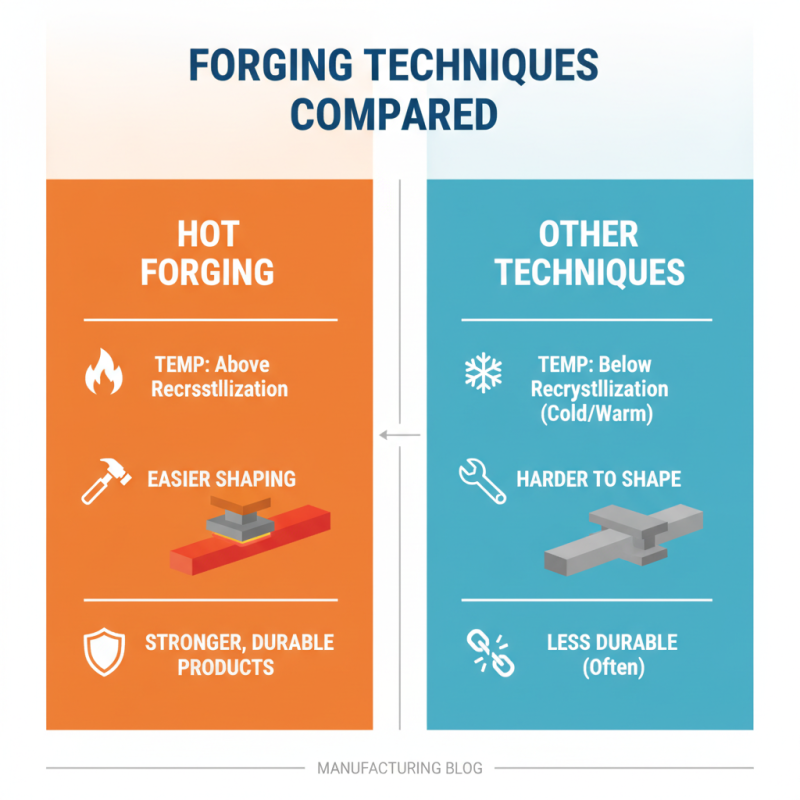
Hot forging is a popular manufacturing process, but how does it compare to other techniques? One key difference lies in the temperature used. Hot forging involves heating metal above its recrystallization temperature. This allows for easier shaping and molding. The result is a product that is stronger and more durable.
In contrast, cold forging occurs at room temperature. While it can produce precise dimensions, the metal remains harder and less ductile. This makes it harder to work with. Closed die forging, another technique, can provide excellent detail but may require expensive tooling. Each method has strengths and weaknesses, and acknowledging these can lead to better decisions for your business.
Understanding the nuances of these forging techniques is vital. The right technique depends on your specific needs. Consider factors like cost, strength requirements, and production volume when making your choice. This process can be complex, and mistakes can lead to wasted resources. It's essential to evaluate your options carefully before proceeding.
Best Practices for Implementing Hot Forging in Your Business
Hot forging can significantly enhance your production efficiency. Industry studies reveal that this process increases material strength by up to 30%. This is crucial for businesses needing durable components. When implementing hot forging, understanding the tooling and machine requirements is essential. Neglecting this can lead to costly mistakes. Ensure you use appropriate heating techniques to prevent material distortion.
Training your staff on best practices is vital. A skilled team can minimize defects, which reduce waste. Reports indicate that poorly executed forging increases scrap rates by 25%. Monitor the forging temperatures carefully. Inconsistent heating affects the quality of the final product. Regular maintenance of machinery also plays an important role in maintaining productivity. Ignoring these aspects could lead to downtime, impacting overall business efficiency.
Collaborating with experienced professionals can offer insights into optimizing your hot forging process. They can identify areas for improvement. If overlooked, these could lead to production delays. Creating a feedback loop with your team helps in recognizing recurring issues. Addressing these can bolster your production capabilities. A proactive approach ensures that you stay competitive in the market.
What is Hot Forging Part and How It Benefits Your Business?
| Dimension |
Description |
Benefits |
Best Practices |
| Temperature |
Typically between 900°C to 1200°C |
Improved material properties |
Maintain consistent furnace temperature |
| Materials |
Commonly used materials include steel and aluminum |
Enhanced strength and ductility |
Choose appropriate materials for your application |
| Process Efficiency |
High production rates and low cycle times |
Cost savings on labor and materials |
Invest in modern forging equipment |
| Applications |
Automotive, aerospace, and industrial machinery |
Versatility in product offerings |
Conduct market research on application needs |
| Quality Control |
Regular inspection and testing |
Ensures product reliability |
Implement a structured quality management system |