Top 10 Cold Heading Die Suppliers in China for Global Buyers?
In the fast-paced world of manufacturing, the demand for precision often hinges on the quality of tools used. Among these, the Cold Heading Die stands out as a critical component in the production of metal fasteners. Manufacturers rely on these tools to ensure accurate shapes and sizes, which directly affects product performance. This article explores the leading Cold Heading Die suppliers in China, catering to global buyers seeking reliable partnerships.
China has established itself as a hub for high-quality manufacturing. Many suppliers have earned a reputation for their expertise in producing Cold Heading Dies. They combine advanced technology with skilled craftsmanship. However, not all suppliers are created equal. Potential buyers need to evaluate their choices carefully. Some companies may promise quality but fail to deliver consistent results.
Understanding the nuances of the supply chain is essential. In this dynamic market, establishing trust and reliability can be challenging. Buyers must prioritize suppliers who demonstrate transparency and a commitment to quality. This way, they can secure the Cold Heading Dies that will enhance their production efficiency and product quality.
Top Chinese Cold Heading Die Suppliers: An Overview of the Market
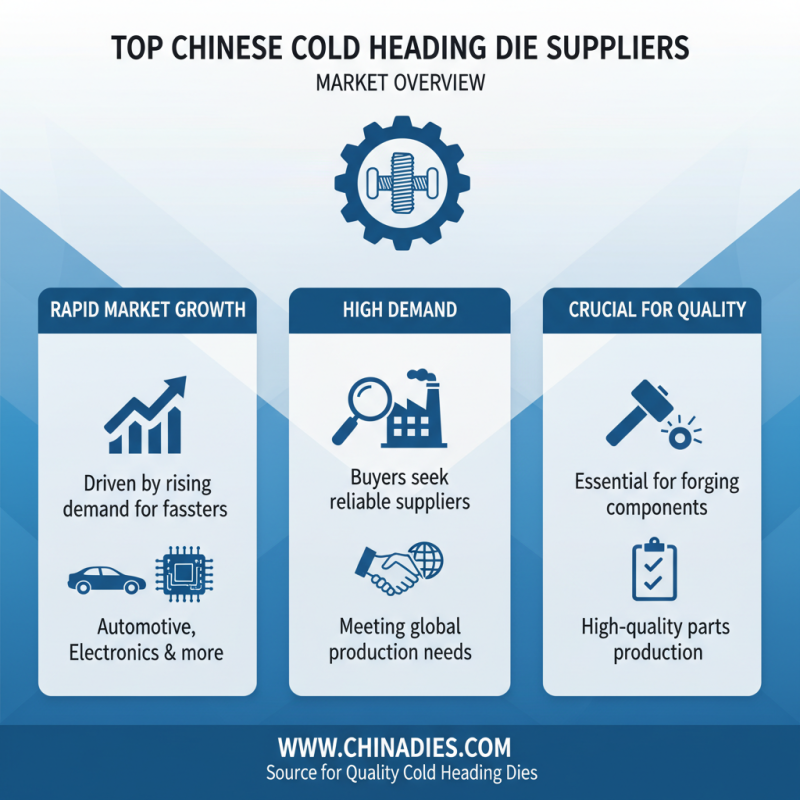
The market for cold heading dies in China is expanding rapidly. This growth is driven by a rising demand for fasteners in various industries. Many buyers are looking for reliable suppliers to meet their production needs. These dies are crucial in forging high-quality components. They play a key role in processes ranging from automotive parts to electronics.
Chinese suppliers often emphasize innovation and technology. They use advanced materials to enhance durability and performance. A variety of designs are available to fit different manufacturing processes. However, quality can vary significantly across the market. Buyers should assess manufacturer credentials and track records carefully. This ensures they receive products that meet their specifications.
Pricing is another aspect to consider. While competitive rates attract many buyers, low prices can sometimes indicate compromised quality. Research and evaluation are essential to avoid pitfalls. Engaging with suppliers who prioritize transparency can alleviate concerns. Understanding industry standards and certifications can further guide buyers in making informed decisions.
Key Factors Driving Demand for Cold Heading Dies in Global Markets
The demand for cold heading dies is on the rise in global markets. This growth is driven by the increasing need for precision-engineered fasteners in construction, automotive, and electronics sectors. Industries are pursuing efficiency and cost-effectiveness. Cold heading dies allow manufacturers to produce high-quality components quickly and with less waste.
Technological advancements are significantly influencing this demand. Modern materials and innovative designs are enhancing die performance. Manufacturers are focused on durability and precision. This attention to detail reduces production downtime and increases profit margins. However, challenges remain. Some suppliers struggle with maintaining quality under pressure. Others face fluctuating raw material costs, impacting overall pricing strategies.
Global buyers are also more discerning. They seek quality assurance and reliable supply chains. Trustworthiness in supplier relationships is crucial for smooth operations. As competition increases, firms must adapt. Balancing cost with quality is a constant challenge. Continuous improvement is not just preferred but necessary for staying relevant in this evolving market.
Leading Cold Heading Die Manufacturers in China: Market Position and Share
The market for cold heading dies in China is growing rapidly. Many manufacturers are stepping up their game to capture a larger share. These suppliers are increasingly focusing on quality and innovation. They aim to meet the rising demands of global buyers. China is becoming a key player in this industry.
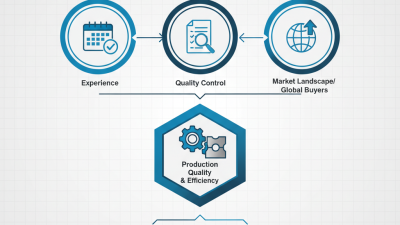
Cold heading die manufacturers are known for their expertise. They offer various products tailored to different industrial needs. Buyers should look for suppliers with a strong reputation. Experience in the field is crucial. A reliable supplier can ensure high-quality products consistently.
Tips: Assess the supplier's production capability. Verify their quality control processes. Look for customer testimonials or case studies to gauge their reliability. Communication is vital. Ensure you establish clear channels to avoid misunderstandings.
When choosing a supplier, consider their market position. Research their years of operation and client base. It’s important to choose a manufacturer who has demonstrated their ability to adapt to industry changes. Regularly revisiting your supplier's performance is essential for long-term satisfaction.
Top 10 Cold Heading Die Suppliers in China for Global Buyers
| Supplier Rank |
Market Share (%) |
Annual Revenue (Million USD) |
Number of Patents |
Export Countries |
| 1 |
25% |
150 |
10 |
USA, Germany, Japan |
| 2 |
20% |
120 |
8 |
Canada, UK, France |
| 3 |
15% |
90 |
6 |
Australia, India, Brazil |
| 4 |
12% |
80 |
7 |
Netherlands, Italy, Spain |
| 5 |
10% |
70 |
5 |
Russia, South Africa, Mexico |
| 6 |
8% |
60 |
4 |
Sweden, Norway, Finland |
| 7 |
7% |
50 |
3 |
South Korea, Singapore, Taiwan |
| 8 |
5% |
40 |
4 |
Chile, Argentina, Peru |
| 9 |
3% |
30 |
2 |
Turkey, UAE, Saudi Arabia |
| 10 |
2% |
20 |
1 |
New Zealand, Ireland, Portugal |
Evaluation of Quality Standards and Certifications Among Chinese Suppliers
When assessing Chinese suppliers in the cold heading die industry, quality standards and certifications are critical. The ISO 9001 certification is a common benchmark. It demonstrates a supplier's commitment to consistent quality and customer satisfaction. Reports show that suppliers with this certification experience a 20% increase in global partnerships compared to those without.
Another important aspect is material quality. Steel grade and heat treatment processes significantly influence product durability. A study surveyed buyers, revealing that 75% prioritize suppliers who adhere to strict material specifications. Suppliers with third-party inspections tend to build stronger trust with customers. Industry data indicates that such suppliers often achieve a 30% lower defect rate.
However, the landscape is not perfect. Some suppliers may claim certifications without full compliance. This discrepancy can lead to subpar products reaching the market. Buyers need to conduct thorough audits, not relying solely on certifications. They should evaluate actual production processes and material sources to ensure reliability. Constant vigilance is necessary to avoid relying on potentially misleading information.
Future Trends in Cold Heading Die Production and Export from China
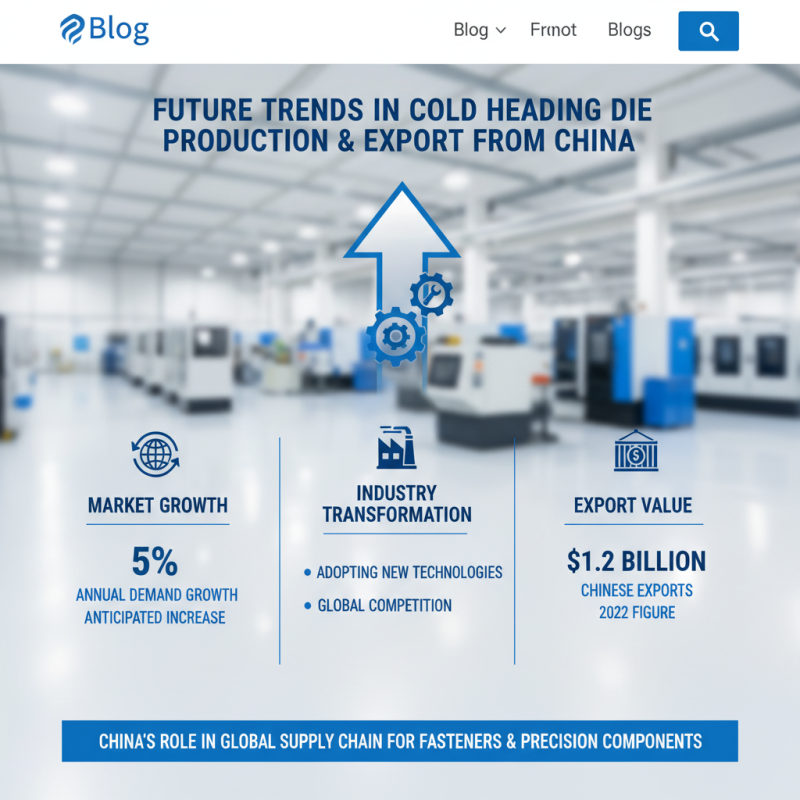
The cold heading die industry in China is on the brink of transformation. With market demand set to grow by 5% annually, manufacturers must adapt to changing technologies and global competition. Recent reports show that the value of cold heading dies exported from China reached approximately $1.2 billion in 2022. This figure highlights China's significant role in the global supply chain for fasteners and precision components.
Adopting advanced manufacturing techniques is crucial. For instance, integrating AI-driven processes can improve production efficiency. However, many suppliers struggle with implementation due to high initial costs and the need for skilled labor. Sustainability is another concern; manufacturers are increasingly pressured to reduce waste and energy consumption. Data indicates that firms incorporating environmentally friendly practices can enhance their market competitiveness. Yet, the pace of change remains uneven across the industry.
Innovation in material sciences is also crucial. The use of high-strength materials can lead to more durable products. However, this trend requires precise engineering capabilities that not all suppliers possess. As the industry evolves, buyers must carefully evaluate suppliers' capabilities. There's an evident gap between leading manufacturers and those lagging behind. Embracing change and investing in training will be vital for suppliers aiming to thrive in this dynamic environment.