Leave Your Message

2026 Top Forged Aluminum Parts Suppliers for Global Buyers?

Choosing reliable Forged Aluminum Parts suppliers will matter even more for global buyers in 2026. Aerospace, automotive, robotics, energy, and industrial equipment manufacturers need components that balance strength, weight, consistency, and cost. A polished website is not enough. Buyers should examine forging capacity, alloy control, heat-treatment records, dimensional inspection, and traceability.

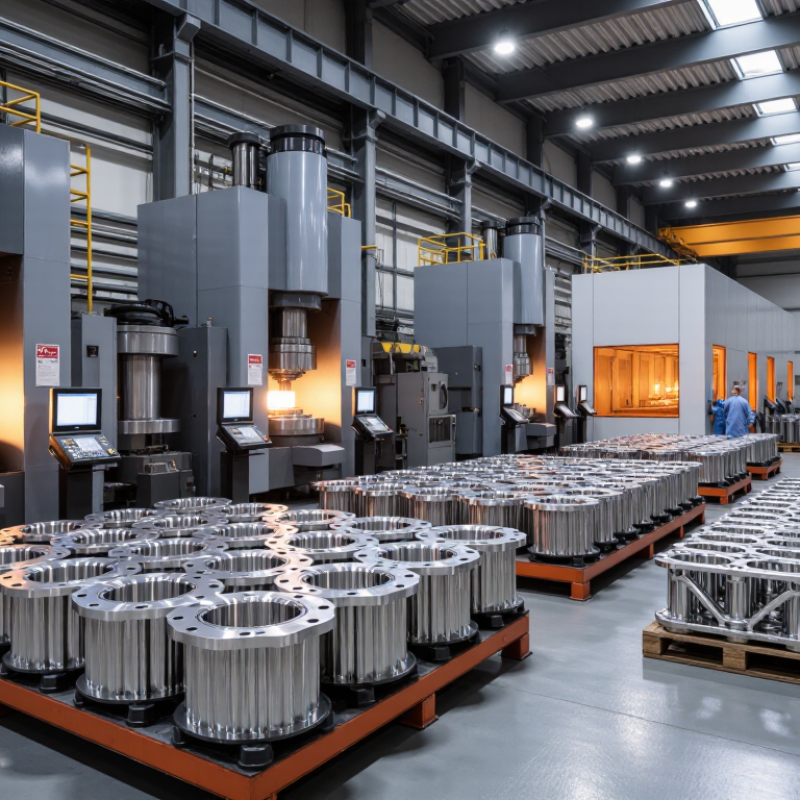
This guide introduces leading suppliers for international sourcing decisions. It considers production experience, engineering support, quality systems, export capability, and communication reliability. Factory visits, sample approvals, and audit reports can reveal details that online profiles often miss. Look closely at equipment, such as closed-die presses, CNC machining centers, coordinate measuring machines, and controlled heat-treatment lines. These details help connect supplier claims with actual manufacturing capability.

No supplier ranking is permanently correct. Market conditions change. Capacity may shift. Public information can also remain incomplete. That is worth admitting. Buyers should confirm current certifications, lead times, minimum order quantities, packaging standards, and inspection responsibilities before signing contracts. Regional logistics, material availability, and tariff exposure also deserve careful review. A capable supplier may still be unsuitable for a small prototype program or urgent delivery schedule.

The following overview is designed as a practical starting point, not a substitute for due diligence. It highlights companies that appear relevant to global buyers while encouraging direct technical verification. Ask difficult questions. Request evidence. Compare samples. In forged aluminum sourcing, dependable decisions come from documented performance, transparent communication, and consistent results over time.

2026 Top Forged Aluminum Parts Suppliers for Global Buyers?

2026 Global Supplier Map: Regions, Capacity, and Forging Technologies

A practical 2026 supplier map should show more than country names. It should connect regions with real production capabilities.

East Asia often offers broad closed-die forging capacity, automated lines, and competitive volume production. Europe is known for controlled processes, complex alloys, and strict documentation. North America remains strong in heavy forgings, defense-adjacent industrial work, and specialized engineering. South Asia and Türkiye can provide flexible capacity, but qualification depth varies between facilities.

Technology matters as much as geography.

Check whether a supplier uses closed-die, open-die, ring rolling, or precision forging. Ask about press tonnage, billet size, heat-treatment control, and machining integration. A small aerospace bracket and a two-ton industrial shaft require very different equipment.

In supplier reviews, I have found that traceability often separates reliable producers from attractive quotations. Yet capacity figures can be optimistic. Buyers should verify them through production records, not brochures.

Tips:

Request sample inspection reports and process-flow diagrams. Confirm material certificates, non-destructive testing, and calibration records. Compare actual lead times with stated capacity. Visit the plant when the order is critical.

A map can mislead. Regional strengths are useful, but every project still needs a technical audit, clear drawings, and measurable acceptance criteria. Some suppliers may appear ready but lack stable backup equipment, which deserves careful reflection.

Alloy Selection: 2xxx, 6xxx, and 7xxx Aluminum for Forged Parts

Alloy selection will shape every 2026 forged aluminum purchase. It affects strength, corrosion resistance, machinability, cost, and inspection risk. The USGS Mineral Commodity Summaries 2025 estimated global primary aluminum production at about 72 million metric tons in 2024. That scale supports supply, but it does not guarantee suitable forging stock. Buyers should request the exact temper, heat-treatment record, chemical analysis, and mechanical test results.

2xxx alloys contain copper and deliver strong fatigue performance after heat treatment. They suit aircraft fittings, structural brackets, and heavily loaded parts. However, their corrosion resistance is weaker. Protective finishing and strict storage become important. 6xxx alloys, strengthened by magnesium and silicon, offer balanced strength, weldability, and corrosion resistance. They are practical for frames, housings, and medium-load components. 7xxx alloys provide the highest strength of these three families, especially in aerospace-grade forgings. Zinc-based chemistry brings greater sensitivity to quench control, stress corrosion, and process variation. Small defects matter.

Experienced buyers should compare grain flow, ultrasonic inspection results, dimensional capability, and lot traceability. A supplier may quote the alloy correctly but control the forging temperature poorly. That is an uncomfortable possibility. Review sample sections, not only certificates. The best alloy on paper can fail in service if the design ignores fillet radii, machining allowance, or surface protection. Forging trials, independent testing, and clear acceptance criteria reduce that uncertainty.

2026 Top Forged Aluminum Parts Suppliers for Global Buyers

Alloy Selection: 2xxx, 6xxx, and 7xxx Aluminum for Forged Parts

The chart compares representative room-temperature tensile and yield strength values for commonly specified aluminum tempers: 2024-T4, 6061-T6, and 7075-T6. Actual forged-part performance varies with billet quality, forging reduction, heat treatment, section size, and required certification.

Technical Qualification: ASTM B247, EN 755, ISO 9001, and IATF 16949

2026 Top Forged Aluminum Parts Suppliers for Global Buyers?

Global buyers should treat technical qualification as evidence, not decoration. ASTM B247 is central for aluminum-alloy forgings. It covers material, heat treatment, mechanical testing, dimensions, and acceptance requirements. A capable supplier should provide heat numbers, forging records, inspection results, and complete material traceability. The International Aluminium Institute reported approximately 70.6 million tonnes of primary aluminum production in 2023. That scale increases supply options, but it does not guarantee forging discipline.

EN 755 requires careful interpretation. It mainly addresses extruded aluminum products, including profiles, bars, and tubes. It should not replace ASTM B247 for forged components. Suppliers offering mixed processes must separate specifications clearly. ISO 9001 strengthens document control, corrective action, and repeatable inspection. The ISO Survey 2023 recorded more than 1.2 million ISO 9001 certificates worldwide. Certification is widespread. Proof of process control still matters more.

IATF 16949 becomes critical for automotive programs. Buyers should review process FMEA, control plans, measurement-system studies, capability data, and customer-specific requirements. Production-part approval records should match the actual alloy, temper, tooling, and inspection route. Audit trails should reach the furnace and final packing table. Small gaps appear here. Some suppliers present certificates but cannot explain reaction plans during a live audit. That weakness deserves attention. Forged parts may look identical, while their fatigue performance differs sharply. Independent testing, retained samples, and periodic supplier audits reduce that risk.

2026 Top Forged Aluminum Parts Suppliers for Global Buyers? - Technical Qualification: ASTM B247, EN 755, ISO 9001, and IATF 16949

Qualification Dimension Applicable Standard Technical Scope Buyer Verification Points Typical Application Applicability Supplier Readiness Indicator
Aluminum Forging Product Compliance ASTM B247/B247M Aluminum-alloy forgings, including requirements related to chemical composition, mechanical properties, heat treatment, dimensions, testing, and inspection. Review the purchase specification, alloy and temper designation, heat-treatment records, mechanical-test reports, dimensional inspection results, and material traceability documents. Structural, aerospace-support, transportation, industrial, and general engineering forged components. Applicable High when complete lot-level records are available.
Extruded Aluminum Product Compliance EN 755 series Technical delivery conditions, mechanical properties, dimensional tolerances, and other requirements for extruded aluminum and aluminum-alloy products. Confirm whether the project includes extruded profiles or bar stock. Check alloy, temper, cross-section, dimensional tolerances, surface condition, and inspection documentation. Extruded profiles, bars, tubes, and semifinished products used alongside forged parts. Conditional Strong capability when forging and extrusion supply are coordinated.
Forged Aluminum European Standard Reference EN 586 series European requirements specifically associated with aluminum and aluminum-alloy forgings, including technical delivery conditions and mechanical properties. Verify the exact EN 586 part requested, alloy and temper, product form, testing frequency, dimensional requirements, and certificate format. European procurement programs requiring a forging-specific EN reference. Applicable High when the supplier can map EN requirements to controlled process records.
Quality Management System ISO 9001:2015 General quality-management requirements covering documented processes, risk-based thinking, corrective action, customer focus, and continual improvement. Check certificate scope, issuing body, validity, manufacturing site, audit status, nonconformance process, calibration controls, and document-retention practices. General industrial, commercial, and engineering supply chains. Applicable Minimum quality-system benchmark for international sourcing.
Automotive Quality Management IATF 16949:2016 Automotive quality-management requirements incorporating customer-specific requirements, product safety, special characteristics, traceability, and process control. Confirm certificate scope and manufacturing location. Review APQP, PPAP, FMEA, control plans, MSA, SPC, change management, and product-safety controls where applicable. Automotive forged suspension, steering, powertrain, chassis, and safety-related components. Conditional Preferred for automotive production and serial supply programs.
Material Identification and Traceability Contract specification plus applicable material standard Linking raw material, forging lot, heat treatment, inspection results, and shipment documentation through a controlled identification system. Request heat or lot number traceability, material certificates, forging-route records, furnace charts, test coupons where required, and clear marking or labeling controls. All safety-critical, regulated, or repeat-production components. Applicable Essential for recalls, investigations, and repeat-order consistency.
Heat Treatment Control Applicable alloy specification and approved process specification Controlled solution treatment, quenching, aging, or other required thermal cycles used to achieve the specified temper and mechanical properties. Review furnace qualification, temperature uniformity records, load charts, quench controls, aging records, hardness results, and rework authorization procedures. Heat-treatable aluminum forgings requiring specified strength, hardness, or fatigue performance. Applicable Critical for stable mechanical properties and lot-to-lot consistency.
Dimensional and Geometric Control Drawing, purchase specification, and applicable standard Verification of dimensions, tolerances, datums, form, position, surface condition, and machining allowance. Review calibrated measurement equipment, inspection plans, first-article reports, CMM capability where necessary, gauge repeatability, and sampling frequency. Near-net-shape forgings and forged blanks requiring machining or direct assembly. Applicable Higher readiness when inspection data are digitally retained by lot.
Defect Detection and Nondestructive Testing Customer drawing, purchase specification, and approved NDT procedure Detection of surface or internal discontinuities using methods such as visual inspection, dye penetrant, eddy current, or ultrasonic testing when specified. Confirm qualified personnel, written procedures, acceptance criteria, equipment calibration, test coverage, and retention of inspection reports. Safety-critical, fatigue-sensitive, pressure-related, and aerospace-support components. Conditional Required when the drawing or risk assessment specifies NDT.
Production Process Capability Customer-specific requirements and controlled process plan Ability to manage die design, billet preparation, forging, trimming, heat treatment, machining, finishing, inspection, and packaging as an integrated process. Evaluate process flow, equipment capacity, die-life management, preventive maintenance, production-control plans, capacity studies, and contingency arrangements. Repeat orders, high-volume programs, and components with tight dimensional or performance requirements. Applicable High readiness requires documented process ownership and backup capacity.
Automotive Launch and Serial Production IATF 16949 customer-specific requirements Structured launch, validation, approval, change-control, and ongoing performance-monitoring practices for automotive programs. Request evidence of APQP milestones, PPAP submission capability, control-plan deployment, supplier development, warranty-data handling, and escalation procedures. Automotive platforms with formal production-part approval and ongoing delivery-performance requirements. Conditional Strong indicator for controlled high-volume serial production.
Export Documentation and Packaging Purchase contract, destination-country rules, and logistics requirements Commercial documents, packing lists, certificates of conformity, material certificates, labeling, corrosion protection, and packaging suitable for international transport. Verify document accuracy, packaging validation, moisture and impact protection, palletization, labeling, export-control screening, and shipment traceability. Global buyers importing forged parts across multiple customs jurisdictions. Applicable Reduces customs delays, transit damage, and receiving discrepancies.
Standards Interpretation Customer drawing and contract specification Correctly distinguishing forging standards from extrusion standards and identifying the governing requirement when multiple standards are cited. Ask the supplier to provide a compliance matrix showing which standard controls material, process, dimensions, testing, inspection, and acceptance criteria. Multi-standard projects involving forged parts, extrusions, machined features, and global customer requirements. Applicable High technical maturity is demonstrated by a clear, auditable compliance matrix.
Technical note: ASTM B247/B247M is a forging-focused aluminum standard, while EN 755 primarily addresses extruded aluminum and aluminum-alloy products. For aluminum forgings purchased to European requirements, buyers should verify whether an EN 586-series requirement or another project-specific standard is applicable. Certification claims should always be confirmed for the exact manufacturing site, product scope, and certificate validity period.

Process Benchmarks: 350–500°C Forging Windows, T6 Treatment, and Tolerances

For global buyers, forged aluminum quality begins with temperature control.
A practical forging window is 350–500°C, depending on alloy, section thickness, and die speed. ASM Handbook, Volume 14A, notes that aluminum forging temperatures must balance formability against grain growth and surface oxidation. Small deviations matter. A billet entering the die too cold may show laps, while excessive heat can reduce dimensional stability.

T6 treatment adds another control point. For common heat-treatable alloys, solution treatment often approaches 530°C, followed by rapid quenching and artificial aging near 160–180°C. The Aluminum Association’s Aluminum Standards and Data identifies solution heat treatment, quenching, and aging as critical steps for achieving repeatable strength. In production, quench delay should be recorded, not guessed. Even a short delay can change hardness across thick and thin sections.

Tolerance claims require equal caution. ASTM B247/B247M provides a recognized framework for aluminum-alloy die forgings, but buyers should request drawing-specific limits, inspection methods, and sampling plans. Suppliers commonly quote tighter tolerances after machining than in the as-forged condition. That distinction is often missed. A perfect 350–500°C window is a myth because tools, geometry, and alloy chemistry interact. Buyers should review furnace charts, hardness maps, tensile results, and nonconformance records before approval. Documentation matters.

Buyer Evaluation: MOQ, Lead Time, Incoterms, Traceability, and Landed Cost

2026 Top Forged Aluminum Parts Suppliers for Global Buyers?

A serious supplier evaluation starts with MOQ, not a glossy capability list. Ask whether the quoted MOQ applies per drawing, alloy, finish, or production batch. A 500-piece minimum may be reasonable for one die, but expensive for several variants. Confirm tooling charges separately. Hidden assumptions create avoidable disputes.

Lead time should be divided into tooling, samples, production, inspection, and shipping. For forged aluminum parts, request a dated schedule with approval points. Traceability matters. Each lot should connect to the material certificate, heat number, forging date, inspection report, and packing label. Request sample records before placing a large order. Good documentation is useful.

Incoterms can change the real price sharply. Compare EXW, FOB, FCA, and DAP only after listing freight, insurance, duties, brokerage, inland transport, and destination handling. This is landed cost, not the unit price. A cheaper quote can become costly after rework or port delays. Ask who controls export documents and who carries transit risk.

I would also check dimensional capability, surface treatment controls, and corrective-action records. Supplier claims need evidence. A video call cannot replace an audit or independent inspection. My checklist is not perfect, especially when forecasts change. Recalculate the cost using realistic demand, exchange-rate movement, packaging waste, and a small quality reserve. That uncomfortable margin may protect the project later.