Leave Your Message
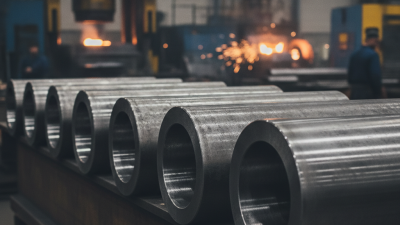
Choosing China’s top forged cylinder manufacturers starts with the job the component must perform. Forged Cylinders serve demanding applications in hydraulic presses, steel mills, mining equipment, and other heavy machinery. Their reliability depends on more than a strong-looking surface. Steel grade, forging method, heat treatment, and machining accuracy all affect service life.
A sound supplier comparison looks at evidence. Ask for material certificates, heat-treatment records, dimensional inspection reports, and ultrasonic testing results where the design requires them. Check whether the manufacturer can meet your drawing tolerances, production volume, and delivery schedule. A sample inspection can reveal practical details, such as a bore’s finish or whether a flange aligns correctly. Small differences matter.
Looks are not enough.
This guide examines manufacturers through capabilities, quality controls, customization, and communication—not just name recognition. It also considers whether a supplier can explain its process clearly and provide traceable documentation for the specific order. Requirements vary by application, so no single factory is automatically the right choice for every buyer. A large production line may suit repeat orders, while a specialized shop may handle unusual dimensions more attentively. Both claims should be verified.
There is a limitation worth admitting: public company information rarely shows how consistently every batch performs. Buyers should confirm specifications directly and agree on inspection criteria before production begins. That extra step may feel tedious. It can prevent costly surprises later.
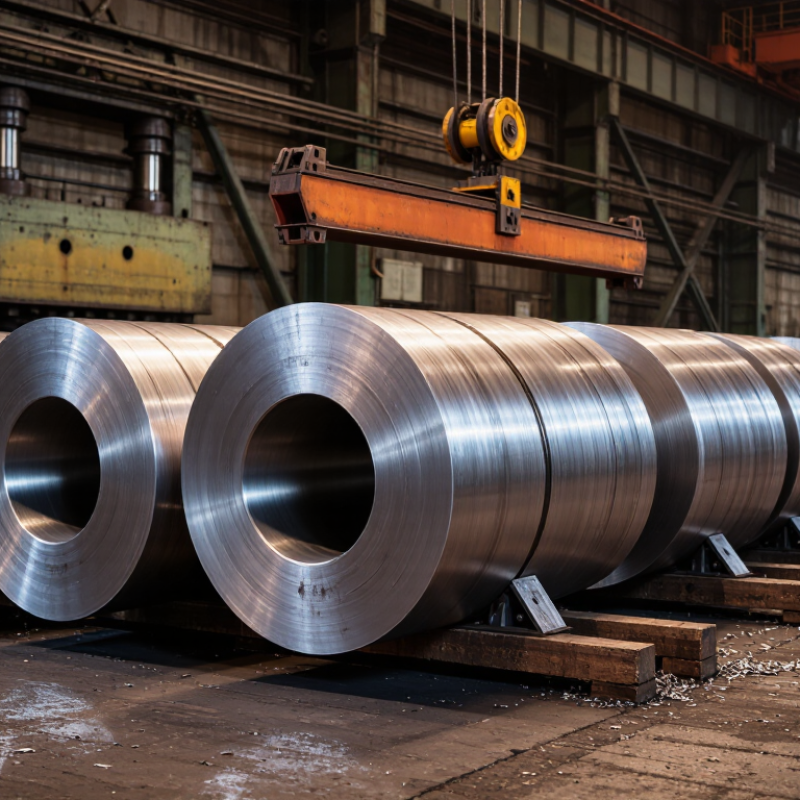
A forged cylinder starts as heated steel or alloy shaped under compressive force. The process may use an open-die press, closed dies, or a forged hollow preform, depending on size and design. Pressure changes the metal’s shape and can refine its internal structure. Details matter. The final grain flow depends on the forging route and later machining, not simply on the word “forged.”
Material selection follows the cylinder’s working conditions. Engineers consider load, operating temperature, corrosion exposure, and the required toughness. Common choices include carbon and alloy steels, while some applications call for stainless grades. Heat treatment can adjust strength and hardness, but the cycle must suit the material and section thickness. A thick wall may cool differently from a thin end.
After forging, the blank is machined to precise dimensions, then checked for surface and internal defects. Inspection may include ultrasonic testing, hardness measurements, and dimensional checks, selected for the part’s risks and specifications. A well-planned process can preserve useful grain flow around highly stressed areas. Still, forging is not automatically better: an unsuitable route can raise cost without extending service life. That trade-off deserves review.
| Dimension | What It Means | Common Examples or Methods | Practical Considerations |
|---|---|---|---|
| Definition | A forged cylinder is a cylindrical component shaped by compressive force, usually while the metal is hot. The term describes the manufacturing route, not one specific product design. | Forged blanks may be machined into pressure-containing parts, sleeves, shafts, or other cylindrical components. | Confirm the component’s function and applicable design code: a forged cylinder is not automatically a complete pressure vessel or a hydraulic-cylinder barrel. |
| Carbon steel | Carbon steels are used when strength, machinability, availability, and cost suit the design requirements. | Examples include C45 / AISI 1045 for some general engineering applications and ASTM A105 for forged piping components. | Grade selection depends on the required strength, section size, operating temperature, environment, and governing specification. ASTM A105 is specifically a piping-component forging specification. |
| Alloy steel | Alloying elements such as chromium and molybdenum can support higher strength and hardenability after suitable heat treatment. | Examples include 42CrMo4 (EN 10083) and ASTM A182 F22 for specified forged piping components. | Mechanical properties depend on the exact grade, heat treatment, product size, and applicable standard; grade names alone do not establish final properties. |
| Stainless steel | Stainless grades are selected where corrosion resistance is needed, with performance depending on the grade and service environment. | ASTM A182 includes forged or rolled alloy and stainless-steel piping components; F304 and F316 are examples of stainless forging grades within that specification. | Consider corrosion conditions, temperature, fabrication requirements, and the relevant material specification. Stainless steel is not immune to every form of corrosion. |
| Grain flow | During forging, deformation can elongate and redirect the metal’s grain structure. The resulting flow pattern depends on the starting stock, die design, and deformation sequence. | Well-planned forging can orient flow around a component’s shape; subsequent machining may cut through or remove portions of that flow. | Grain flow is one factor in performance, not a guarantee of strength or fatigue life. Design, material quality, heat treatment, and inspection also matter. |
| Open-die forging | The workpiece is compressed between dies that do not fully enclose it, allowing the material to be shaped through successive strokes. | Often used for large or relatively low-volume forgings, including cylindrical blanks. | Final dimensions and surface finish commonly require machining. Process capability and achievable properties depend on the workpiece and supplier controls. |
| Closed-die forging | Metal is pressed into shaped die cavities to produce a near-net or preform shape. | Commonly suited to repeat production of parts whose geometry can be formed in the selected dies. | Die design, material flow, flash, and machining allowance affect cost and dimensional results. A cylindrical finished shape may still require substantial machining. |
| Ring rolling | A pierced ring is expanded and reduced in cross-section between rolls. It is a forging process used to make seamless rings. | Useful for ring-shaped components such as flanges and bearing rings; it is not the same process as forging a solid cylindrical billet. | Specify this route only when the required component geometry is ring-like and the design and material specification permit it. |
| Heat treatment | Controlled heating and cooling can adjust a steel forging’s microstructure and mechanical properties. | Depending on grade and specification, processes may include normalizing, quenching and tempering, or solution treatment for applicable stainless grades. | The required treatment should be stated in the purchase specification and verified through the applicable test documentation. |
| Inspection and verification | Inspection checks whether material, dimensions, and quality meet the drawing, purchase order, and governing specification. | Common checks include dimensional inspection, chemical analysis, tensile testing, and suitable non-destructive examination when specified. | Testing methods and acceptance criteria should be agreed in advance; no single inspection method detects every type of defect. |
| This is a general, non-ranking technical overview. Material grades, process capability, properties, and inspection requirements must be confirmed against the relevant design, material standard, and service conditions. | |||