Choosing reliable brass forging parts manufacturers can shape a project’s cost, safety, and delivery performance. This guide reviews ten manufacturers serving global buyers across plumbing, electrical, automotive, and industrial applications. The evaluation considers forging capability, alloy control, machining accuracy, surface finishing, inspection systems, and export experience. These details matter when a component must fit tightly, resist corrosion, and perform under pressure.
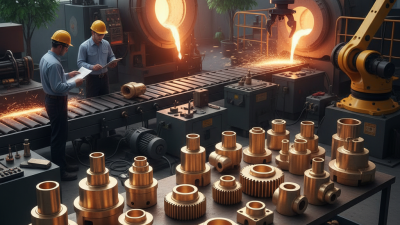
Practical sourcing requires more than comparing catalog photos. Buyers should examine material certificates, sample reports, dimensional tolerances, tooling policies, and production capacity. A forged brass fitting may look simple, yet thread accuracy and internal porosity can affect the entire assembly. Strong manufacturers explain their process clearly, from billet heating to trimming, machining, testing, and packaging. They also communicate realistic lead times.
No ranking is perfect. A supplier with advanced equipment may not suit a small order. Another may offer attractive prices but provide limited inspection evidence. This article balances technical capability, quality consistency, responsiveness, certifications, and customer feedback. It also highlights questions buyers should ask before approving samples or signing contracts. Regional logistics, payment terms, language support, and after-sales service receive attention too. Careful comparison reduces surprises, although no supplier can remove every sourcing risk. The best choice depends on your alloy, drawings, annual volume, required finish, and target market. рҟ
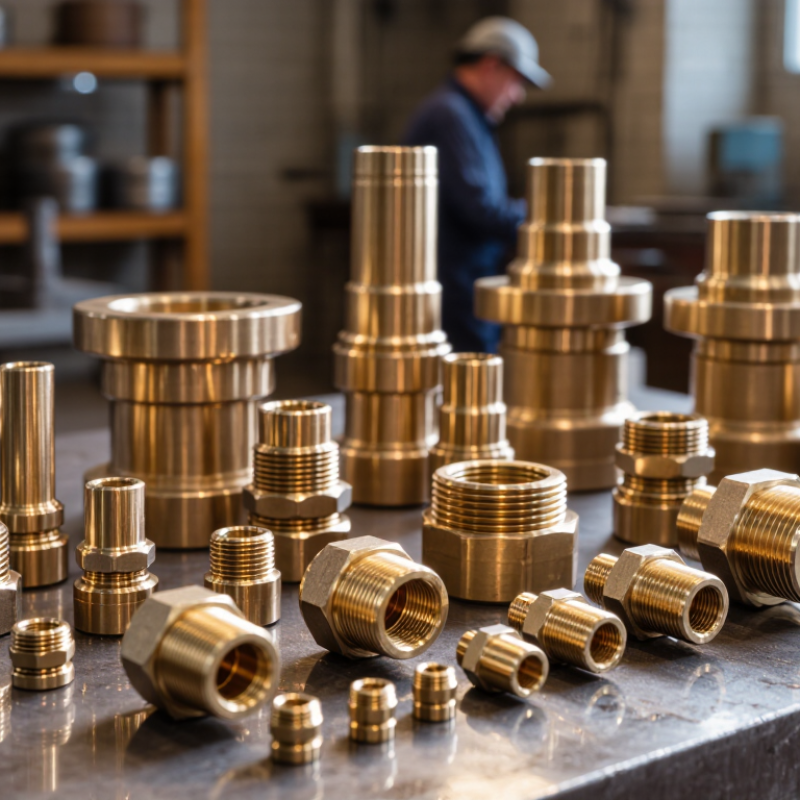
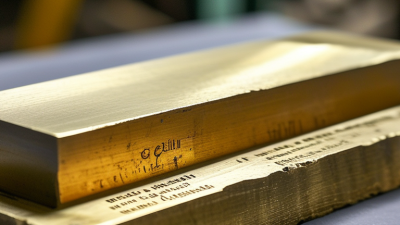
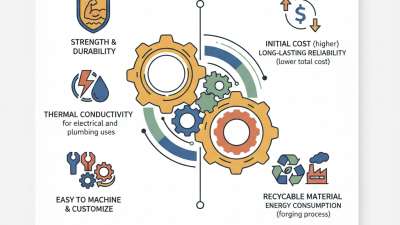
Brass forging parts are components shaped under controlled heat and pressure. Manufacturers form brass billets between dies, creating fittings, connectors, valves, terminals, and structural hardware. This process improves grain flow and reduces internal weakness compared with many cast alternatives. The result is usually a dense part with reliable strength, good corrosion resistance, and excellent electrical conductivity. Small details matter. Thread accuracy, surface finish, and burr control can determine whether a part installs smoothly.
Global buyers need these parts because equipment often operates across demanding environments. Plumbing systems require stable sealing surfaces. Electrical assemblies need dependable conductivity. Industrial machines may face vibration, pressure, moisture, and repeated maintenance. A suitable forging can reduce leakage risks and extend service life. Buyers should review alloy composition, dimensional tolerances, pressure ratings, machining requirements, and applicable testing standards before placing an order.
Reliable sourcing also depends on manufacturing evidence. Ask for material certificates, inspection records, sample approval, and clear traceability from raw material to shipment. Check whether the supplier can support drawings, tooling changes, and consistent batch production. Packaging deserves attention too, especially when parts have polished threads or machined sealing faces. A buyer can still overlook small defects during a rushed inspection. No specification is perfect. Practical testing may reveal installation problems that drawings cannot show. Trial orders, measured samples, and honest communication often provide stronger assurance than attractive catalog claims.

How to Evaluate Brass Forging Manufacturers and Production Capabilities
Choosing a brass forging manufacturer requires more than comparing unit prices. Request process records, not polished presentations. A capable supplier should show die design files, forging temperatures, material certificates, and inspection results. Check whether each heat number follows the part from billet storage to final packing. The 2024 USGS Mineral Commodity Summaries reported global copper mine production at about 22 million metric tons in 2023. This scale does not guarantee stable brass supply, so buyers should verify approved sources and material consistency.
Production capability should match the drawing, volume, and tolerance range. Ask for press capacity, maximum forging weight, annual output, and typical lead times. Review sample reports for dimensional capability, surface defects, hardness, and leak testing. Cpk values near the specification limit deserve questions. A spreadsheet can look convincing and still hide weak process control. The 2023 ISO Survey recorded more than 1.2 million ISO 9001 certificates worldwide, but certification alone cannot prove forging expertise.
Visit the factory when possible. Observe billet heating, trimming, shot blasting, heat treatment, and final inspection. Look for calibrated gauges beside the line, not locked in an office. Ask how rejected parts are separated and investigated. Strong manufacturers can explain corrective actions with dates and measurable results. I would also request a small pilot order before long-term commitment. It may cost more initially. That discomfort is useful. Real capability appears when drawings change, tools wear, or delivery pressure rises.
Recommended evaluation weighting for global buyers when comparing brass forging suppliers. The framework focuses on measurable production, quality, and supply-chain capabilities rather than company or brand data.
Buyers should verify each category through material certificates, sample inspections, tolerance reports, tooling reviews, quality records, capacity evidence, and documented delivery performance.
Choosing among the 10 leading brass forging parts manufacturers for international buyers requires practical evidence, not attractive claims. Experienced suppliers explain alloy grades, forging temperatures, machining limits, and surface treatments clearly. They also provide dimensional reports, material certificates, and traceable production records. These details help buyers judge consistency before placing larger orders.
Reliable manufacturers usually maintain controlled forging lines, calibrated measuring equipment, and documented inspection procedures. Their engineers can review drawings and suggest changes that reduce flash, cracks, or unnecessary machining. Strong suppliers also understand export packaging, moisture protection, labeling, and delivery documentation. Ask for samples made with the proposed brass grade. Small differences matter.
No supplier is perfect. A polished sample may not represent monthly production quality. Buyers should examine tolerance results across several batches and ask how rejected parts are handled. Communication speed matters too, especially when drawings change across time zones. Some manufacturers offer impressive technical language but provide weak evidence. That deserves caution. A useful comparison includes tooling cost, minimum order quantity, lead time, quality controls, and after-sales response. Independent audits can add confidence, although they cannot replace direct technical discussions. The best choice depends on the part’s geometry, working environment, compliance needs, and total delivered cost. Thin walls, deep cavities, and tight threads often expose weaknesses that simple samples conceal.
For global buyers comparing the 10 best brass forging parts manufacturers, certification is only the starting point. The ISO Survey of Management System Standards 2023 recorded more than one million ISO 9001 certificates worldwide. That scale shows quality systems are common, but not automatically effective. Ask for the current certificate, issuing body, scope, and site address. The scope should cover forging, machining, inspection, and final release.
Technical control matters more. ASTM B124 and EN 12165 provide useful references for copper-alloy forgings and material requirements. A reliable supplier should provide heat-lot traceability, chemical analysis, mechanical test results, and dimensional records. Request PMI verification for incoming brass, especially when copper, zinc, lead, or other alloy limits are critical. Check forging flash, die mismatch, cracks, porosity, and machining allowance under controlled lighting. CMM reports can confirm critical dimensions, while hardness testing should identify the method and calibration status.
I have seen attractive inspection files hide weak sampling plans. That deserves scrutiny. ISO 2859-1 may support acceptance sampling, but critical safety-related dimensions often require tighter controls or 100% inspection. Review calibration certificates against ISO 17025 principles, not just expiration dates. Environmental and worker-management certifications, such as ISO 14001 and ISO 45001, add credibility, yet they do not replace product testing. A capable manufacturer will explain nonconformities openly, preserve retained samples, and provide corrective-action evidence instead of promising perfection.
| Rank | Anonymous Manufacturer Profile | Primary Supply Region | Typical Brass Forging Capability | Common Brass Grades | Applicable Product Standards | Relevant Certifications or Compliance | Recommended Inspection Requirements |
|---|---|---|---|---|---|---|---|
| 1 | High-Volume Automotive Forging Supplier | Europe or East Asia | Hot forging, multi-station forming, machining, and automated production lines | CW617N, C36000, C37700, C38500 | EN 12165, ASTM B124/B124M, ASTM B16/B16M | ISO 9001; IATF 16949 preferred; RoHS and REACH declarations | Material certificate, optical emission spectroscopy, first-article inspection, CMM dimensional report, hardness testing, batch traceability, and capability studies for critical dimensions |
| 2 | Precision Plumbing and Valve Forging Supplier | Central Europe or North America | Closed-die forging, CNC machining, pressure testing, and threaded components | CW617N, C37700, C46400 | EN 12165, ASTM B124/B124M, ASME B16.15 where applicable | ISO 9001; potable-water compliance according to the destination market; lead-content declaration | Chemical composition, thread gauges, dimensional inspection, hydrostatic or pneumatic leak testing, surface examination, and verification of lead limits |
| 3 | Industrial Fittings and Hydraulic Components Supplier | East Asia | Hot forging, precision turning, deburring, plating, and assembly | C36000, C37700, C46400 | ASTM B124/B124M, ASTM B16/B16M, ISO 68-1 for general thread geometry | ISO 9001; ISO 14001 beneficial; RoHS and REACH compliance | Pressure and leak tests, thread inspection, concentricity measurement, coating thickness testing, burr inspection, and lot-based sampling plans |
| 4 | Low-Lead Brass Component Specialist | North America or Europe | Lead-free or low-lead forging, machining, and controlled alloy processing | C69300, C87850, low-lead copper-zinc alloys | Applicable ASTM copper-alloy specifications and destination-market drinking-water requirements | ISO 9001; NSF/ANSI/CAN 61 or equivalent market approval when required; RoHS and REACH | Independent laboratory chemical analysis, lead and restricted-substance testing, dimensional inspection, pressure testing, and complete heat-number traceability |
| 5 | Custom Small-Batch Forging and Prototyping Supplier | Europe or North America | Tooling development, prototype forging, CNC finishing, and engineering support | C37700, C36000, C46400, customer-specified alloys | EN 12165, ASTM B124/B124M, customer drawings and specifications | ISO 9001 preferred; ISO 17025-accredited external laboratories for special tests | FAI report, 3D scanning or CMM inspection, alloy verification, visual examination, dimensional layout, and sample retention |
| 6 | Electrical and Connector Forging Supplier | East Asia or Southeast Asia | High-speed forming, precision machining, plating, and electrical-contact components | C36000, C54400, C19000 where specified | ASTM B16/B16M, ASTM B139/B139M, customer electrical specifications | ISO 9001; ISO 14001; RoHS, REACH, and conflict-minerals declarations when applicable | Electrical conductivity, plating thickness, dimensional inspection, contact-force testing where applicable, surface cleanliness, and contamination control |
| 7 | Marine and Corrosion-Resistant Brass Forging Supplier | Northern Europe, Mediterranean region, or East Asia | Hot forging of dezincification-resistant and naval brass components | C46400, C48500, DZR brass grades | ASTM B124/B124M, EN 12165, applicable marine classification requirements | ISO 9001; ISO 14001 beneficial; marine approval where contractually required | Chemical analysis, dezincification-resistance testing where specified, hardness, dimensional inspection, visual checks, and saltwater or pressure testing when applicable |
| 8 | Sanitary and Gas-Fitting Forging Supplier | Europe or North America | Forged valves, adapters, manifolds, sanitary fittings, and gas components | CW617N, C37700, C46500 | EN 12165, ASTM B124/B124M, applicable gas or pressure-equipment standards | ISO 9001; product certification based on the destination market; RoHS and REACH where applicable | 100% or statistically controlled leak testing, pressure testing, thread gauges, material verification, cleanliness inspection, and packaging validation |
| 9 | Export-Oriented Forging and Machining Supplier | Southeast Asia or South Asia | Open and closed-die forging, CNC machining, finishing, and export packaging | C36000, C37700, CW617N, C46400 | ASTM B124/B124M, EN 12165, customer drawings and inspection plans | ISO 9001; ISO 14001 preferred; RoHS and REACH documentation | Pre-production sample approval, incoming material inspection, in-process checks, final dimensional report, packaging inspection, and pre-shipment third-party inspection |
| 10 | Integrated Forging, Heat-Treatment, and Surface-Finishing Supplier | Europe, East Asia, or North America | Forging, controlled heat treatment, machining, polishing, plating, and assembly | C37700, C36000, C46400, CW617N | EN 12165, ASTM B124/B124M, ASTM B16/B16M, customer specifications | ISO 9001; ISO 14001; ISO 45001 beneficial; RoHS and REACH compliance | Heat-treatment records, hardness mapping, chemical composition, coating thickness, adhesion testing, CMM inspection, final functional testing, and full process traceability |
Comparing the 10 best brass forging parts manufacturers requires more than checking the lowest quotation. Ask for a detailed price breakdown covering material, tooling, machining, surface treatment, inspection, and packaging. A lower unit price may hide expensive molds or high minimum order quantities. Request samples from the same drawing and compare weight, tolerances, thread quality, and visible forging marks. Practical testing often reveals differences that spreadsheets miss.
Lead time should include engineering review, tooling production, sample approval, mass production, and shipment. Reliable manufacturers provide a milestone schedule, not just a single delivery date. Check their experience with export packaging, commercial invoices, certificates of origin, and customs documentation. Confirm whether they can support your preferred port and shipping terms. These details reduce delays, although no supplier can promise perfect timing during material shortages or port congestion.
Tips: Compare total landed cost, not factory price alone. Ask how they handle rejected parts and design changes. Request recent inspection records, but verify them with independent checks when the order is critical. A supplier may answer quickly and still lack production discipline. I have found that clear drawings and written acceptance criteria prevent more problems than persuasive sales presentations. Allow a small schedule buffer. It feels inefficient, but it often protects the launch date.