Leave Your Message
Choosing a Cold Forging Die supplier in 2026 is not just a price comparison. A die may look simple on a drawing, yet its performance depends on steel quality, heat treatment, machining accuracy, and the way it handles material flow. A small mismatch can mean chipped edges, inconsistent dimensions, or repeated production stoppages. Those details matter on the press floor.
Dr. John A. Schey, a respected metal-forming author, studied how materials deform during manufacturing. The following is an editorial paraphrase of principles in his work, not a verbatim quotation: “Reliable forming begins with controlling material flow.” It is a useful lens for evaluating suppliers. Ask how each company selects tool steel, verifies hardness, manages tolerances, and investigates premature die failure. Request evidence, not just confident claims. A polished catalogue cannot show how a die behaves after thousands of cycles.
This guide examines leading Cold Forging Die suppliers for 2026 through practical criteria: engineering support, manufacturing capability, quality controls, delivery reliability, and service after installation. Supplier strengths can vary by part geometry and production volume, so a universal ranking may hide important trade-offs. A lower quote may look attractive. Then tooling life tells another story. The comparison ahead aims to help buyers ask sharper questions and identify the right fit, while recognizing that supplier data and capabilities should be confirmed directly before purchase. One caveat remains: even a capable supplier cannot compensate for unclear specifications or poor process control.
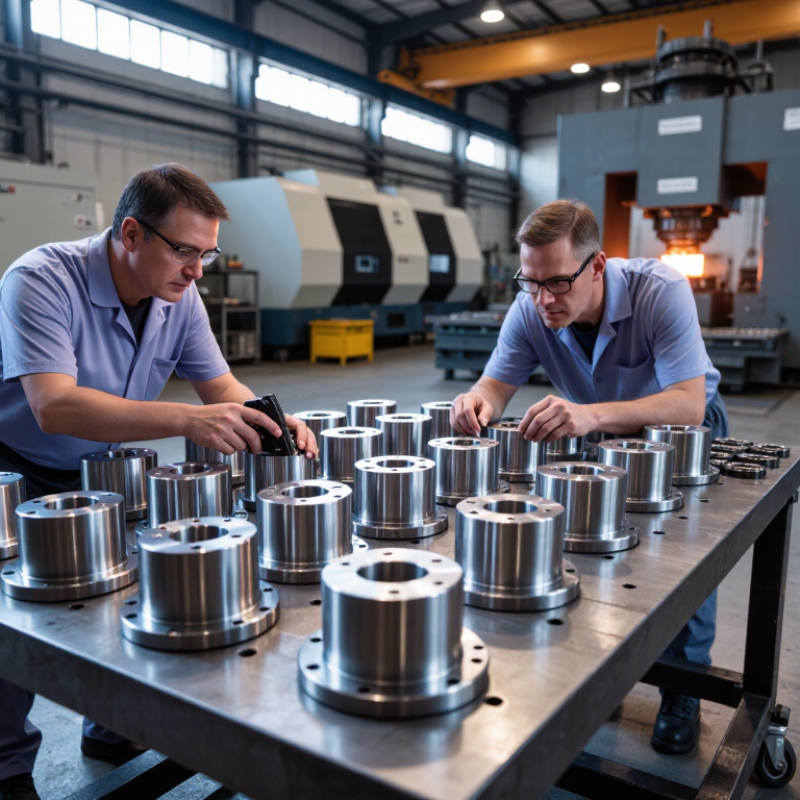
Cold forging dies are precision tools that squeeze metal billets near room temperature into repeatable shapes. A punch drives the billet into a die cavity; the cavity controls its flow. Common operations include heading, upsetting, extrusion, and coining. Unlike machining, the process forms parts with little material removal. The World Steel Association reported 1,882.6 million tonnes of crude steel production worldwide in 2024, illustrating the vast material base served by metal-forming industries. That figure is not a measure of cold-forged output, however. The distinction matters.
A die set may include a punch, insert, holder, and guides. Tool steel or carbide is selected according to load, wear, part geometry, and production volume. The ASM Handbook, Volume 14A, describes bulk forming as a process governed by material flow, friction, and tool-workpiece interaction. In practice, small changes to a cavity radius or lubricant can affect filling, surface finish, and die life. A clean cross-section helps. Experienced engineers check for stress concentrations and elastic die movement, then validate designs with trials or simulation. Those checks reduce risk, but no model fully captures production-floor variation. When comparing suppliers, ask how they measure cavity wear, control heat treatment, and document trial results—not only how closely a new die matches its drawing.
Cold-forging dies are hardened tools that shape metal at or near room temperature under high pressure. This comparison outlines common die components and practical capabilities to assess when evaluating suppliers; it is not a ranked supplier list.
| Die or Tooling Component | Main Function | Typical Cold-Forging Operation | Common Tool Materials | Supplier Capability to Check |
|---|---|---|---|---|
| Die insert | Forms the outside profile of the workpiece and withstands high contact pressure during forming. | Heading, upsetting, forward extrusion, and backward extrusion. | Cold-work tool steels such as AISI D2 or AISI A2; cemented carbide may be used where high wear resistance is needed. | Ask about insert design, heat-treatment control, surface finishing, and how the insert is supported in its die case. |
| Punch | Contacts and displaces the material, forming features such as heads, recesses, or internal contours. | Heading, coining, and extrusion. | Cold-work tool steels, high-speed tool steels, or cemented carbide, selected according to load, wear, and impact conditions. | Check punch-life tracking, dimensional inspection, fracture prevention, and the supplier’s approach to punch geometry. |
| Heading die | Contains the billet or wire segment while a punch upsets material to form a head or other enlarged section. | Cold heading of fasteners and other formed parts. | Cold-work tool steel or carbide tooling; the choice depends on production volume, material, and operating conditions. | Verify experience with the intended part geometry, multi-station tooling, die alignment, and replacement-part availability. |
| Extrusion die | Forces metal through or into a shaped opening to produce a reduced or formed cross-section. | Forward extrusion or backward extrusion. | Cold-work tool steel or cemented carbide; carbide can offer high compressive strength and wear resistance but is more brittle than steel. | Ask how the supplier evaluates extrusion pressure, die stresses, material flow, and the risk of cracking or chipping. |
| Ejector or knockout pin | Pushes the formed part out of the die after the forming stroke. | Part release in heading and extrusion dies. | Wear-resistant tool steel or other suitable hardened tooling material, chosen for the load and contact conditions. | Check pin fit, alignment, wear resistance, and whether the design supports reliable part release without damaging the component. |
| Die case and backing components | Support and contain the working die insert, helping manage the loads generated during forming. | Used with insert-based heading and extrusion tooling. | Strength-appropriate alloy or tool steels, selected for the tooling assembly and press conditions. | Review assembly design, fit tolerances, stress-management methods, and documentation for the complete tooling set. |
| Complete multi-station tooling set | Coordinates dies, punches, and supporting parts across successive forming stages. | Progressive cold heading or multi-stage cold forging. | Material selection varies by component; tool steels and cemented carbide are common choices. | Assess engineering support, station-to-station coordination, trial capabilities, inspection records, and service for maintenance or revisions. |