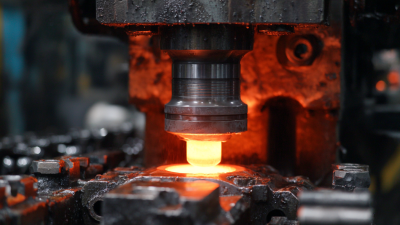
China remains a major manufacturing base for automotive components, including Stainless Steel Auto Parts. Its scale deserves careful evaluation, not automatic praise. The China Association of Automobile Manufacturers reported approximately 30.16 million vehicles produced in 2023. It also recorded about 4.91 million vehicle exports. These figures indicate a deep supplier ecosystem, but production volume alone cannot prove reliability.
Material demand adds another perspective. The World Stainless Association reported global stainless steel production of approximately 58.4 million tonnes in 2023. Automotive suppliers therefore operate within a large, competitive material market. However, buyers should verify alloy certificates, heat numbers, surface finish, and corrosion-testing records. A polished exhaust clamp may look excellent while hiding inconsistent stainless grades.
This guide examines China’s leading stainless steel automotive suppliers through practical purchasing criteria. These include IATF 16949 certification, PPAP capability, CNC and stamping capacity, welding quality, inspection equipment, and export experience. OICA’s 2023 vehicle production statistics also show the scale of global automotive demand, supporting a more international supplier comparison. Quality systems matter.
Reliable suppliers should provide dimensional reports, RoHS or REACH documentation where applicable, traceability records, and clear production lead times. They should explain tolerances, packaging methods, and failure responsibility before mass production. No shortlist is perfect. Supplier rankings can change with capacity, management, and customer requirements.
The following overview focuses on evidence rather than promotional claims. It is designed for importers, manufacturers, and engineering teams seeking durable, compliant, and consistently manufactured Stainless Steel Auto Parts from China.

Stainless steel auto parts suppliers are companies that design, process, and deliver corrosion-resistant components for vehicles. Their products may include exhaust fittings, brackets, fasteners, tubing, and precision-machined parts. The supplier’s role extends beyond production. It includes material selection, dimensional control, surface finishing, packaging, and technical communication.
Experienced suppliers usually provide material certificates, inspection reports, and production samples. These documents help buyers confirm steel grades, hardness, chemical composition, and tolerance levels. Reliable factories also use measuring equipment during forming, welding, and machining. Small errors matter. A poorly aligned bracket can create vibration, noise, or early failure.
Chinese suppliers often support custom orders through drawings, prototypes, and flexible production volumes. However, low prices should not define quality. Buyers should review traceability systems, inspection procedures, export experience, and response speed. A clear quality agreement is useful before mass production begins. It should explain accepted tolerances, testing methods, packaging, and corrective actions.
Some suppliers communicate well but lack stable process control. Others offer strong equipment but weak technical support. This difference is easy to miss. Careful evaluation remains necessary, even after receiving attractive samples. A supplier should be treated as a manufacturing partner, not only a parts seller.
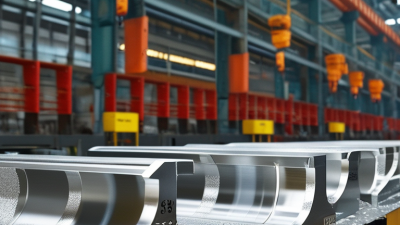
China Top Stainless Steel Auto Parts Suppliers?
China’s stainless steel auto parts sector serves both replacement and original-equipment projects. Key categories include exhaust components, clamps, brackets, heat shields, fasteners, pipes, and precision-formed fittings. These parts need corrosion resistance, stable dimensions, and clean welds. Material choices often include 304 and 316 stainless steel, while higher-temperature systems may require heat-resistant grades. The correct grade depends on temperature, salt exposure, vibration, and forming requirements.
Capable manufacturers usually combine laser cutting, CNC machining, stamping, tube bending, and robotic or manual welding. Some also provide polishing, passivation, leak testing, dimensional inspection, and surface-finish control. Ask for material certificates, production samples, inspection records, and process capability data. A supplier should explain tolerances clearly, not hide behind general quality claims. In practice, even a strong factory can produce inconsistent results after tooling changes. That detail deserves attention.
Tips: Compare sample parts under bright light. Check weld penetration, sharp edges, hole positions, and surface stains. Request a small trial order before regular production. Confirm packaging for transport damage. Do not judge capability from photographs alone. An on-site or third-party audit can reveal storage problems, outdated gauges, or weak inspection habits. Some buyers focus heavily on price and later discover costly rework. That mistake is understandable, but avoidable.
China Top Stainless Steel Auto Parts Suppliers?
Quality Standards, Certifications, and Material Traceability
Reliable stainless steel auto parts suppliers should control quality from raw material receipt to final packing. In practice, this means checking dimensions, surface finish, hardness, tensile strength, and corrosion resistance. A polished part may look perfect while hiding weak material or machining errors. Visual inspection is not enough.
Look for a documented quality system, such as ISO 9001, and automotive process controls aligned with IATF 16949 requirements. Certifications matter, but they need verification. Ask for the certificate scope, issuing body, validity period, and recent audit records. Supplier experience is also visible in inspection plans, calibrated gauges, and clear responses to nonconformities. Small details reveal competence.
Material traceability should connect every part to a heat number, mill certificate, production batch, and inspection report. For stainless steel components, chemical composition can be verified through supplier documents and, when necessary, portable PMI testing. Each carton should carry a readable lot code. Records should remain searchable after shipment, not disappear in email folders. That happens sometimes. It deserves attention.
A dependable supplier can explain what happens when a batch fails testing. They should isolate affected parts, identify the cause, and document corrective action. Request sample records before placing a large order. Review thread accuracy, burr removal, weld quality, and dimensional results from actual production parts. Factory visits add useful evidence, although one visit cannot prove consistent performance. Independent inspections and periodic testing may still be necessary.
| Evaluation Dimension | Relevant Standard or Reference | Recommended Supplier Evidence | Practical Acceptance Criteria | Traceability and Verification Method |
|---|---|---|---|---|
| Quality Management System | ISO 9001:2015; IATF 16949 for automotive supply chains | Valid certificate, scope of certification, recent audit findings, corrective-action records | Certification scope covers the relevant production site and manufacturing activities; major findings are closed on schedule | Verify certificate validity with the issuing certification body and review audit status during supplier approval |
| Stainless Steel Grade Control | Applicable material specification, customer drawing, ASTM, EN, or equivalent national standard | Material certificate showing grade, heat number, chemical composition, mechanical properties, and delivery condition | Chemical and mechanical values comply with the purchase specification and approved drawing | Match the heat number on the certificate with the material label, traveler, and finished-part production record |
| Material Certificate Format | EN 10204, typically Type 3.1 for certified inspection results | Signed or electronically controlled inspection certificate issued under the manufacturer’s quality system | Certificate identifies the product, quantity, grade, heat number, test results, and applicable order reference | Check document number, heat number, batch quantity, and consistency with the incoming inspection report |
| Chemical Composition | Specified stainless steel grade and applicable product standard | Mill test report and, when required, positive material identification results using a calibrated analyzer | Key alloying elements and limits meet the ordered grade; no material substitution without written approval | Use heat-level records and random or risk-based PMI checks on incoming material and finished parts |
| Mechanical Properties | Applicable material specification or customer requirement | Tensile strength, yield strength, elongation, hardness, and test-condition records where applicable | All required values meet the specified grade, temper, thickness, and heat-treatment condition | Review laboratory method, specimen orientation, test date, equipment identification, and heat number |
| Dimensional Accuracy | Approved engineering drawing, GD&T requirements, and control plan | First Article Inspection report, inspection plan, gauge list, and capability study for critical characteristics | Critical dimensions conform to drawing tolerances; measurement systems are suitable and calibrated | Link inspection results to part number, revision, machine, operator, lot, and inspection time |
| Surface Finish and Corrosion Resistance | Drawing specification; agreed surface-finish requirement; applicable corrosion test method | Surface roughness results, visual inspection records, passivation or polishing records, and corrosion-test reports when specified | No burrs, cracks, contamination, discoloration, or unacceptable tool marks; finish matches the approved sample | Record treatment batch, process parameters, inspection results, and release status for each production lot |
| Welding and Joining Control | Approved welding procedure, customer specification, and applicable welding quality requirements | Welding procedure qualification, welder qualification, parameter logs, visual inspection, and non-destructive test records where required | Joint strength, penetration, appearance, distortion, and defect limits meet the approved requirements | Trace welds to operator, equipment, consumable lot, procedure revision, and production batch |
| Calibration and Measurement Systems | ISO 9001 or IATF 16949 measurement-control requirements; ISO/IEC 17025 for external laboratories | Calibration certificates, equipment register, measurement uncertainty data, and laboratory accreditation details where applicable | Equipment is within calibration at the time of inspection and appropriate for the required tolerance | Confirm serial number, calibration due date, reference standard, and out-of-tolerance impact assessment |
| Process Control and Change Management | Approved control plan, process flow, PFMEA, and customer change-notification requirements | Process parameters, work instructions, deviation approvals, engineering-change records, and requalification results | No changes to material, tooling, heat treatment, subcontractor, or process location without documented approval | Use revision-controlled records to identify when, why, and by whom each change was approved |
| Lot Identification | Internal traceability procedure and customer-specific requirements | Lot-code structure, labels, production travelers, packing records, and shipment documentation | Each shipment can be linked to a defined production lot and corresponding inspection release | Forward trace from raw material to shipment and backward trace from finished part to heat and process records |
| Nonconforming Product Control | ISO 9001 or IATF 16949 nonconformity and corrective-action requirements | Nonconformance reports, containment records, root-cause analysis, corrective actions, and concession approvals | Affected lots are identified, segregated, dispositioned, and prevented from unintended shipment | Review defect trends, response time, recurrence rate, and evidence of effective corrective action |
| Automotive Regulatory Compliance | Customer-specific requirements; applicable vehicle-material and restricted-substance regulations | Material declarations, restricted-substance statements, supplier compliance records, and test reports when required | Declared materials and substances meet the destination-market and customer requirements | Maintain compliance records by part number, material grade, revision, and production date |
| Supplier Audit Readiness | Customer audit checklist; ISO 9001 or IATF 16949 audit principles | Process-audit results, layered-process-audit records, key performance indicators, and improvement plans | Records are current, retrievable, internally consistent, and supported by objective production evidence | Perform document review, production-floor audit, sample trace exercise, and corrective-action follow-up before approval |
Choosing China-based stainless steel auto parts suppliers requires more than comparing price lists. Evaluate production experience, material control, and communication before ordering. Ask how the supplier identifies steel grades, manages heat treatment, and checks dimensional accuracy. A reliable factory should provide traceable mill certificates, inspection records, and clear tolerance data. Request samples made through the same process as mass production.
A polished sample can hide weak process control. That happened during one sourcing review. We now inspect unfinished surfaces, threads, welds, and edges under strong light.
Assess equipment and quality systems through an on-site visit or detailed remote audit. Look for calibrated gauges, clean storage, separated raw materials, and workers who understand inspection steps. Confirm capacity through monthly output, lead times, tooling ownership, and backup plans. Check whether engineers can read drawings and manage revisions accurately. Stainless steel performance depends on corrosion resistance, surface finish, and fit, not appearance alone. Ask for corrosion-test evidence when relevant. Independent testing adds confidence for safety-related components. Still, certificates do not prove every batch. Verify recent records.
Tips: Send drawings with critical dimensions highlighted. Define sampling rules before production. Compare first articles with signed inspection reports. Keep one approved sample for future audits. Visit the facility if possible. If travel is difficult, request live video checks, timestamped photos, and random measurements. Do not accept vague answers. A low quote may reflect omitted processes, not efficiency.
A reliable sourcing process starts with clear drawings, material grades, tolerances, surface finishes, and annual quantities. Request samples before discussing large production volumes. Check the supplier’s factory capacity, inspection equipment, quality records, and experience with automotive components. A video audit helps, but it cannot replace an independent pre-shipment inspection. Small details matter. For example, scratches around a polished exhaust clamp may appear after transport, not production.
Pricing depends on stainless steel grade, weight, machining time, tooling, finishing, packaging, and order volume. Freight costs can change the final price sharply. Ask whether the quotation includes molds, testing, export packing, and documentation. Compare equal specifications, not only unit prices. A low quote may hide thin material or loose tolerances. That mistake is expensive. Buyers should also confirm payment terms, production lead time, minimum order quantity, and the agreed delivery term.
Tips: Keep one approved sample as the reference standard. Ask for material certificates and dimensional reports for each batch. Confirm the correct HS classification with a qualified customs professional. Use moisture-resistant cartons, protective separators, and visible part labels. Export documents should match the commercial invoice, packing list, and shipping details. Requirements vary by destination, so review import duties, product standards, labeling rules, and testing obligations before production. Some buyers overlook packaging until damage appears. Rechecking the plan is worthwhile.