Leave Your Message

Who Are the Top China Stainless Steel Auto Parts Suppliers?

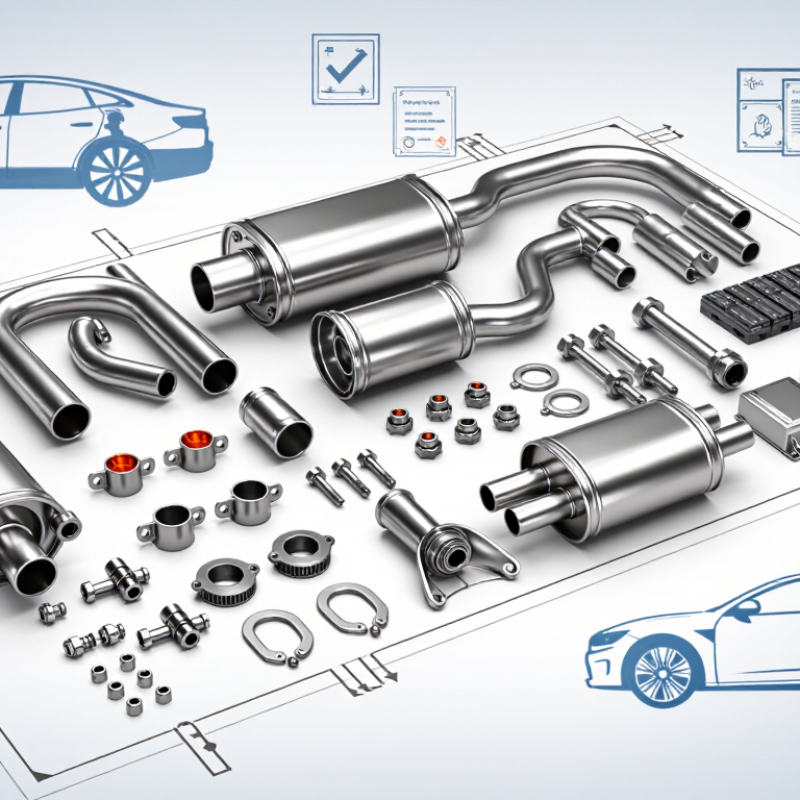
China has become a major manufacturing base for Stainless Steel Auto Parts, but supplier quality varies sharply. A polished factory floor does not guarantee reliable components. Buyers must examine material certificates, production records, inspection methods, and customer references.

Metallurgist Professor Harry Bhadeshia defines stainless steel clearly: “Stainless steels are iron-based alloys containing at least 10.5% chromium.” This simple point matters in automotive sourcing. The correct alloy, usually 304, 316, or a specified grade, must match the part’s environment. Exhaust brackets face heat. Brake hardware faces moisture, salt, and vibration. Decorative trim requires clean forming and consistent polishing.

The strongest Chinese suppliers usually combine CNC machining, stamping, laser cutting, welding, and surface finishing under controlled procedures. They can provide heat numbers, dimensional reports, salt-spray results, and samples from regular production. Look closely at weld discoloration, sharp edges, thread accuracy, and packaging. Small defects become expensive after installation.

Experience still matters.

A supplier may offer a low quotation but lack stable raw-material control. Another may appear less competitive yet reduce rejection rates through better tooling and inspection. This comparison is not always comfortable. Some buyers also overtrust certifications without checking daily execution. That is a mistake.

This guide examines leading China Stainless Steel Auto Parts suppliers through capability, quality consistency, customization, delivery performance, and automotive experience. It does not treat company size as proof of excellence. Instead, it asks a harder question: can each supplier repeatedly deliver safe, traceable, and accurately finished parts under real vehicle conditions?

Who Are the Top China Stainless Steel Auto Parts Suppliers?

China’s 2023 Auto Output Reached 30.16 Million Units: Market Context

Who Are the Top China Stainless Steel Auto Parts Suppliers?

China’s automotive output reached 30.16 million vehicles in 2023, according to the China Association of Automobile Manufacturers. Sales also exceeded 30 million units, showing strong demand for exhaust components, fasteners, brackets, trim, and formed structural parts. The International Organization of Motor Vehicle Manufacturers reported global vehicle production above 93 million units that year. China therefore remains a major manufacturing base, not only a domestic market.

For buyers, the strongest stainless steel auto parts suppliers should show stable grades, clear mill certificates, and repeatable forming accuracy. Common materials include 304, 316L, and heat-resistant stainless grades for exhaust applications. The World Stainless Association reported global stainless steel production of about 58.4 million tonnes in 2023. This scale supports broad material availability, but it does not guarantee consistent quality. That assumption is useful, but incomplete.

Factory audits should examine laser cutting, stamping, welding, polishing, and salt-spray testing. A supplier may offer an attractive price while lacking traceability for coils and welding wire. I have seen small dimensional differences create fitting problems during assembly. Buyers should request first-article samples, inspection records, and production photos before approving volume orders. The best sourcing decision depends on verified process control, not catalog size. Some evaluations still focus too heavily on price. That deserves reconsideration.

How Stainless Steel Grades 304 and 316 Shape Auto Parts Supplier Selection

Who Are the Top China Stainless Steel Auto Parts Suppliers?

Grade selection often separates a reliable supplier from a cheap one. The World Stainless Association reported approximately 58.4 million tonnes of global stainless crude steel production in 2023. This scale supports wider sourcing, but volume alone proves little. Automotive buyers should request heat numbers, mill certificates, and independent composition tests.

Grade 304 remains a practical choice for brackets, trim, exhaust shields, and formed interior components. It typically contains about 18% chromium and 8% nickel. The International Molybdenum Association explains that 316 includes roughly 2–3% molybdenum, improving resistance to chloride exposure. Coastal roads, winter salt, and humid underbody zones can justify the higher material cost.

Look beyond price.

A capable China-based supplier should explain why 304 or 316 fits each service environment. Ask for salt-spray results, tensile data, dimensional inspection records, and welding procedures. ASTM A240 requirements can help verify sheet and plate chemistry, but they do not replace part-level validation. Suppliers with automated forming and laser inspection may reduce distortion and burrs, especially on thin stainless components.

There is a catch. 316 is not automatically better for every vehicle part. Its added alloying content can increase purchasing cost, while poor forming practice may still cause cracking or contamination. A useful supplier comparison should include total lifecycle risk, not only the quoted kilogram price. I would also challenge unusually perfect test data. Independent retesting sometimes exposes gaps between certified material and delivered batches.

Who Are the Top China Stainless Steel Auto Parts Suppliers? - How Stainless Steel Grades 304 and 316 Shape Auto Parts Supplier Selection

A brand-neutral comparison framework for evaluating stainless steel auto-parts suppliers, material suitability, documentation, and production capability.

Evaluation Dimension Stainless Steel Grade 304 Stainless Steel Grade 316 Supplier Evidence to Request Selection Implication
Common standard designation AISI/SAE 304; UNS S30400; commonly specified under ASTM A240 for flat products. AISI/SAE 316; UNS S31600; commonly specified under ASTM A240 for flat products. Material certificate showing the applicable ASTM, EN, or JIS designation and heat number. Confirm that the quoted material standard matches the drawing and regulatory requirements.
Typical chemical composition Chromium: 18.0–20.0%; nickel: 8.0–10.5%; carbon: maximum 0.08% under common ASTM limits. Chromium: 16.0–18.0%; nickel: 10.0–14.0%; molybdenum: 2.0–3.0%; carbon: maximum 0.08% under common ASTM limits. Heat-analysis report or EN 10204 Type 3.1 inspection certificate. 316’s molybdenum content generally improves resistance to chloride-related pitting compared with 304.
Minimum tensile strength, annealed condition Typically 515 MPa minimum under ASTM A240 requirements. Typically 515 MPa minimum under ASTM A240 requirements. Mechanical-test results including tensile strength, yield strength, and elongation. Grade selection alone does not determine part strength; geometry, thickness, forming, and heat treatment also matter.
Minimum yield strength, annealed condition Typically 205 MPa minimum under ASTM A240 requirements. Typically 205 MPa minimum under ASTM A240 requirements. Mill test certificate and, where required, independent verification testing. Use the complete engineering specification rather than assuming 316 is mechanically stronger than 304.
Corrosion environment Good
Suitable for many indoor, dry, mildly humid, and general automotive environments.
Very good
Better suited to chloride exposure, coastal conditions, road-salt contact, and some chemical environments.
Documented material grade, surface condition, passivation or cleaning procedure, and corrosion-test method where applicable. Choose 316 when chloride exposure creates a credible pitting or crevice-corrosion risk; validate the actual environment.
Formability Excellent general cold-forming performance when the correct temper and tooling are used. Very good cold-forming performance, with work-hardening behavior that must be considered in deep drawing. Production samples, forming records, blank design, and evidence of tool tryout. Compare suppliers by demonstrated forming capability, not only by material price.
Weldability Generally excellent; low-carbon 304L is often selected for welded fabrication to reduce sensitization risk. Generally excellent; low-carbon 316L is often selected for welded fabrication to reduce sensitization risk. Welding procedure specification, welder qualification, filler-metal details, and post-weld cleaning controls. For welded auto parts, confirm whether 304L or 316L is required instead of standard 304 or 316.
Magnetic response Annealed material is normally non-magnetic, but cold working can produce some magnetic response. Annealed material is normally non-magnetic, but cold working can produce some magnetic response. Material condition, cold-reduction percentage, and any magnetic-permeability requirement. Do not use a simple magnet test as the sole method of grade identification.
Typical automotive part suitability Exhaust trim, brackets, shields, clamps, fasteners, fabricated covers, and general corrosion-resistant components, subject to temperature and design validation. Marine or coastal vehicle hardware, components exposed to road salts, fluid-handling hardware, and higher-corrosion-risk brackets or fittings. Application history without confidential customer names, production samples, dimensional inspection records, and process capability data. Match the grade to exposure, temperature, load, appearance, and lifecycle requirements.
Surface-finish capability Common finishes include 2B, BA, brushed, polished, and custom formed or passivated surfaces. Common finishes include 2B, BA, brushed, polished, and custom formed or passivated surfaces. Approved surface sample, roughness target, inspection method, protective-film specification, and packaging standard. Surface consistency is critical for visible trim and for preventing contamination during storage and assembly.
Manufacturing processes to verify Laser or stamping cutting, bending, deep drawing, CNC machining, welding, deburring, passivation, and assembly. Same core processes, with additional attention to work hardening, tool wear, weld cleaning, and chloride contamination control. Process-flow chart, equipment list, maintenance records, first-article inspection, and process-control plan. Prioritize suppliers with in-house control of critical operations or qualified, traceable subcontractors.
Traceability requirements Heat number and batch traceability should be maintained from incoming coil, sheet, tube, or bar through finished parts. Heat number and batch traceability are equally important, especially where corrosion performance is safety or warranty relevant. Lot numbering, material-to-part traceability matrix, barcode records, and retention period for quality documents. Traceability reduces the risk of grade substitution and supports root-cause analysis.
Quality-system indicators Look for a documented quality system, controlled drawings, calibrated inspection equipment, nonconformance procedures, corrective-action records, and automotive-relevant production controls. Request valid certification scope, audit results, inspection plans, control plans, and sample corrective-action reports with confidential information removed. Certificates should be verified against their scope and validity; certification alone does not replace a technical audit.
Inspection capability A capable supplier should be able to verify dimensions, flatness, hole position, weld appearance, surface defects, hardness where specified, and material identity. Equipment list including CMM, optical measurement, surface-roughness tester, thickness gauge, and PMI/XRF access where required. Define critical-to-quality characteristics and acceptance limits before requesting quotations.
Material identification Positive material identification can help distinguish 304 from other austenitic grades, but chemical analysis should follow the agreed test method. PMI or laboratory analysis should confirm chromium, nickel, and molybdenum levels where grade verification is critical. PMI procedure, calibration records, test frequency, and sample-based or 100% inspection plan. 316 verification should specifically account for molybdenum; visual appearance cannot reliably identify the grade.
Commercial comparison Usually lower material cost
Actual pricing varies with nickel markets, form, thickness, finish, order volume, and processing.
Usually higher material cost
Actual pricing varies with nickel and molybdenum markets, form, thickness, finish, order volume, and processing.
Itemized quotation covering raw material, tooling, processing, inspection, packaging, freight, and payment terms. Compare total lifecycle cost, including corrosion risk, rework, warranty exposure, and service life—not only the unit price.
Recommended supplier-selection decision Prefer when the environment is moderate and the supplier demonstrates stable forming, welding, finish, and traceability control. Prefer when chloride, salt, coastal exposure, or aggressive cleaning conditions justify the additional alloy content and cost. Use technical review, sample approval, process audit, quality agreement, and pilot-lot evaluation before mass production. The strongest supplier is the one that can consistently meet the required grade, process capability, documentation, delivery, and lifecycle-performance targets.
Reference basis: Composition and minimum mechanical-property figures are based on commonly used ASTM A240 requirements for annealed 304/304L and 316/316L stainless steel products. Exact limits depend on the selected product standard, product form, thickness, temper, and purchase specification. Corrosion performance must be validated against the actual service environment.

Which China Suppliers Serve OEMs Under IATF 16949 Quality Systems?

China’s scale matters when selecting stainless steel auto parts suppliers. The China Association of Automobile Manufacturers reported 30.16 million vehicle units produced in 2023. This volume supports mature machining, stamping, tube forming, and surface finishing capacity. However, production scale alone does not prove OEM readiness.

An IATF 16949 supplier should control more than final inspection. Ask for current certification, scope, audit status, and site address. Review APQP files, PPAP samples, process flow charts, PFMEA, control plans, and measurement-system studies. For stainless steel parts, verify heat-lot traceability, chemical composition, hardness, dimensional capability, weld quality, and corrosion-test results. The IATF 16949 requirements emphasize risk-based process control and customer-specific requirements. Evidence should remain searchable, not trapped in spreadsheets.

Look closely at production records. SPC charts should show real process behavior, while calibration records should match the gauges used on the line. The supplier should also explain nonconformance handling, containment timing, and corrective-action verification. A clean certificate is useful. It is not proof of flawless parts. The 2023 ISO Survey shows China remains one of the largest markets for certified management systems, yet certificate numbers cannot measure every factory’s discipline. Sample audits, pilot runs, and witnessed inspections still matter. Some suppliers may present excellent documents but weak shop-floor consistency. That gap deserves attention.

Comparing Supplier Capacity, Export Reach, and 2023 Auto-Parts Demand

China’s stainless steel auto-parts suppliers should be judged by output, export discipline, and 2023 demand coverage. The China Association of Automobile Manufacturers reported 30.16 million vehicles produced in 2023, up 11.6% year on year. Vehicle sales reached 30.09 million units. This created strong demand for exhaust components, brackets, fasteners, tubing, and precision stampings.

Capacity & Production Control
Capacity tells only part of the story. Large integrated factories can melt, form, weld, and inspect stainless steel under one roof. Smaller specialists may offer better flexibility, but their backup capacity can be unclear. During plant audits, buyers should check furnace records, monthly press utilization, tooling storage, and traceability from coil to finished part. Real details matter. A full warehouse does not prove stable production.

Export Reach & Material Reliability
Export reach also separates serious suppliers from temporary exporters. Customs data showed China’s automobile exports reached about 4.91 million vehicles in 2023, a 57.9% increase. This supports wider demand for locally produced components. Suppliers serving Europe, Southeast Asia, and North America should provide corrosion tests, material certificates, and documented shipment history. Stainless grades are not interchangeable. One overlooked specification can cause premature rust near a coastal assembly plant. Some capacity claims still deserve skepticism. Independent audits and recent export records remain more reliable than polished brochures.

How to Verify Certifications, Material Traceability, and Manufacturing Data

Who Are the Top China Stainless Steel Auto Parts Suppliers?

Reliable stainless steel auto parts suppliers prove quality through records, not polished presentations. During a supplier audit, check each certification directly with the issuing organization. Confirm the certificate number, site address, scope, and expiration date. A certificate covering trading activity cannot prove factory production capability. Check the details.

Material traceability should begin with the incoming coil, bar, or tube. Ask for mill certificates showing grade, heat number, chemical composition, and mechanical properties. That heat number should appear on storage labels, cutting records, inspection reports, and shipping documents. Request positive material identification testing for critical components. Portable XRF testing can quickly detect grade substitutions, but laboratory confirmation may still be necessary.

Manufacturing data reveals what happens between raw material and finished parts. Review furnace charts, CNC program controls, dimensional inspection results, surface-finish readings, and calibration records. Sampling plans should match the part’s safety and performance requirements. Ask how rejected parts are isolated and recorded. Trace one production lot backward, then forward, without accepting missing links.

Some factories provide impressive files with weak connections between them. I have found that a matching heat number is more useful than a thick quality folder. Digital records can also contain manual entry errors. Compare timestamps, machine IDs, operator records, and inspection data. Supplier evaluation should include a live video audit or factory visit when practical. Small gaps matter.

Chromium content is a practical first check when reviewing mill certificates and heat-lot traceability for stainless steel auto parts. The reference values show the minimum chromium levels commonly specified for representative grades under ASTM A240. Final verification should compare the supplier’s certificate, heat number, chemical analysis, and applicable material standard.