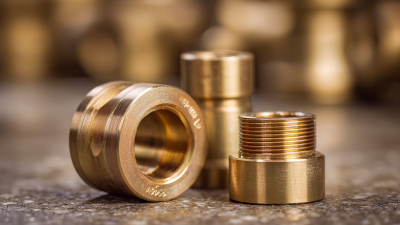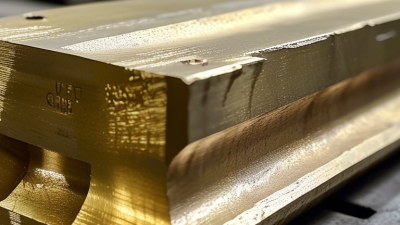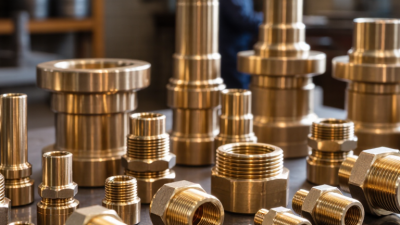
Choosing reliable Brass Forging Parts suppliers requires more than comparing prices or browsing polished product photographs. Buyers must examine process control, material traceability, dimensional accuracy, and communication habits. A dependable supplier should explain its forging equipment, brass alloy grades, heat-treatment methods, and inspection records without hesitation.
William F. Hosford, a respected metal-forming expert, wrote, “Forging is the working of metal by plastic deformation.” This principle matters when evaluating suppliers. Proper forging aligns the metal’s grain structure and improves strength around demanding areas, such as threaded ends, valve bodies, and compact fittings. Ask whether the supplier controls forging temperature, die wear, flash removal, and surface finishing. Small gaps in these details can create large failures later.
Look closely at the evidence. Request material certificates, sample inspection reports, and clear tolerance data. If possible, inspect a production sample under magnification. Uneven edges, shallow cracks, excessive flash, or inconsistent color deserve attention. A reliable supplier also welcomes technical questions and provides realistic lead times. Promises alone are not proof.
A low quotation can look attractive. It may also conceal weak inspection practices, unstable alloy sourcing, or poor tooling maintenance. No checklist is perfect. Supplier selection still requires judgment. Compare several manufacturers, test representative Brass Forging Parts, and review their response after a problem appears. Their corrective action often reveals more than their sales presentation. Trust should grow from repeatable evidence, not confident language.
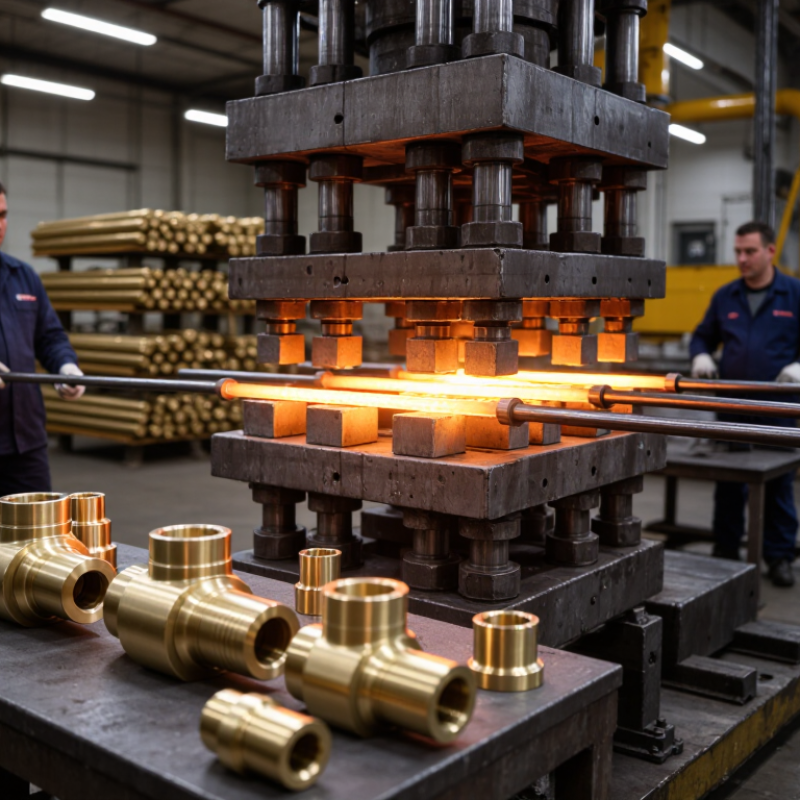
Reliable brass forging parts begin with verified material grades, not attractive quotations. ASTM B16 covers free-cutting brass rod, bar, and shapes. It is useful when suppliers machine forged blanks. EN 12165 covers wrought copper alloys and forgings for general purposes. It supports broader European purchasing requirements. CW617N, commonly identified as CuZn40Pb2, requires careful confirmation because its chemical limits and condition matter.
Ask suppliers for heat numbers, chemical analysis, mechanical results, and dimensional inspection records. Check whether the certificate matches the supplied batch. A certificate can still be wrong. The International Copper Study Group’s October 2024 forecast placed refined copper usage near 26 million metric tons for 2024. That scale makes traceability increasingly important, especially when raw-material prices change quickly. In my experience, forged samples may look identical while lead content, hardness, or grain flow differs. Buyers should compare test results against the exact standard edition, not a copied specification.
Tips: Request one sample part, one material certificate, and one independent laboratory verification. Confirm CuZn40Pb2 chemistry before approving CW617N. For ASTM B16 projects, verify whether the supplier is offering bar stock or a forged component. For EN 12165 orders, define alloy condition, tolerances, and heat treatment in writing. Small details matter. One practical weakness remains: many purchasing teams check only chemistry and forget forging direction, surface defects, or final machining allowance. Reliability requires checking the whole production record.
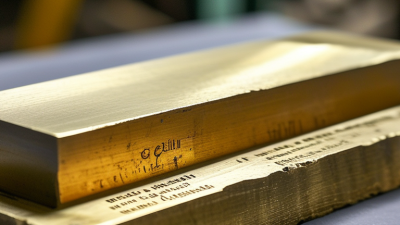
Choosing a brass forging supplier requires more than checking equipment and quoted prices. Audit the quality system first. The ISO Survey 2023 reported 1,265,216 ISO 9001 certificates worldwide for 2022, showing its broad use, but certification alone proves little. Ask to see the current certificate, scope, expiry date, and approved production locations.
For automotive work, IATF 16949 certification signals stronger process discipline. Request recent audit findings, corrective-action records, and evidence of closure. Check whether controls cover incoming brass, die temperature, forging pressure, heat treatment, and final dimensional inspection. During a factory visit, follow one batch from material receipt to shipment. Look for heat-number traceability on tags, calibrated gauges, and clear segregation of nonconforming parts.
Small details matter.
The IATF Global Oversight annual reporting framework stresses certification-body oversight, customer-specific requirements, and continual improvement. A reliable supplier should explain these controls without hiding behind a certificate. Review process-capability results, usually Cp and Cpk, rather than accepting “100% inspection” as a complete answer. The ISO Survey also confirms that ISO 9001 adoption is global, not automatically proof of forging expertise. I have found that some audits look excellent on paper but weaken on the production floor. That gap deserves attention. Ask operators how they react to a cracked forging, unstable dimensions, or missing material records. Their answers may reveal more than polished procedures. (Sources: ISO Survey of Management System Standard Certifications 2022; IATF Global Oversight annual reporting materials.)
| Audit Dimension | Relevant Standard or Expectation | Evidence to Request | Recommended Supplier Benchmark | Audit Result |
|---|---|---|---|---|
| Quality Management Certification | ISO 9001:2015 confirms that the organization operates a quality management system capable of consistently meeting customer and applicable statutory requirements. | Current certificate, certificate number, issuing certification body, issue date, expiry date, and certified site address. | Certificate is current, independently verifiable, and covers brass forging, machining, inspection, and related activities at the actual production site. | Pass / Verify |
| Automotive Quality System | IATF 16949:2016 is an automotive quality management system standard based on ISO 9001 requirements and additional automotive requirements. | IATF certificate, certified manufacturing location, scope statement, and evidence of applicable customer-specific requirements. | Required when the forged brass parts are supplied for applicable automotive production or service-part programs; otherwise, ISO 9001 may be the baseline requirement. | Pass / Conditional |
| Certification Scope and Site | A certificate applies only to the organization, location, and activities stated in its approved scope. | Certificate scope, site address, process list, outsourcing details, and production-flow map. | No mismatch between the certified site and the facility that performs forging, heat treatment, machining, plating, or final inspection. | Pass / Fail |
| Document and Drawing Control | Controlled documented information must be identifiable, reviewed, updated, protected, and available where needed. | Revision-controlled drawings, work instructions, inspection standards, approval records, and obsolete-document controls. | Operators use only the latest approved revision, with documented authorization for engineering changes. | Pass / Needs Action |
| Material Traceability | Quality systems should support identification and traceability when required by the customer, regulation, or production risk. | Material certificates, heat or batch numbers, forging-lot records, receiving records, and finished-part labels. | Each shipment can be traced from finished parts to raw-material batch, forging date, process route, inspection results, and operators or equipment used. | Pass / Fail |
| Process Control for Forging | Production processes should be planned, controlled, monitored, and validated where output cannot be fully verified later. | Process-flow diagram, control plan, forging-temperature records, die-maintenance logs, setup approvals, and first-piece inspection. | Critical parameters have defined limits, reaction plans, responsible personnel, and retained records for every production lot. | Pass / Needs Action |
| Inspection and Test Equipment | Monitoring and measuring resources must be suitable, maintained, and calibrated or verified at specified intervals. | Calibration certificates, equipment registers, traceability to recognized measurement standards, and out-of-tolerance procedures. | All gauges used for dimensions, hardness, surface condition, and leak or pressure testing are within calibration status. | Pass / Fail |
| Nonconforming Product Control | Nonconforming outputs must be identified and controlled to prevent unintended use or delivery. | Quarantine-area records, nonconformance reports, concession approvals, rework instructions, and scrap controls. | Defective brass forgings are physically or electronically segregated, dispositioned by authorized personnel, and prevented from shipment. | Pass / Fail |
| Corrective Action and Root-Cause Analysis | The supplier should react to nonconformity, determine root causes, implement corrective action, and verify effectiveness. | Recent corrective-action reports, containment records, root-cause analysis, effectiveness checks, and recurrence data. | Actions address systemic causes rather than only sorting or replacing defective parts; overdue actions are escalated and closed. | Pass / Needs Action |
| Supplier and Subcontractor Control | Externally provided processes, products, and services must be controlled according to their effect on product conformity. | Approved-supplier list, subcontractor evaluations, material-supplier certificates, purchase specifications, and incoming inspection records. | Critical outsourced processes such as heat treatment, plating, testing, or machining have defined approval and performance-monitoring criteria. | Pass / Conditional |
| Performance Monitoring | Quality objectives and relevant process performance should be monitored and evaluated using appropriate information. | Monthly quality dashboards, customer complaints, rejection rates, on-time delivery records, audit findings, and improvement plans. | The supplier tracks defect trends, delivery performance, corrective-action closure, and process capability for customer-defined critical characteristics. | Pass / Needs Action |
| Decision Guidance: Approve suppliers only after certificate validity, certification scope, traceability, process controls, measurement systems, nonconforming-product controls, and corrective-action effectiveness have been verified. Certification supports supplier qualification but does not replace a product- and process-specific audit. | ||||
When choosing a brass forging parts supplier, ask for process capability evidence, not attractive samples alone.
The supplier should monitor critical dimensions through Statistical Process Control (SPC), including bore diameter, flange thickness, and thread position.
Control charts must show a stable process before Cpk is calculated. ISO 22514-1 explains that capability analysis is meaningful only when process variation is statistically controlled. Without stability, one impressive batch proves little.
Set a Cpk target of 1.33 or higher for critical characteristics.
Under stable, approximately normal conditions, Cpk 1.33 represents about four standard deviations between the process average and the nearest specification limit. That equals roughly 63 defects per million opportunities when the process is centered and assumptions hold, according to the AIAG Statistical Process Control Reference Manual.
The NIST/SEMATECH e-Handbook also stresses checking distribution shape, sampling method, and measurement reliability before trusting capability results.
Ask for recent control charts, subgroup rules, specification limits, and gauge repeatability data. A supplier reporting only a final Cpk value is hiding useful context.
The uncomfortable part: even Cpk 1.33 can weaken after tool wear, furnace variation, or die changes. I would request trend data across several production lots, not a single favorable report. Leave room for doubt.
A reliable brass forging supplier should make every part traceable to its production heat. Start with heat numbers. This identifier should appear on the forging, packing list, inspection report, and material certificate. Compare these records before approving shipment. A missing or altered number creates a serious verification gap.
The material certificate should state the alloy grade, chemical composition, mechanical results, heat-treatment condition, and testing method. Ask for the original laboratory report, not only a supplier summary. The International Organization for Standardization’s ISO Survey 2023 recorded more than 1.26 million ISO 9001 certificates worldwide. However, certification alone does not prove complete material traceability. Review sample records from previous orders, including furnace logs, lot splits, and nonconformance reports.
Digital records can strengthen control. Deloitte’s 2023 Smart Manufacturing and Operations Survey found that 86% of manufacturing leaders expected smart manufacturing to become a major competitiveness factor within five years. Still, software cannot repair poor data entry. Visit the facility when possible, and check whether operators scan labels at each handoff. I would also request independent chemical verification for high-risk applications. It costs more, but one unchecked batch can create expensive rework. Records may look perfect. The physical markings must agree. Consider this weakness: suppliers sometimes preserve certificates better than they preserve the actual chain of custody.
Reliable brass forging suppliers should be compared through delivery evidence, not attractive quotations. The 2023 World Bank Logistics Performance Index rates logistics timeliness on a 1–5 scale, showing why country-level averages cannot replace supplier data. Request the last six months of purchase-order records, including promised dates, actual dispatch dates, and delay reasons. Define “on time” clearly: shipment released on or before the confirmed date, not merely finished in production.
A 95% on-time shipping target is practical, but it needs measurable controls. Ask whether lead time includes tooling, sample approval, heat treatment, inspection, and export preparation. For example, a supplier quoting 20 days may require another 10 days for die correction. That detail matters.
Small MOQ can reduce inventory, while excessive MOQ may trap cash in slow-moving parts. Compare a 500-piece trial order with a 2,000-piece production MOQ, then calculate storage and reordering costs. The 2023 UNCTAD Review of Maritime Transport notes that ports handle over 80% of global merchandise trade by volume; port congestion can therefore affect even well-managed suppliers. Ask for a backup dispatch plan.
Promises are not performance. Request weekly capacity updates and dated corrective-action reports. A perfect dashboard may still hide partial shipments or quietly extended dates. That weakness deserves scrutiny. Suppliers should explain exceptions without blaming transporters or customers. Their data should be consistent, recent, and independently checkable.